
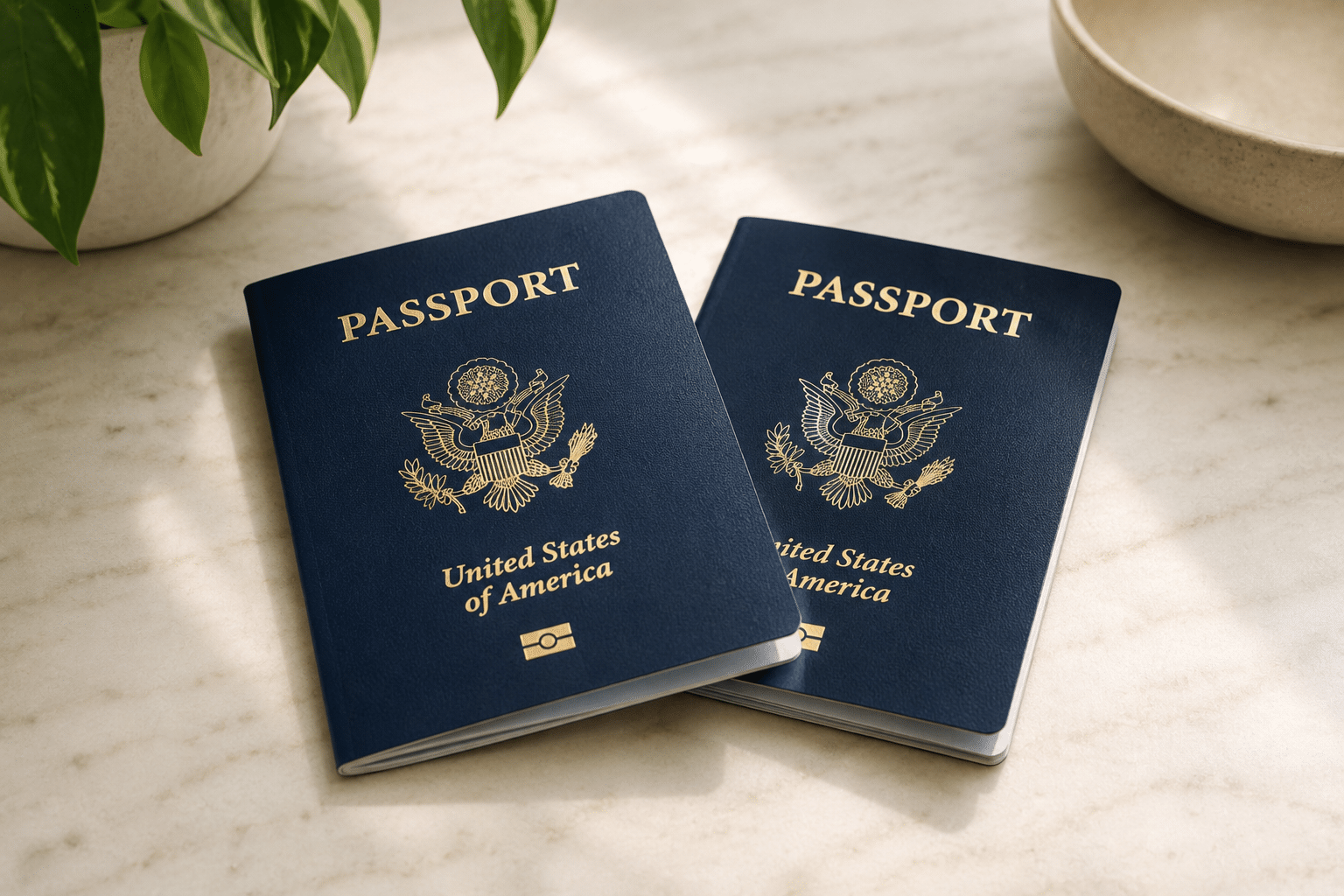
A second US passport can keep your international travel on track if you’re without your original passport.
Usually when applying for entry to foreign country that requires you to have an entry visa, you have to send away your existing US passport with the visa application. Processing by that country can sometimes take as long as two or three months. While you’re without your passport, you can’t travel outside the US and that includes Canada or Mexico.
When applying for any type of visa in Spain, you need to include your US passport with your visa application. Processing your visa application in Spain can take up to 90 days, which means you’re “stuck” in the US until the application is completed.
Since we travel internationally quite a bit, we really weren’t crazy about not being able to travel while we wait. We recently discovered that you can actually get a second US passport under certain conditions. Most Americans don’t even know this is even an option.
What’s Different About A Second US Passport?
A second US passport is a duplicate passport book issued alongside the one you already have. It’s valid for four years rather than the standard ten year term. It’s intended for specific travel situations rather than long-term use. Both passports are valid at the same time and both have the same personal information, just different numbers. The US State Department prints a special endorsement code in the second passport linking it internally to your primary passport.
Reasons For A Second US Passport
The most common reason for one is when you’re applying for a foreign visa as we mentioned above. But, there are other valid reasons for one as well. One is for traveling to multiple countries in the same general time period where you’ll need to send your passport in to another country the minute you get it back from the first country. Another is having stamps in your passport that would cause certain countries to deny you entry. For example is having Israeli entry stamps when planning to travel to some countries in the Middle East.
Other valid reasons include needing visas for several countries on an ongoing basis due to frequent international travel, or having stamps in your passport that would cause certain countries to deny you entry. For example, having Israeli entry stamps when planning to travel to some countries in the Middle East.
Applying For A Second Passport
We always use the official US State Department portal whenever it comes to anything passport related, but of course there are various non-governmental companies that can help you as well. If you use the official government portal, there is no fee for a second passport, unless you want expedited service.
You’ll need to fill out the online Form DS-82 if you have a current valid passport and are eligible for renewal or Form DS-11 if you don’t meet those criteria. You also need to submit a signed, written statement explaining why you need a second passport. Since having a second passport isn’t routine, you’ll need to be very specific in your statement. A vague request won’t cut it. Include any supporting materials you can such as proof of travel plans.
Approval isn’t guaranteed. Each application is reviewed individually and they can decline to issue a second passport.
Processing runs about 4–6 weeks for routine applications or around two weeks if you pay the extra $60 for expedited service. Remember that during high travel periods (such as summer, holidays, etc), it can take longer.
Don’t Forget The Golden Rule When You Have Two US Passports
When you have a second US passport, there’s one golden rule that’s easy to overlook and important to get right: use the same passport for your entire trip, from leaving the US to returning to it. You should also use the number of the passport you’re going to take and use on the trip on all of your airline reservations.
When you enter a country, your passport details are recorded. When you exit, border control expects to see the same passport. It’s essential that the same document be presented when entering and exiting a country. If you enter a country on passport A and try to leave on passport B, you may face a barrage of questions and in some countries, you may be delayed, detained or prevented from leaving. The same rule applies when leaving and returning to the US.
Find out more about the Spanish visa and immigration process here.