After The Move
Spanish
Bank Accounts

As an expat living in Spain you’ll want to get a Spanish bank account. While you can get by for a short time using your US cards, having a Spanish bank account quickly becomes part of everyday life.
At first, it may seem like you can continue using your US bank without much trouble, especially if you have a card with no foreign transaction fees. For a short visit, that can work, but once you’re living in Spain you’ll find that many things are set up to run through a local account. Paying rent, setting up utilities, arranging internet or mobile service and even some insurance policies are all much easier when you have a Spanish bank account. Without one, you’ll likely run into small points of friction that add up over time.

When To Open Your Spanish Bank Account
You will need an NIE — Spain’s foreigner identification number — to open any Spanish bank account. If you don’t have one yet, getting your NIE is one of the first things to sort out before or shortly after arriving.
Open An Account Before Moving (Non-Resident Account)
Some expats choose to open a Spanish bank account before they move. Primarily because they’re buying property, paying a rental deposit, setting up utilities in advance or preparing financially for their move. Having an account early can make it easier to transfer money, pay deposits, set up automatic payments or work with lawyers, real estate agents and utility companies. It can also simplify the financial side of the move so that once you arrive in Spain you already have a local account set up.
To open a non-resident bank account in Spain, banks typically require a passport, proof of your address in your home country, and documentation showing your income or financial situation such as pay stubs, tax returns, or bank statements. Many banks will require an NIE or non-resident certificate (certificado de no residente). The non-resident certificate is issued by the Spanish National Police, but many banks will request it for you as part of the account opening process. The process usually takes one to two weeks and involves a small administrative fee.
Non-resident accounts often have higher fees and fewer services than resident accounts and many people later convert the account to a resident account once they are living in Spain.
Before you have a Spanish bank account set up, many expats use services like Wise or Revolut to handle transfers and everyday spending. Revolut has also applied in 2026 to be a bank in the US.
Opening An Account After Moving
Once you are a resident, opening a resident bank account is easier. The resident account will generally have lower fees and more services available.
To open a resident bank account, banks usually require your passport, your NIE number and your TIE residency card. They will also ask for proof of your new address in Spain. Your empadronamiento certificate and sometimes a rental contract or property deed will validate proof. Many banks will also ask for proof of income such as an employment contract, pension statement or proof of funds if you are living on savings or investment income. Once the account is opened, you will usually set up direct debits for utilities and other recurring expenses. This is very common in Spain and why a Spanish bank account is important for everyday life.
Choosing A Bank
Spain has several large national banks that most expats end up using including Santander, BBVA, CaixaBank (Holabank for expats) and Sabadell.
In areas with a larger expat community you’ll often find English-speaking staff, which makes the process more comfortable. There are also online-first options like N26 that can work well for everyday spending.
Additional things to keep in mind when selecting a bank are:
What Is Banking Like In Spain
Banking in Spain is still more branch-based than the US. While you can still do many things online, having a local branch can make things much easier when something isn’t straightforward. It’s not so much about building a “relationship” but more about having a real person you can go to when you need help navigating the system.
Spanish banks often operate by appointment for many services. Opening accounts, making changes or discussing loans and mortgages may require scheduling a meeting with a banker rather than just walking in. This is different from what most people are used to in the US.
Branch hours are also more limited than in the US. Most are open Monday through Friday, typically from 8:30am until around 2:00pm. Some branches offer limited afternoon hours on certain days but many close by early afternoon. It’s worth planning ahead if you need to visit in person for anything that can’t be handled online.
Most major banks have solid mobile apps and online banking, though the quality and English-language support varies by provider. CaixaBank’s Holabank and BBVA tend to have strong digital tools and are worth considering if online banking is a priority for you.
Using Your Account Day To Day
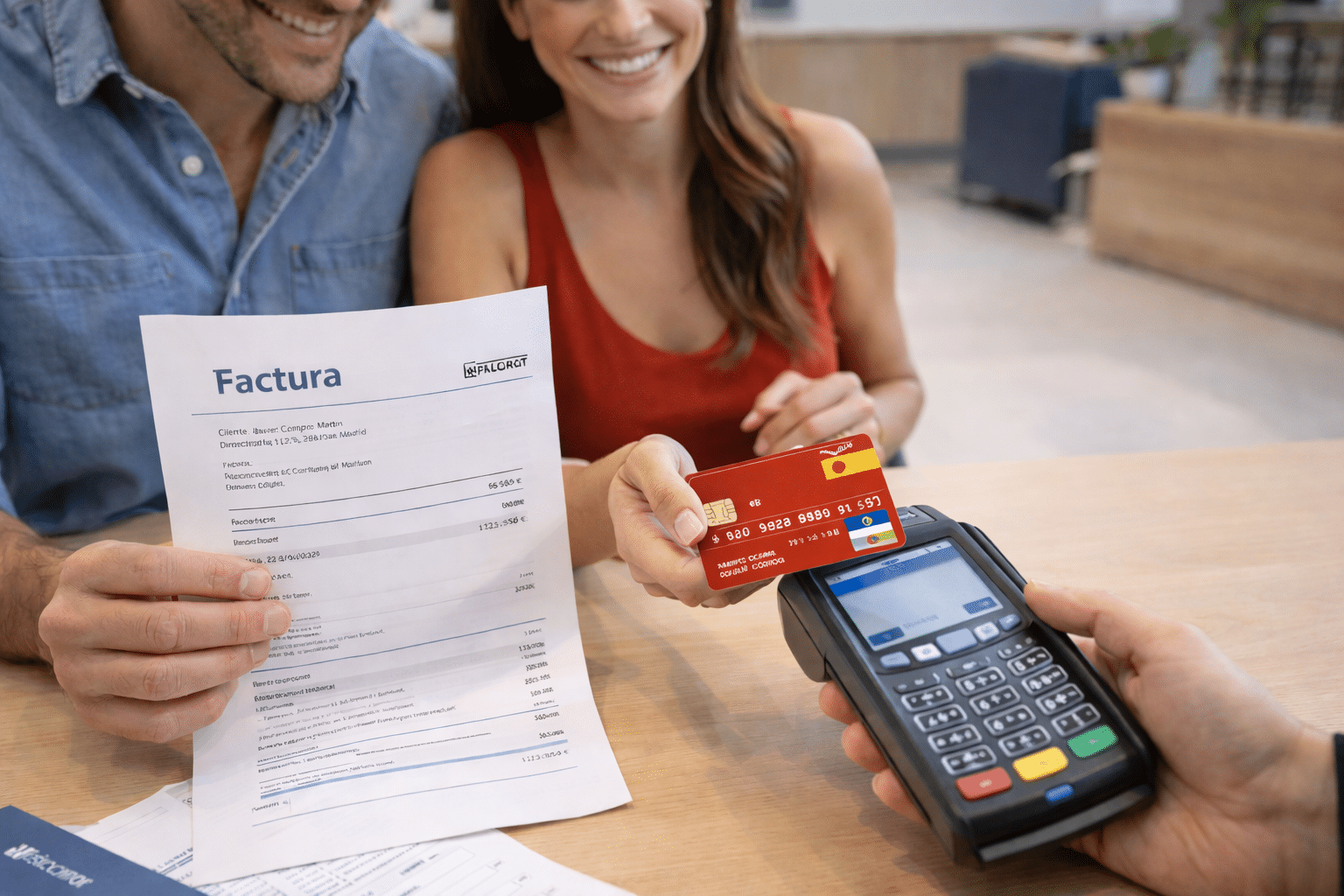
Once your account is open you’ll usually receive your debit card and IBAN on the spot. An IBAN is the bank account number used across the EU for transfers and payments. It replaces the routing numbers and account numbers used in the US.
You’ll need the IBAN for payments handled through direct debit (known as domiciliación). That’s how utilities, subscriptions and many other recurring payments for services are paid in Spain. Debit card payments are widely accepted and over time you’ll find yourself relying almost entirely on your Spanish account for everyday expenses.
Bizum And Paying People In Spain
Bizum is a mobile payment system built into most Spanish bank apps that allows you to send money instantly to another person using just their phone number. It’s similar to Venmo or Zelle in the US, but it’s integrated directly into the Spanish banking system rather than being a separate app.
People use Bizum all the time for small payments, like splitting restaurant bills, paying someone back, sending money to friends or family or even paying small businesses. Many local shops, service providers and even some landlords accept Bizum payments.
Once you have your Spanish bank account and mobile banking set up, activating Bizum only takes a few minutes inside your bank’s app. After that you’ll likely find yourself using it regularly. It’s one of the most common ways people transfer money in Spain.
Fees Can Be Higher Than In The US
Bank fees are more common in Spain than in the US. Many Spanish banks charge account maintenance and other fees unless you meet certain conditions. Direct depositing your salary or pension, setting up automatic bill payments, maintaining a minimum balance or using other bank services like insurance or credit cards can get the fees reduced or waived.
Many people structure their account to meet the bank’s requirements so most fees are reduced or eliminated. It’s worth asking about this upfront so you understand how to avoid unnecessary charges and choose the account that best fits how you plan to use it.
Managing Your Expat Finances
A Spanish bank account is just one part of managing your finances as an expat. Credit cards, investment and brokerage accounts, transferring large amounts between US dollars and euros and understanding how money moves between the two countries all come with their own considerations. We cover all of that in our Expat Finance guide.
FAQs
Can I open a joint bank account in Spain?
Yes, most Spanish banks allow joint accounts. Many couples open one for household expenses such as utilities, insurance, taxes and rent or mortgage payments. Both account holders will usually need an NIE number and identification and both people typically need to be present when opening the account.
How long does it take to open a bank account in Spain?
If you have all the required documents, opening a bank account in Spain is usually fairly quick. It can often be done in one appointment at the bank. You may receive your account number (IBAN) immediately while debit cards are typically mailed within one to two weeks. Online banking access is typically set up the same day.
Can I use my Spanish bank account throughout Europe?
Yes. Spanish bank accounts are part of the SEPA (Single Euro Payments Area) system. This allows you to transfer money between most EU countries as easily as a domestic transfer. In most cases SEPA transfers in euros are free or very low cost when done online.
Are checks commonly used in Spain?
No. Checks are uncommon in Spain compared to the US. Most payments are made by bank transfer, direct debit, debit card or cash. Even large payments such as property deposits or car purchases are often done by bank transfer or cashiers check.
Should I keep my US bank account after moving to Spain?
Most expats keep their US bank account even after opening one in Spain. A US account is often useful for maintaining US credit cards, receiving income or investment distributions, paying US bills and transferring money to Spain.

Before Moving
Everything you need to sort before you leave — visas, NIEs, finances and the hundred other things on your pre-move list.

After The Move
What you need to get sorted once you arrive — utilities, healthcare, paperwork and all the practicalities of your new life in Spain.

Property Guide
Here’s what to know about buying property in Spain as an American — from your first search to signing at the notary.

Resources
Checklists, glossaries and vetted websites to help you plan, prepare and hit the ground running in Spain.

Our Journey
Follow along as we document our move from Portland, Oregon to Jávea, Spain — the highs, the headaches and everything in between.
This page last updated: