After The Move
Healthcare

Spain has both public and private healthcare systems, and most expats end up using both. Understanding how they work together — and when each one makes sense — is one of the more practical things to sort out after you arrive.
Spain’s healthcare system is very different from the US. It is generally affordable, high-quality and accessible, and it operates differently in terms of referrals, prescriptions, pharmacies and how the public and private systems interact. Private insurance is required for most visas, but eligibility for public healthcare opens up over time depending on your residency status and employment situation.
This guide covers how healthcare works once you’re living in Spain, including public vs. private coverage, costs, pharmacies, prescriptions and choosing a private insurer.
Public And Private Healthcare In Spain
Spain has both public and private healthcare systems. Many expats use both depending on the situation.
Public healthcare is funded through taxes and social security contributions and is available to residents who qualify. Public healthcare is very affordable and covers most medical needs, but specialist appointments and non-urgent procedures can sometimes involve longer waits.
Private healthcare is delivered through insurance companies, private hospitals and clinics. Private healthcare usually offers faster appointments, more flexibility in choosing doctors, and often more English-speaking providers.
A big difference between the two systems is wait times. Many expats keep a private insurance policy even after they become eligible for public healthcare. Using both systems together is very common. For example, many choose to use public healthcare for major medical issues and hospitalizations and private insurance for routine care, specialists and faster appointments.
When Expats Become Eligible For Public Healthcare
Most expats moving to Spain begin with private health insurance as it’s a requirement for their visa. Over time they may become eligible for Spain’s public healthcare system depending on their residency status and employment situation. The most common way to qualify is by working in Spain and paying into the Spanish social security system. Self-employed individuals who pay social security contributions are also eligible.
For expats living in Spain on a Non-Lucrative Visa (NLV) who are not working, there is also a program called the Convenio Especial. This program allows them to join the public healthcare system by paying a monthly fee. The cost is typically around €60 per month for residents under age 65 and around €157 per month for those over 65, although the exact amount can vary slightly by region.
In most cases, you must have been a resident in Spain and registered on the padrón for at least one year before you can apply. Many expats on the NLV start with private insurance for their visa and then later transition into the Convenio Especial while continuing to keep a private insurance policy.
To apply, contact your local INSS (Instituto Nacional de la Seguridad Social) office. You’ll need to bring proof of padrón registration and residency documentation.
Spain Moves Towards Universal Healthcare
In March 2026, Spain approved a healthcare decree that further expanded access to the public healthcare system. It allows some residents who can demonstrate they are living in Spain and registered locally, to apply for public healthcare even if they are not working or still completing residency paperwork.
For new residents who are still covered by the private insurance policy purchased for their visa, it does not eliminate the requirement to maintain private insurance. However, it may make it easier over time to transition into the public healthcare system once you are settled and registered locally.
Public Healthcare Vs Private Insurance Coverage
The two systems work differently and serve different needs. Here’s a comparison of what each typically covers. Advantages of private insurance are in bold.
| Public Healthcare | Private Insurance |
|---|---|
| Primary care doctor | Primary care doctor |
| Specialist visits (with referral) | Specialists without referral |
| Hospital care | Private hospitals |
| Surgery | Surgery |
| Emergency care | Emergency care |
| Pregnancy and childbirth | Pregnancy and childbirth |
| Preventive care | Preventive care |
| Some mental health services | More mental health options |
| Partial prescription coverage | Usually prescriptions not included or partially covered |
| Limited dental | Often dental options available |
| Limited vision | Vision sometimes included |
| Longer wait times | Shorter wait times |
| Assigned doctors | Choose your doctors |
| English and Spanish speaking doctors | More English speaking doctors |
Cost Of Healthcare In Spain
One of the biggest differences for expats is how affordable healthcare in Spain is compared to the US.
Under the public system, most doctor visits, hospital care and procedures are very low cost or free. Costs are covered through taxes and social security contributions, so once you’re eligible there’s very little out-of-pocket expense for most care.
Private insurance in Spain is also significantly more affordable than in the US. Most expats pay between €50 and €150 per month depending on age, coverage level and whether co-payments are included. Policies with no co-payments — which are typically required for visa applications — sit at the higher end of that range.
Prescription medication is generally much cheaper than in the United States under both systems. Under public healthcare you pay a percentage of the medication cost based on income and residency status. With private insurance, prescriptions are often handled outside your policy but the out-of-pocket cost is still typically low compared to what you’d pay in the US.
Pharmacies in Spain Are Different From The US
Pharmacies in Spain play a much larger role in everyday healthcare than they do in the US. Pharmacists are highly trained and often act as the first point of contact for minor medical issues. For many everyday illnesses or minor problems, people in Spain often go to a pharmacy before going to a doctor. Pharmacists can often provide advice, recommend treatments, and help with minor issues without needing a doctor appointment.
Another difference is that pharmacy availability is very good. While not every pharmacy is open all night, every area has a rotating system of open pharmacies called farmacia de guardia. This ensures that there is always a pharmacy open nearby at night, on weekends and on holidays. Some pharmacies in larger cities are open 24 hours.

Prescriptions And Medication In Spain
Prescriptions work differently in Spain than in the US and it’s worth understanding the basics before you need one.
Under the public system, prescriptions are issued electronically. Your doctor sends the prescription directly to the pharmacy system — there’s no paper to carry or lose. You simply show your health card (tarjeta sanitaria) at the pharmacy and the prescription is already there. This system is called receta electrónica and is used across most of Spain.
Private insurance prescriptions work differently. Your doctor provides either a paper prescription or a digital one depending on the clinic. You take it to any pharmacy — you’re not restricted to a specific one. Most private clinics issue prescriptions on the spot during or after your appointment.
One practical difference from the US: many medications that require a prescription in America are available over the counter at Spanish pharmacies. Pharmacists are well trained and can advise on what’s available without a prescription, which is useful for common illnesses or minor issues while you’re still getting set up with a doctor.
We have more information on reestablishing your existing US prescriptions in Spain in this post.
Private Health Insurance Companies In Spain
The main private insurers in Spain are Sanitas, Adeslas, Asisa, DKV and Mapfre. International providers like Cigna, Allianz and AXA are also options for expats who want coverage that travels with them.
One important thing to understand before comparing companies: in Spain you do not visit any doctor and get reimbursed later. Each insurer has a network of doctors, clinics and hospitals and you stay within that network. When comparing policies, the network coverage for your specific area often matters more than the brand name.
Most expats find pricing and coverage are similar across the major providers. The differences come down to network size, English-language support, customer service and whether extras like dental, mental health or international coverage are included.
Many expats switch insurers as their needs change — especially after qualifying for public healthcare, when private insurance shifts from primary coverage to a supplement for faster appointments and specialist access.
If you travel frequently within the EU, it’s worth knowing about the GHIC (Global Health Insurance Card), which replaced the EHIC for UK residents and the European Health Insurance Card (EHIC) for EU residents.
As a non-EU expat living in Spain, once you’re enrolled in Spain’s public healthcare system you may be eligible for a Spanish EHIC, which covers necessary medical treatment when traveling in other EU countries. Check with your local health center once you’re registered for public healthcare.
Finding an English-speaking doctor is easier with private insurance than through the public system. Most major private insurers have online directories where you can filter by language — checking the English-speaking doctor availability in your specific area before choosing a policy is worth doing, especially if your Spanish is still developing.
FAQs
Can I buy Spanish health insurance before I am a resident?
Yes. In fact, most non-EU expats must purchase private health insurance before they apply for their visa or residency. The policy must be issued by an insurance company authorized to operate in Spain. It must meet specific visa requirements such as full coverage, no co-payments and coverage for the entire year. This insurance is usually purchased while you are still living outside Spain. It is required before your visa application is approved.
Do I need to register somewhere to use public healthcare in Spain?
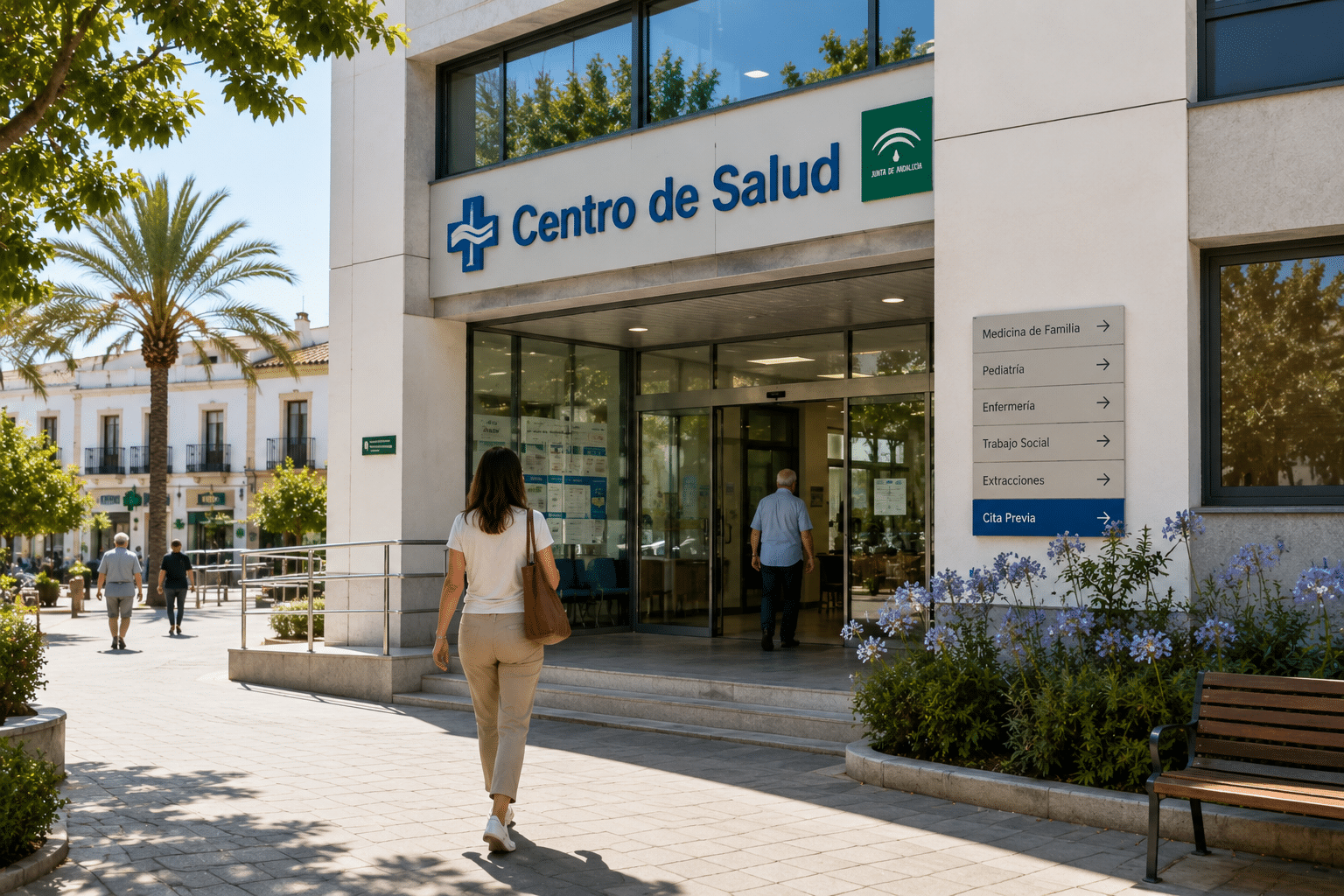
Yes. To use public healthcare you typically need to register with the Spanish social security system (if working) or enroll through programs like the Convenio Especial. After that you register at your local health center (centro de salud) and receive a health card (tarjeta sanitaria), which you use for doctor visits, prescriptions, and hospital care.
Is healthcare in Spain managed nationally or locally?
Spain has a national healthcare system but it is administered by each autonomous region. That means healthcare services, waiting times and procedures can vary slightly depending on where you live in Spain. The overall system is national but the day-to-day management is regional.
Does Spanish private health insurance cover me outside of Spain?
Some private insurance policies include coverage throughout the EU or internationally, but not all do. Many standard Spanish private insurance policies are primarily for treatment inside Spain, while international insurance plans provide broader coverage. It’s important to check whether your policy includes EU travel coverage or worldwide coverage.
Can I use US Medicare in Spain?
No. Medicare does not cover healthcare outside the US, so it won’t pay for medical care received in Spain or elsewhere in Europe. Americans living in Spain rely on private health insurance, Spain’s public healthcare system once they become eligible, or a combination of both. Some retirees choose to keep Medicare Part A since they’ve already paid into it, but it provides no benefit while living abroad — you’ll still need separate coverage in Spain.

Before Moving
Everything you need to sort before you leave — visas, NIEs, finances and the hundred other things on your pre-move list.

After The Move
What you need to get sorted once you arrive — utilities, healthcare, paperwork and all the practicalities of your new life in Spain.

Property Guide
Here’s what to know about buying property in Spain as an American — from your first search to signing at the notary.

Resources
Checklists, glossaries and vetted websites to help you plan, prepare and hit the ground running in Spain.

Our Journey
Follow along as we document our move from Portland, Oregon to Jávea, Spain — the highs, the headaches and everything in between.
This page last updated: