
After The Move
Spanish
Digital ID

Spain’s Digital ID (Certificado Digital) is an electronic ID that lets residents and expats securely access nearly all government services online without visiting offices. Once you have your NIE, residence card and empadronamiento (padrón), you can apply for your digital certificate. Spain has been moving more and more administrative processes online, and the digital certificate is essentially the key that gives you access to those systems.
How To Get A Spanish Digital ID
The digital certificate is issued by the FNMT (Fábrica Nacional de Moneda y Timbre), Spain’s official certificate authority. Getting your Spanish digital ID (certificate) involves a short process.
- Apply online through the official certificate authority website.
- After applying you receive a verification code.
- Verify your identity by visiting an authorized office in person (at a tax office, town hall, or police station depending on the area) or doing it via secure video call.
- After your identity is verified you return to the website and download the certificate onto your computer.
Once it’s installed, your computer can use it to identify you on government websites. One practical note: the digital certificate can be finicky with certain browsers. It works most reliably with Firefox or Chrome with the appropriate extensions installed. If you run into issues on Safari or Edge, switching browsers usually resolves them.
Digital ID Vs Cl@ve
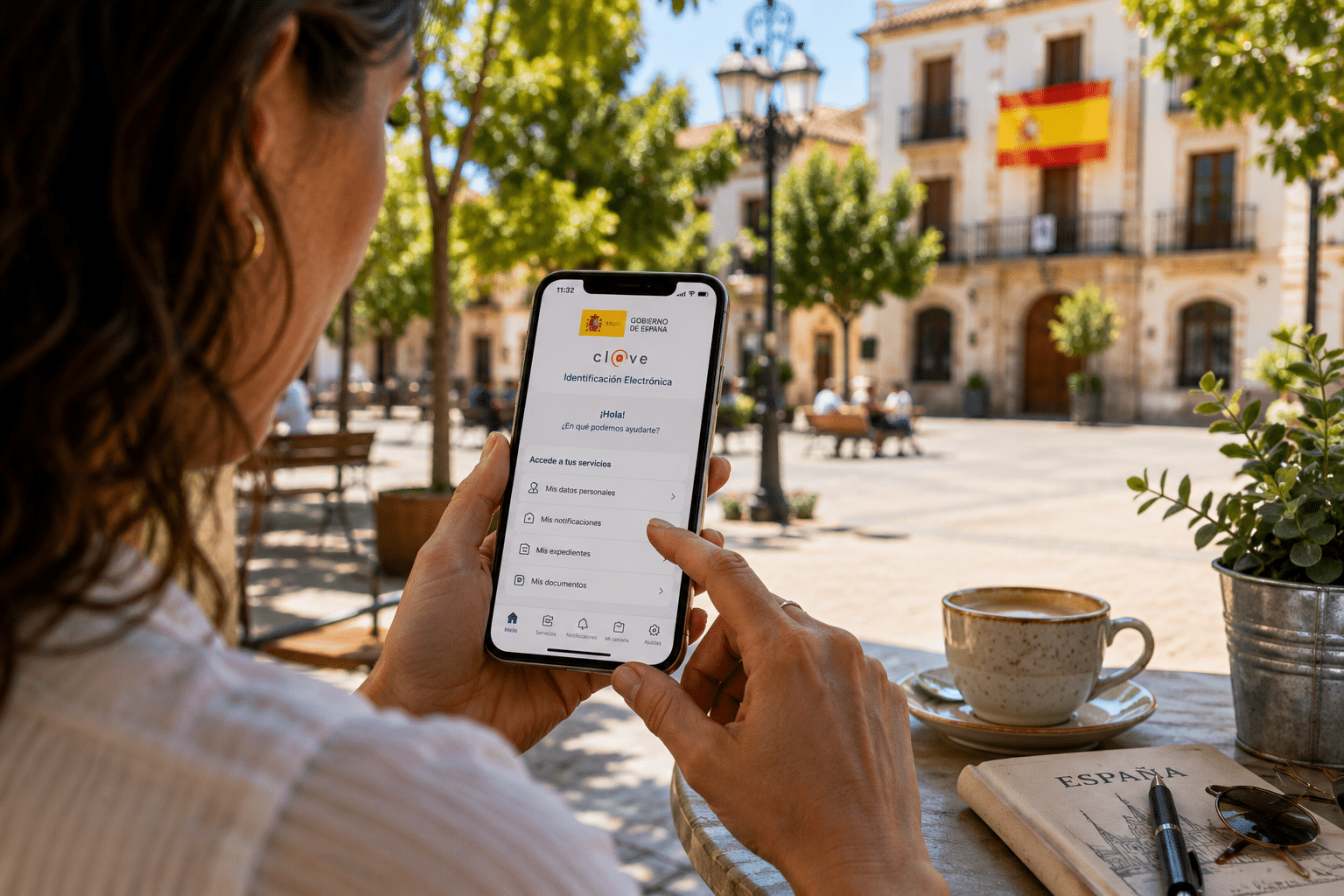
Cl@ve is an additional system that is often grouped together when talking about a Spanish Digital ID. The Spanish Cl@ve system includes two main login methods: Cl@ve PIN and Cl@ve Permanente.
Cl@ve PIN uses a temporary code sent to your phone each time you log in and is often used for taxes and occasional administrative tasks.
Cl@ve Permanente uses a permanent username and password and is typically used for services like Social Security or healthcare portals.
Many people in Spain eventually use both systems along with the Spanish Digital ID, depending on which government website they are accessing.
| System | How It Works | Best Used For |
|---|---|---|
| Cl@ve PIN | Temporary code sent to your phone each time you log in | Filing taxes, checking fines, downloading documents, occasional government tasks |
| Cl@ve Permanente | Permanent username and password login (sometimes with a security code) | Social Security, healthcare portals, government accounts you access regularly |
| Digital ID | Installed on your computer and identifies you automatically on government websites | Most official paperwork, tax agency, DGT, Social Security, signing documents online |
What You Can Do With A Digital Certificate
Once you have your digital certificate set up, you can do many administrative tasks online that would otherwise require appointments and paperwork. This includes:
Backing Up Your Digital Certificate
A very important step after installing the certificate is to export and back up the certificate file. If your computer stops working or you replace it and don’t have a backup, you may have to go through the entire process again. Many people save a backup copy on a USB drive and/or a copy in cloud storage just in case. This small step can save a lot of time later.
When Expats Set This Up
Most expats set this up after they have their residency card and empadronamiento. It’s helpful as you start dealing with taxes, driver’s licenses, social security or other Spanish government administrative tasks.
A typical order for administrative setup in Spain often looks something like this:
The digital ID and Cl@ve come toward the end of that list, but are worth setting up before you start dealing with taxes or Spanish Social Security.
FAQs
Can I use the digital ID on my phone?
The digital certificate is usually installed on a desktop or laptop, but it can also be installed on some smartphones and tablets depending on the device and browser. Many people still prefer using it on a computer because most government websites work more reliably on desktop/laptop browsers.
Is the digital certificate the same as my TIE card?
No. Your TIE card is your physical residency card and identification. Your digital certificate is your online identification for government websites. They are related because you usually need your residency and identification to obtain the digital certificate, but they serve completely different purposes.
What happens if my digital certificate expires?
Digital certificates issued by the FNMT are valid for four years. You’ll receive a reminder to renew before expiry — renewal can usually be done online without repeating the in-person verification step, as long as you renew before the certificate expires. If it lapses, you’ll need to go through the full process again.
Can I install the digital ID certificate on more than one computer?
Yes, but you must export and re-import the certificate file to the other computer. Since the original certificate was installed during the application process you can back it up and install it on another computer. This is why backing up the certificate is very important.
Should I get Cl@ve, the digital certificate, or both?
Many eventually use both Cl@ve and the digital ID certificate because different government websites support different login systems. If you are only going to set up one initially, many people recommend starting with the digital ID certificate because it works for the largest number of government services.

Before Moving
Everything you need to sort before you leave — visas, NIEs, finances and the hundred other things on your pre-move list.

After The Move
What you need to get sorted once you arrive — utilities, healthcare, paperwork and all the practicalities of your new life in Spain.

Property Guide
Here’s what to know about buying property in Spain as an American — from your first search to signing at the notary.

Resources
Checklists, glossaries and vetted websites to help you plan, prepare and hit the ground running in Spain.

Our Journey
Follow along as we document our move from Portland, Oregon to Jávea, Spain — the highs, the headaches and everything in between.
This page last updated: