
Our Journey To Spain
The Northern
Costa Blanca
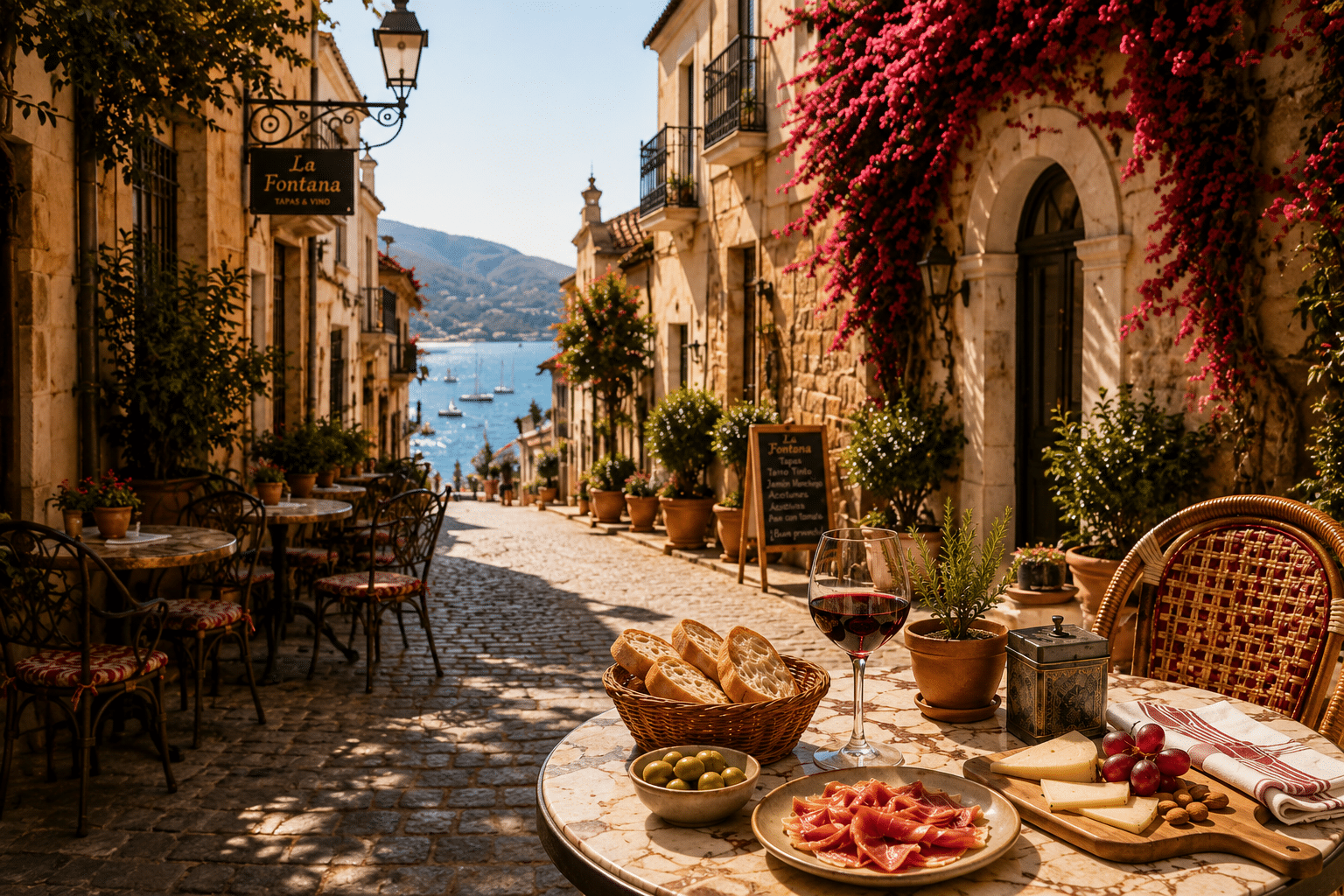
When people talk about the Costa Blanca, they’re often picturing the southern stretch — Benidorm, Torrevieja, the high-rise resorts that fill up in July and empty out in October. The northern end is a different story. Quieter, greener, more varied in character and considerably more livable year-round. It’s the part of the Costa Blanca that people who actually move to Spain tend to choose.
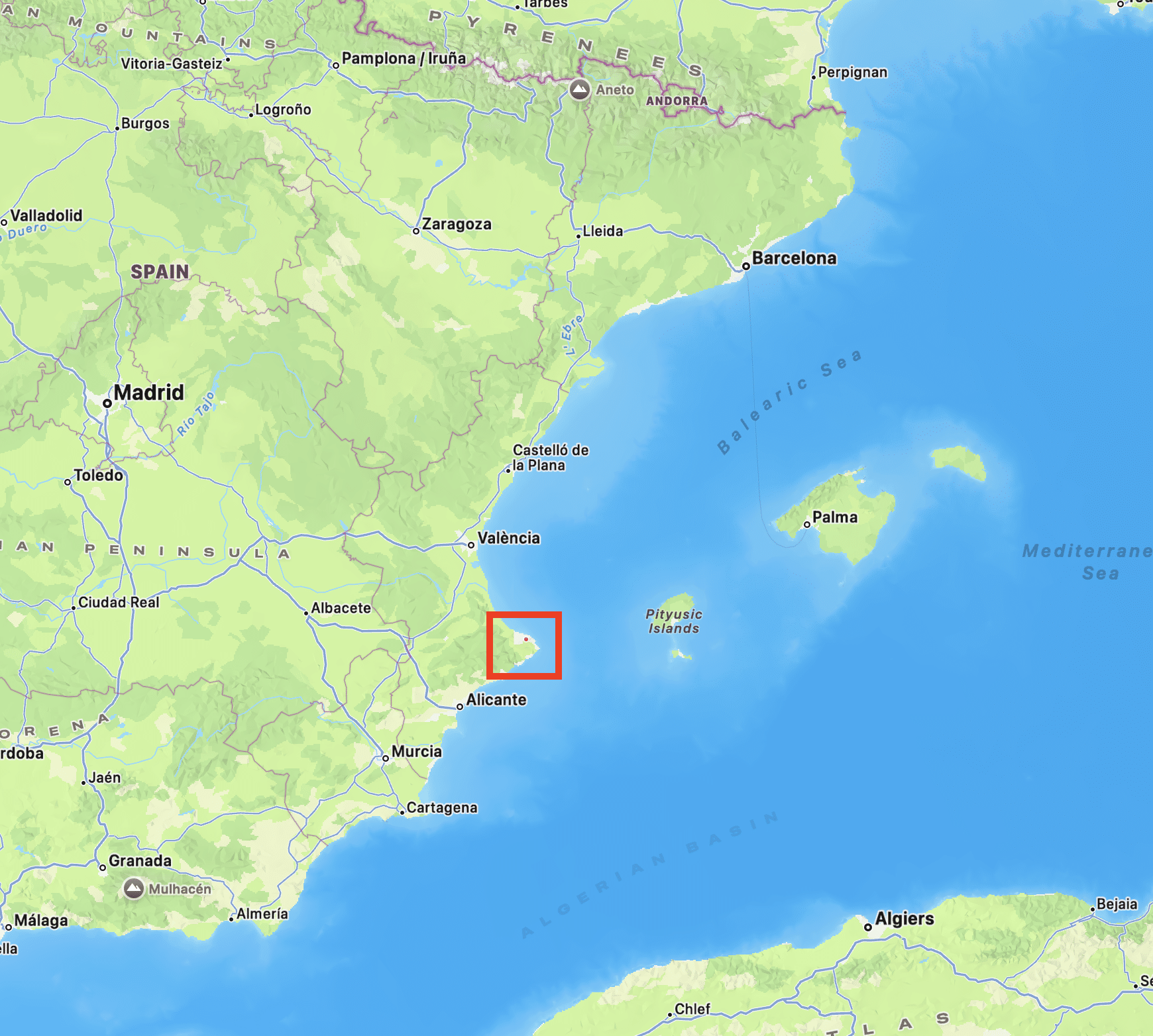
The Northern Costa Blanca runs roughly from Dénia south through Jávea, Moraira and Calpe, backed by the Montgó massif and the valleys of the Marina Alta comarca. The coastline alternates between sandy coves, pebble beaches and dramatic rocky cliffs. Inland, orange and almond groves give way to hillside villages that feel largely unchanged from decades past.
The Northern Costa Blanca Is A Region With Deep Roots
This stretch of coast has been inhabited for thousands of years — Iberians, Phoenicians, Romans, Moors and Christians all left their mark on the landscape and the culture. The agricultural traditions, the architecture of the old town centers and even the language spoken here (Valencian, not just Spanish) reflect that layered history. We’ve put together a fuller history of the region if you want to go deeper on that.
The People
The Northern Costa Blanca has one of the largest international populations in Spain relative to its size. Dénia alone is reported to have around 30% foreign residents. British, German, Dutch and Scandinavian expats have been here for decades. More recently the area has attracted French, Belgian and increasingly North American arrivals.
English is widely spoken in the towns most expats gravitate toward, which helps enormously in the early months. That said, this isn’t a place where you can opt out of Spain entirely. The further you go from the main expat centers, the more Spanish — and Valencian — the daily reality becomes. Most expats who have been here a while will tell you that’s part of what makes it feel like home rather than a holiday.
The Landscape
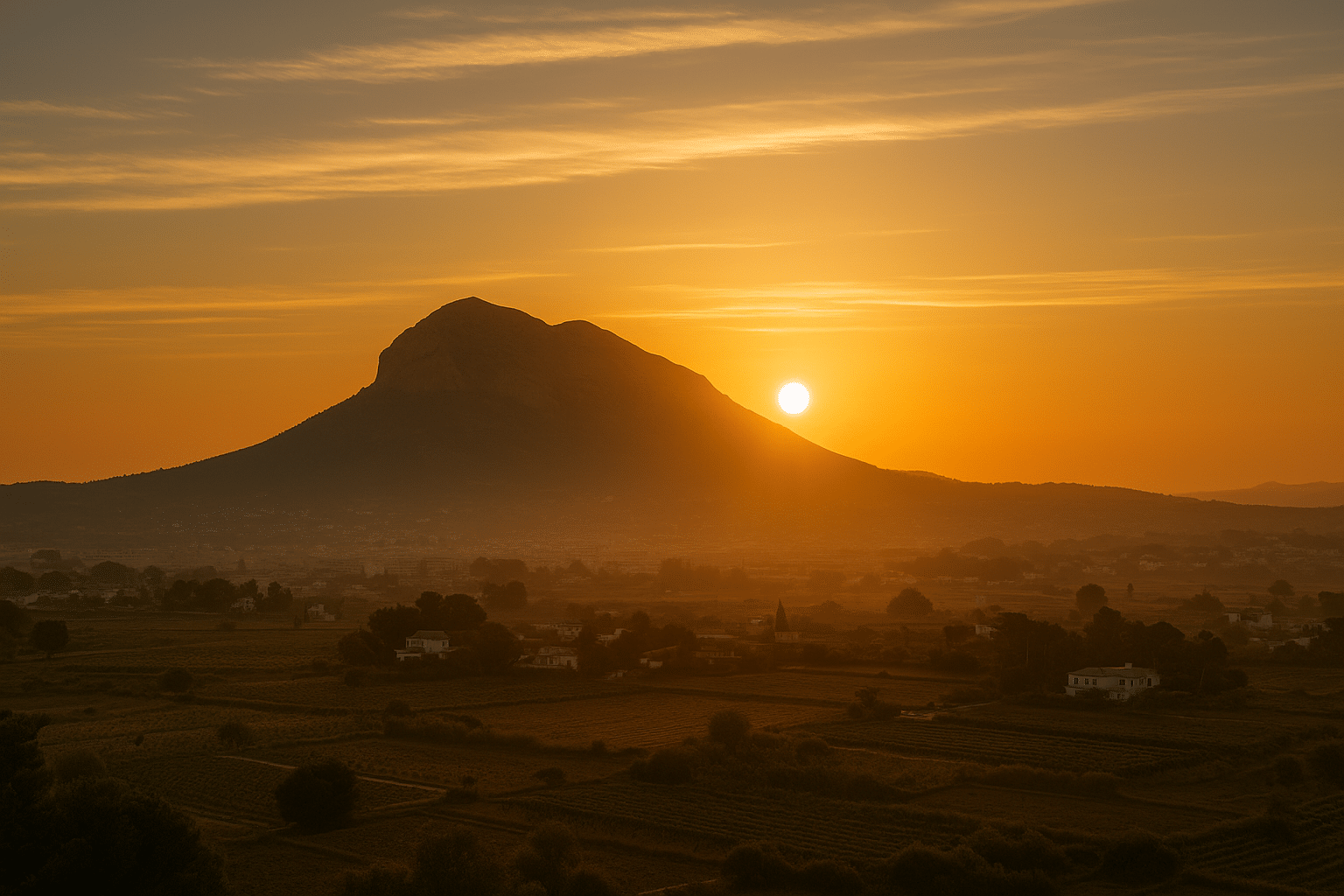
The Montgó Natural Park is the defining feature of the Northern Costa Blanca. The massif rises to 753 meters between Jávea and Dénia and is visible from almost everywhere in the region. What makes it more than just a dramatic backdrop is how much it shapes the environment around it.
The north-facing slopes are noticeably cooler, mistier and more humid than the south-facing side — which in turn is one of the most arid areas in the Valencian territory. That contrast within a single mountain creates a striking range of conditions. Depending on where you live in relation to the Montgó, your experience of the same season can feel meaningfully different from someone just a few kilometers away.
That variety of conditions supports an extraordinary range of plant life. The park is home to more than 650 plant species, including several endemic species that cannot be found anywhere else on the planet. It’s one of the most botanically rich areas in the Western Mediterranean.
That landscape also comes with its own cast of wildlife and insects — most of it harmless, some of it worth knowing about, particularly if you’re buying property here. Our guide to wildlife and pests on the Northern Costa Blanca covers what you’re likely to encounter.
The coastline is more varied than the southern stretch. Sandy beaches at Jávea’s Arenal and Dénia’s Las Marinas give way to rocky coves further south around Moraira and Calpe. The Peñón de Ifach — a dramatic 332-meter limestone outcrop rising from the sea near Calpe — is one of the most recognizable landmarks on the entire Spanish coast.
Inland, the valleys of the Marina Alta are worth exploring. The Jalón Valley is known for its almond blossoms in late January and February and its Moscatel wines. Smaller towns like Pedreguer, Ondara and Parcent give a real sense of what rural Valencia has always looked like.
Climate
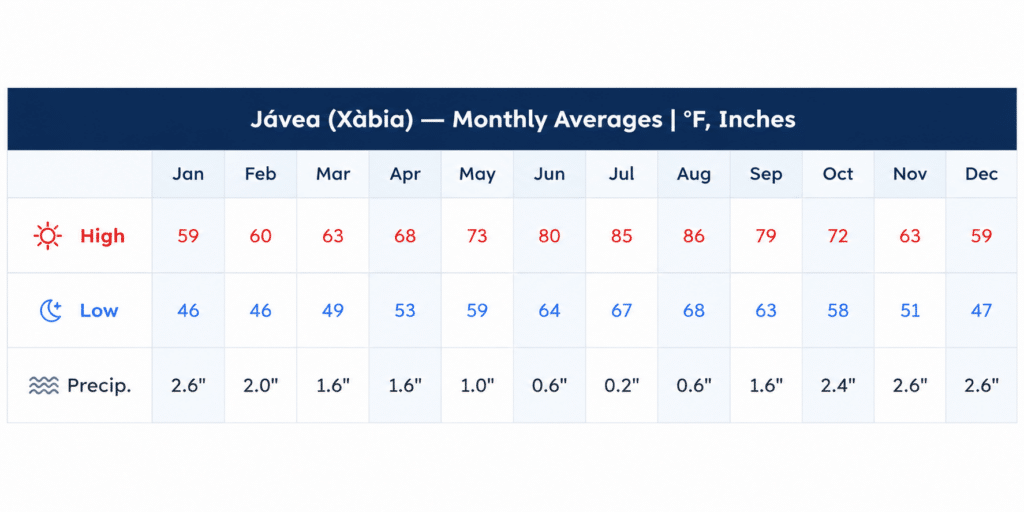
The Costa Blanca has been recognised as one of the healthiest regions to live in by the World Health Organization. The region receives more than 300 days of sunshine per year. The Northern stretch specifically benefits from the mountains acting as a natural buffer — keeping cold interior air out in winter while allowing sea breezes to moderate summer heat.
Summers are hot and dry with almost no rain from June through September. Winters are mild — cool at night, often warm enough for a café terrace by midday. Spring and autumn are genuinely pleasant, warm without the intensity of summer. Jávea in particular has one of the WHO’s healthiest climate classifications — something that surprises people who assume the designation applies only to the region broadly.
The microclimate variation around the Montgó means where you live within the region matters. Coastal properties stay warmer in winter and slightly cooler in summer. Inland valleys can see genuine cold in January. The north slopes of the Montgó get more mist and rain. None of it is dramatic by most standards, but it’s worth knowing before you decide where to buy.
Rain, when it comes, tends to arrive in late September and October and again in spring. Occasionally it comes hard and fast. The rest of the year is mostly clear.
Getting Around
A car is essentially required for day-to-day life in the Northern Costa Blanca, particularly outside a town center. Roads are good and driving is straightforward once you adjust to the scale and the roundabouts. For regional travel, the TRAM coastal rail line connects Dénia through Calpe, Altea and Benidorm to Alicante. It’s a scenic and useful option for day trips and doesn’t require a car. Most people use it occasionally rather than daily, but it’s genuinely handy to have.
Food and Wine
The food here is rooted in what grows and lives nearby — rice, seafood, citrus, almonds, olive oil and Moscatel grapes. The local version of paella bears little resemblance to what gets served in tourist restaurants elsewhere. Fideuà — a noodle-based dish cooked like a paella — is a local staple worth knowing. Arroz a banda, rice cooked in fish stock and served with alioli, is another one.
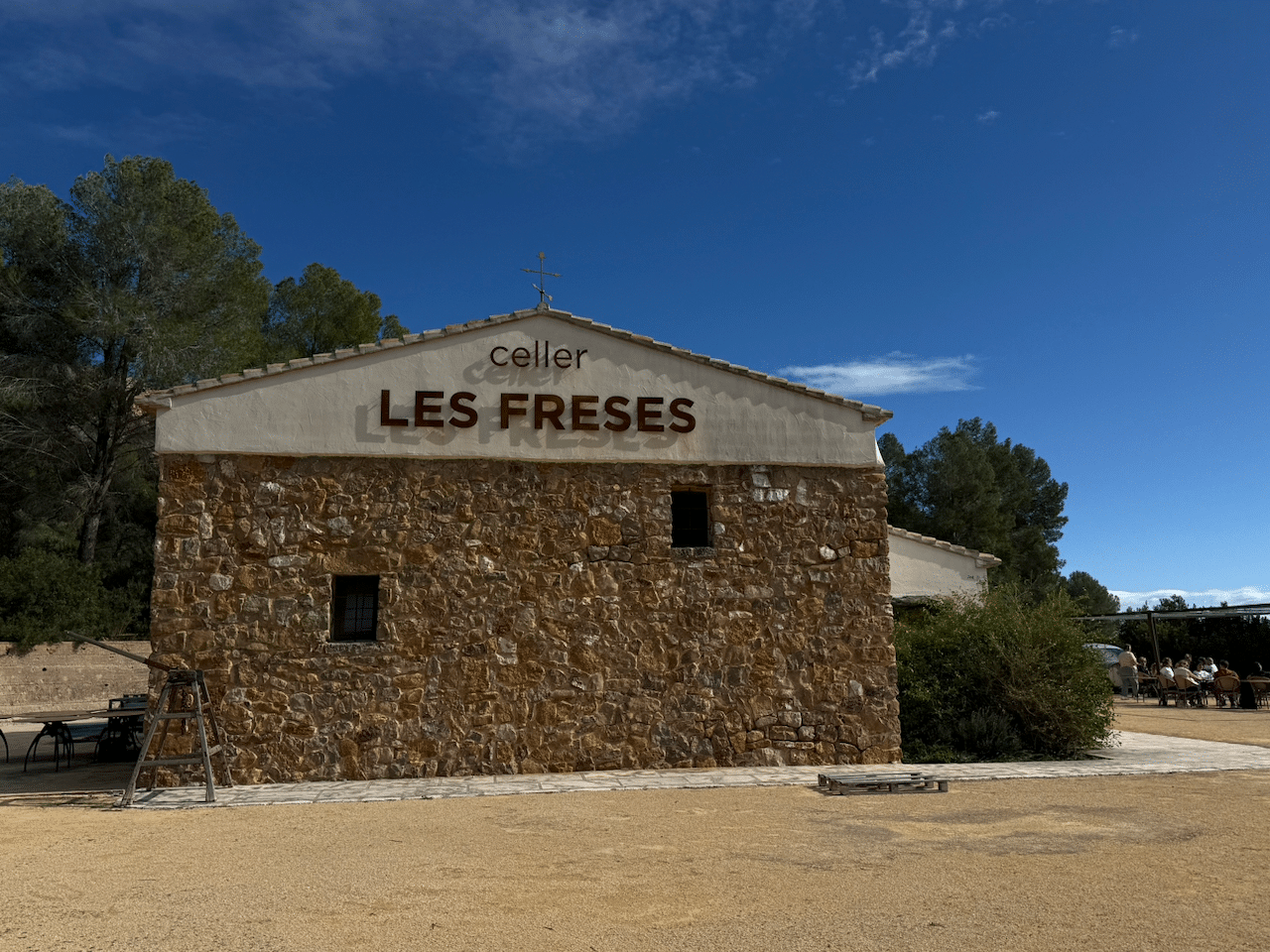
Wine in the Marina Alta has a history that goes back nearly 3,000 years. Just above the Les Freses winery near Jesús Pobre, archaeologists found pressing basins and grape seeds dating to at least the 7th century BC — one of the oldest known winemaking sites in Western Europe.
Today the region produces some excellent Moscatel, both sweet and dry, along with reds from Monastrell. Small producers dot the valleys and are well worth seeking out.
Arts, Music and Culture
Festivals are a constant in the Northern Costa Blanca. Every town has its own calendar and most take them seriously. The Moors and Christians festivals — reenactments of the medieval battles for control of the Iberian Peninsula — are among the most visually impressive events in Spain. Dénia’s version in mid-August is particularly well known. Jávea’s International Cultural Festival in July, representing over 20 countries, reflects just how international the population here has become.
Flamenco, live music, theater and art are all well represented, particularly in Dénia which has a stronger arts scene than you’d expect for a town its size. The TRAM rail line also makes it easy to reach larger cultural venues in Alicante or Benidorm without a car.
Valencia and Alicante
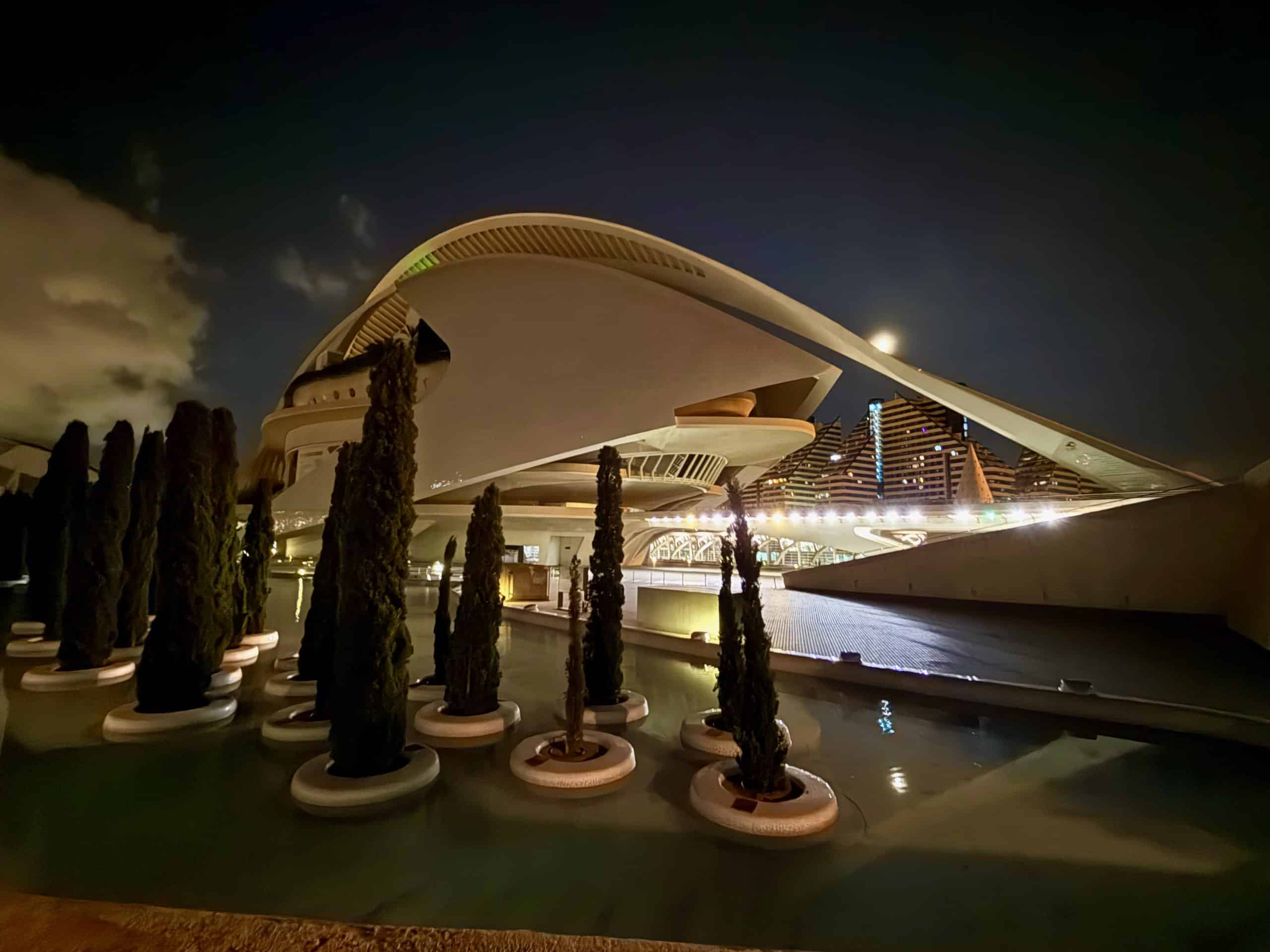
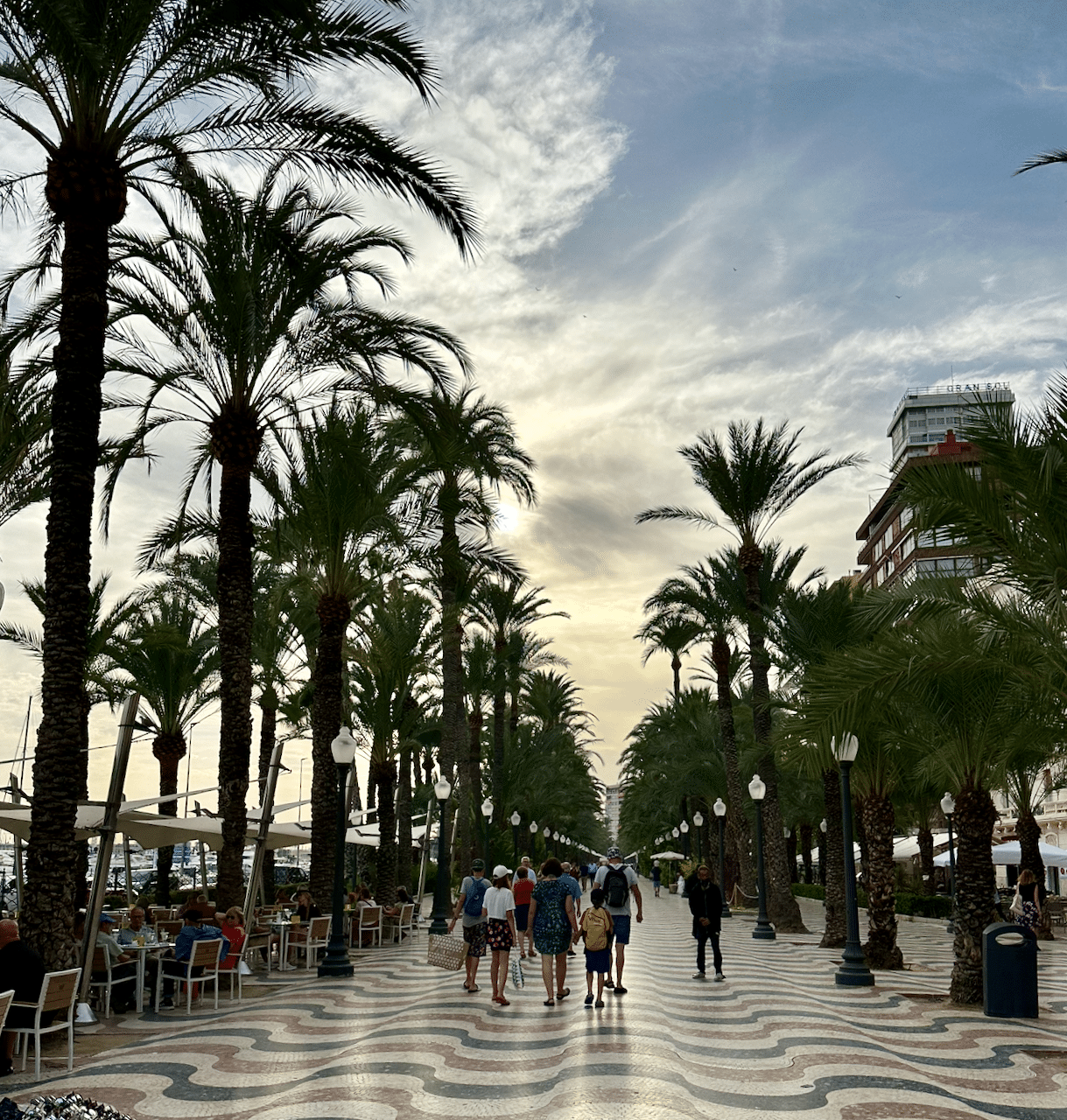
One of the under appreciated advantages of the Northern Costa Blanca is the proximity to two major cities.
Valencia is about an hour and twenty minutes to the north — Spain’s third largest city, with world-class food, the City of Arts and Sciences, a genuine beach culture and excellent transport connections.
Alicante is about an hour to the south, smaller and easier to navigate, with a good old town, the MARQ archaeological museum and a lively waterfront. Both are easy for a day trip or a weekend and make the region feel considerably less isolated than coastal living sometimes can.
For flights, Alicante Airport is the go-to for most of the region — roughly an hour to an hour and fifteen minutes from Jávea and Dénia. Valencia Airport is about twenty minutes further north and worth checking depending on the route.
Jávea and Dénia
If you’re an American seriously considering a move to the Northern Costa Blanca, Jávea and Dénia are the two towns most expats settle in. They sit just 10 kilometers apart, share the same Montgó backdrop and the same stretch of coastline, and yet feel quite different from each other in character, layout and pace. They’re the reason most people end up in this part of Spain rather than somewhere else along the coast — and they deserve more than a paragraph.
This is where we plan to make our new home in Spain. We’ve put together a dedicated page covering both towns in detail, including how they compare and what it’s actually like to live in each one.

Before Moving
Everything you need to sort before you leave — visas, NIEs, finances and the hundred other things on your pre-move list.

After The Move
What you need to get sorted once you arrive — utilities, healthcare, paperwork and all the practicalities of your new life in Spain.

Property Guide
Here’s what to know about buying property in Spain as an American — from your first search to signing at the notary.

Resources
Checklists, glossaries and vetted websites to help you plan, prepare and hit the ground running in Spain.

Our Journey
Follow along as we document our move from Portland, Oregon to Jávea, Spain — the highs, the headaches and everything in between.
This page last updated: