
A Spanish Homes’ Walls Are the Enemy of WiFi
In most US homes interior walls are drywall with wooden studs. WiFi signals pass through these materials fairly easily. Spanish homes are built very differently. Walls are usually concrete block, brick, or reinforced masonry and floors between levels are often solid concrete.
That construction is great for keeping homes cool in summer and warm in winter, but it’s terrible for WiFi signals. A router on the ground floor may barely reach the second floor. Even a single concrete wall can weaken the signal significantly and two or three walls between your router and a device can reduce the signal to almost nothing. Add in thick exterior walls, metal doors, and tiled floors and a single router often struggles to cover even a modest-sized home in Spain
Analyze the Situation
Start by walking through the house with a free WiFi analyzer app like NetSpot or Ultra WiFi. These apps show where the signal is strong and where it drops off. Pay attention to the places where you actually need good coverage — your office, living room, bedrooms, and any outdoor spaces.
Know Your Internet Connection
One thing Spain does very well is fiber internet. High-speed fiber service is widely available, even in many rural areas, through providers such as Movistar, Orange, Vodafone, Digi and Adamo.
The router your provider installs usually works fine for basic use, but it rarely covers an entire Spanish home because of the thick walls. Most people end up building a better network on top of the provider’s router or replacing it entirely if the provider allows it.
A mesh WiFi system is usually the easiest solution. Mesh systems use several small units placed around the house that work together to create one seamless Wi-Fi network. As you move through the home, your devices automatically connect to the strongest signal.
Wired Connections Work Best
The best wifi setup in a Spanish home is to connect each WiFi access point using Ethernet cable. This creates a fast and reliable connection between the units. Many access points can also be powered through the Ethernet cable itself (called Power-over-Ethernet), so they don’t even need to be near a power outlet.
If running Ethernet cables isn’t possible, there are two other options that can use existing wiring in the home.
- MoCA adapters use existing coaxial TV cables to carry internet signals between rooms or floors. They’re very fast and reliable, but many Spanish homes don’t have coax wiring throughout the house.
- Powerline adapters use the home’s electrical wiring to carry the signal. They’re inexpensive and easy to install. Performance can vary depending on the age of the wiring, but they often work well enough to connect a remote access point without drilling through thick walls.
Don’t Forget Outdoor WiFi
Outdoor living is a big part of life in Spain, so you may also want WiFi on a terrace or pool area. Standard indoor equipment usually isn’t designed for that environment. Instead, use an outdoor WiFi access point, ideally one rated IP65 or IP66 for weather protection. These are often mounted under a pergola or roof eave.
Many people think placing a router near a window will allow the signal to reach outside. In practice that rarely works. Spanish exterior walls can be 30–40 cm (12-16″) thick, which blocks most of the signal before it ever reaches the terrace.
A Practical Wi-Fi Setup for a Spanish Home
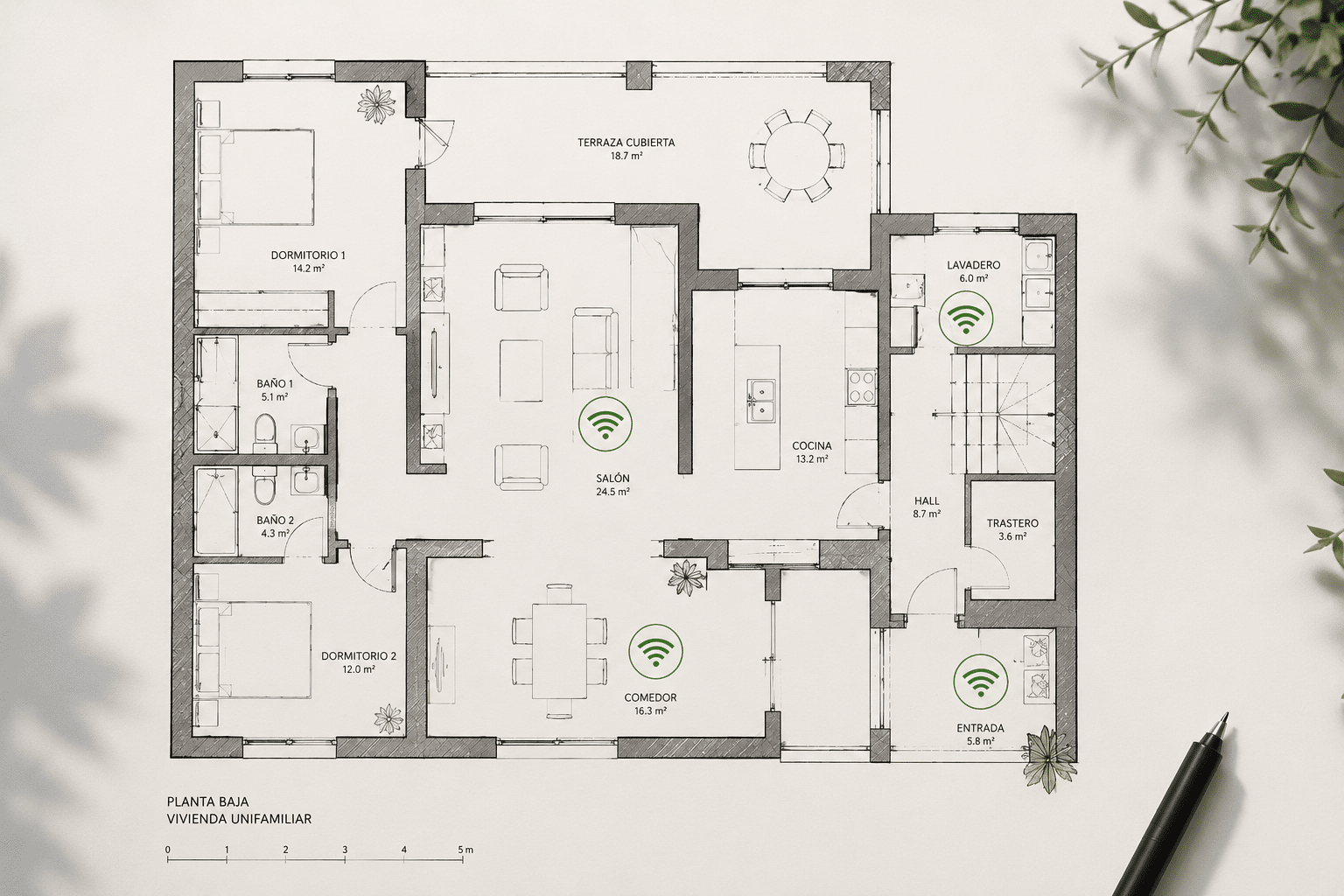
In many Spanish homes the internet provider installs the fiber router wherever the line enters the house. It’s often in a corner room or near the front door. Because of the thick walls, that single router usually won’t provide reliable coverage throughout the home.
A common solution is to add two or three additional WiFi access points placed in key areas such as the main living space, an upstairs hallway, and sometimes near outdoor areas. If possible, these access points are connected with Ethernet cable, which provides the best speed and reliability. When running cable isn’t practical, mesh systems or powerline adapters can still improve coverage significantly.
Many homeowners also install a small outdoor access point to provide strong Wi-Fi on the terrace or around the pool. With just a few well-placed access points, even a large Spanish villa can have consistent coverage throughout the house and outdoor living areas.
Finding Help Installing WiFi
Some internet providers — especially Movistar — offer installation services that go beyond simply setting up the router. It’s worth asking about when you sign up.
You can also usually find a local informático (IT technician) who can help design and install a better WiFi setup. In many areas with expat communities, you’ll find technicians who speak English as well.
For more things you’ll need to consider once you move to Spain, check out this section of our site.