Privacy doesn’t mean the same thing in every country. Some things that feel normal in the US may surprise you in Spain. Some things that feel invasive back home are just routine in Spanish daily life. Knowing more about personal privacy in Spain can save you an awkward moment or worse an accidental legal problem.
Article 18 Of The Spanish Constitution
Most of what follows about personal privacy in Spain traces back to Article 18 of the Spanish Constitution. These are basic, fundamental rights. They apply to anyone in Spain, resident or not, citizen or not.
Article 18 covers four related protections in one place:
The first and the last show up constantly in daily life, so they get their own sections below. The middle two matter more as background reassurance.
If you’re used to thinking about the Fourth Amendment in the US, Spain’s version is different in the details, but the core idea is the same. Your home and your communications are protected from unreasonable government intrusion.
Showing Your ID Is Normal Here
Americans are trained to guard their Social Security number like it’s radioactive. In Spain, showing ID for everyday transactions is just how things work and it would look strange to refuse.
Hotels are legally required to register your ID at check-in. Picking up a package at the post office usually means showing ID that matches the name on the parcel. Banks, gyms and plenty of retail loyalty programs will ask for your NIE as a matter of course, not because something’s wrong.
Your NIE works here the way no single number does in the US. It’s the everyday identifier for nearly everything: banking, phone contracts, deliveries, rentals, government paperwork. That doesn’t mean you should hand it out to anyone who asks online or over the phone. The usual scam-avoidance rules still apply. But showing it in person to a legitimate business, a hotel desk, a post office window or a bank is completely normal here.
GDPR Gives You More Control In Spain
There’s no single US federal law that works like this, so it’s worth understanding even if you never read a word of the actual regulation.
GDPR is the EU’s General Data Protection Regulation. Spain layers its own version on top called the LOPDGDD. Together they give you real, enforceable rights over your personal data that most Americans don’t have.
These regulars are the reason why every website in Spain hits you with a cookie consent banner and why marketing emails require you to opt in rather than opt out. You also have the right to ask any company that holds your data, a gym, a bank, an old employer, exactly what they have on you and to have it corrected or deleted. If a company ignores that request, you can file a complaint with Spain’s data protection agency, the AEPD. It’s a real process with real consequences.
One practical tool worth knowing: Spain has an official opt-out registry called the Lista Robinson, where you can register to stop most marketing calls, texts and mail in one shot instead of opting out company by company. It’s free and legitimate, and it’s one of those small quality-of-life differences that makes daily life here a bit quieter than back home.
Neighbors In Spain Know More About You
Spanish neighborhoods, especially smaller towns like Jávea and Dénia, run on a level of everyday familiarity that can catch new expats off guard. Greetings are more physical than in the US. Two cheek kisses (dos besos) is standard once you’ve been introduced, even briefly. Conversations tend to start more formal, using usted instead of tú, until the relationship warms up enough that switching feels natural.
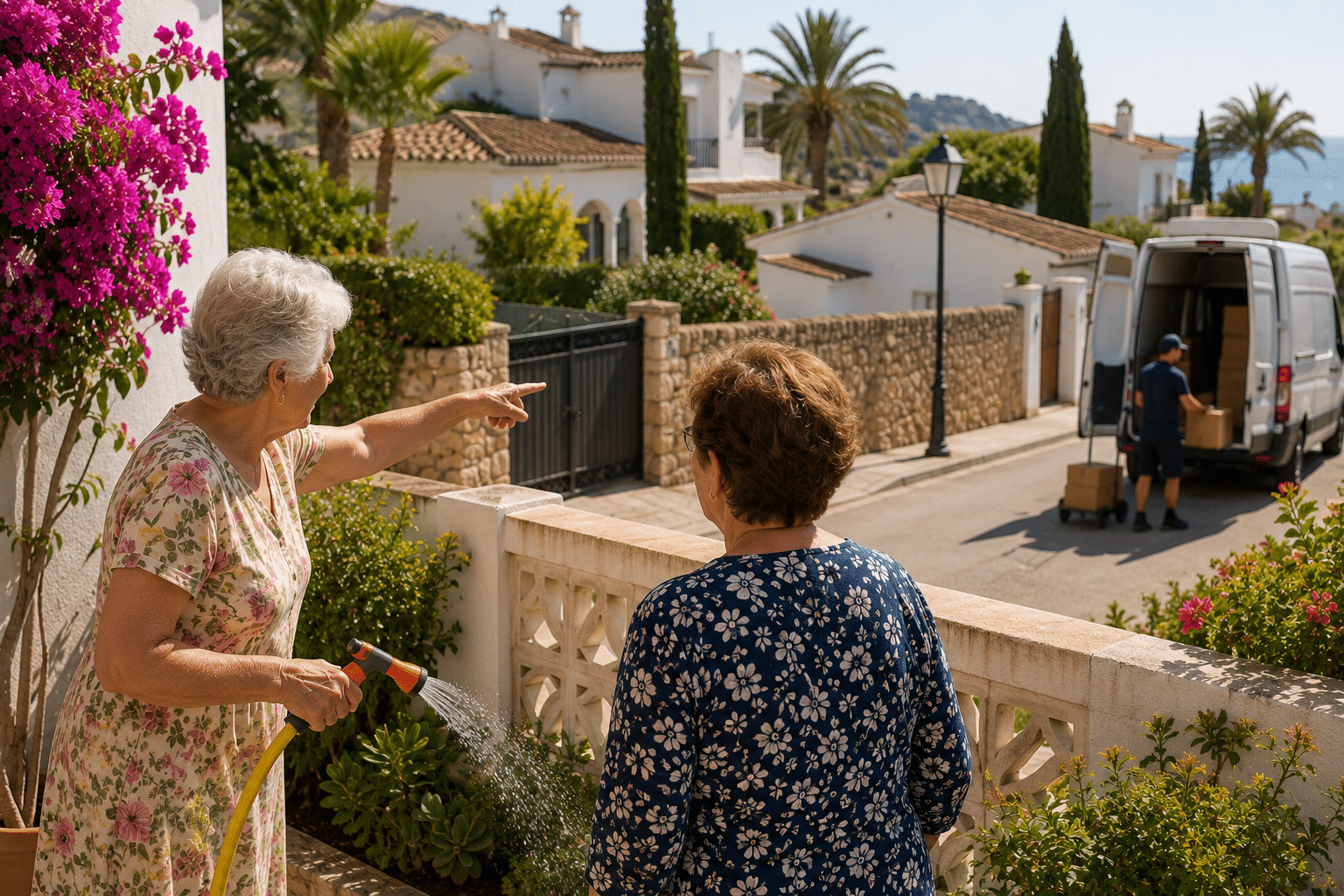
Many urbanizaciones (neighborhoods) and developments common around Jávea and Dénia usually have their own WhatsApp group run by neighbors or the community association. It covers everything from a barking dog to a suspicious car parked on the street.
People notice who’s coming and going, who has visitors, whose gate was left open. The local bar, bakery or corner shop often functions as an informal information hub. Tradespeople and delivery drivers talk and word travels fast in a smaller community even without anyone meaning any harm by it. It can feel like a lot at first if you’re used to a place where neighbors barely know each other’s names, but it usually comes from genuine watchfulness rather than gossip. It tends to work in your favor once people know you.
Taking Photos Is More Restricted
In the US, if you’re standing on a public sidewalk you can generally photograph whatever and whoever is in front of you. Spain works differently. The Spanish Constitution gives people something called derecho a la propia imagen, the right to their own image. It’s a real, protected right, not just a courtesy. Here’s what that means in practice.
Snapping a street scene, a plaza or a landmark where strangers happen to appear in the background is fine. That’s incidental, everyday photography. What crosses the line is deliberately photographing one identifiable stranger as your main subject, especially if you plan to publish or share it without asking. A candid street photo of a crowd is fine. A close-up portrait of one stranger at a café table, posted online without asking is a different story. It can get you a takedown request or a filed complaint with the authorities.
Restaurants, terraces and beaches sit in a gray area sometimes called semi-public space. People there still have some expectation of privacy, even out in public. If you like documenting your travels the safe habit is simple: wide shots of scenery and crowds are fine. Close-ups of identifiable strangers need something like “¿Puedo tomarte una foto?” (“May I take your photo?”). It can be shortened down to just “¿puedo?” the way you’d casually ask “mind if I…?” in English. It works as a quick, low-effort gesture: hold up your camera, make eye contact, say “¿puedo?”, and a nod or smile is your answer either way.
Other Things Worth Knowing
Home Security Systems
If you’re installing security cameras, doorbell cameras or any home monitoring system, Spain has specific rules about where a camera can point, what needs a warning sign, and what counts as recording a neighbor’s property without consent. We cover the privacy rules about this in detail in our home security systems post so we won’t repeat it here, but read it before you think about installing a security system.
WhatsApp is the default communication channel for nearly everything in Spain from plumbers and gestores to real estate agents and even some doctors’ offices. Sharing your phone number here more freely than you might in the US is just part of doing business.
Spain’s Digital ID
Spain’s digital ID system is still catching up with itself. A new digital DNI app called MiDNI is technically valid everywhere now, but most hotels and shops still can’t read it yet. Carrying the physical NIE card or your passport alongside it is still the reliable move.
None of this is about Spain being more or less private than the US. It’s organized differently. Once you know where the lines actually sit, it stops feeling unfamiliar and starts feeling like just another part of how things work in Spain.