ETIAS: What US Travelers and Expats in Spain Need to Know
If you’re planning a trip of an type to the EU and Schengen Area, ETIAS — the European Travel Information and Authorization System is coming this year and you need to be ready.
What Is ETIAS?
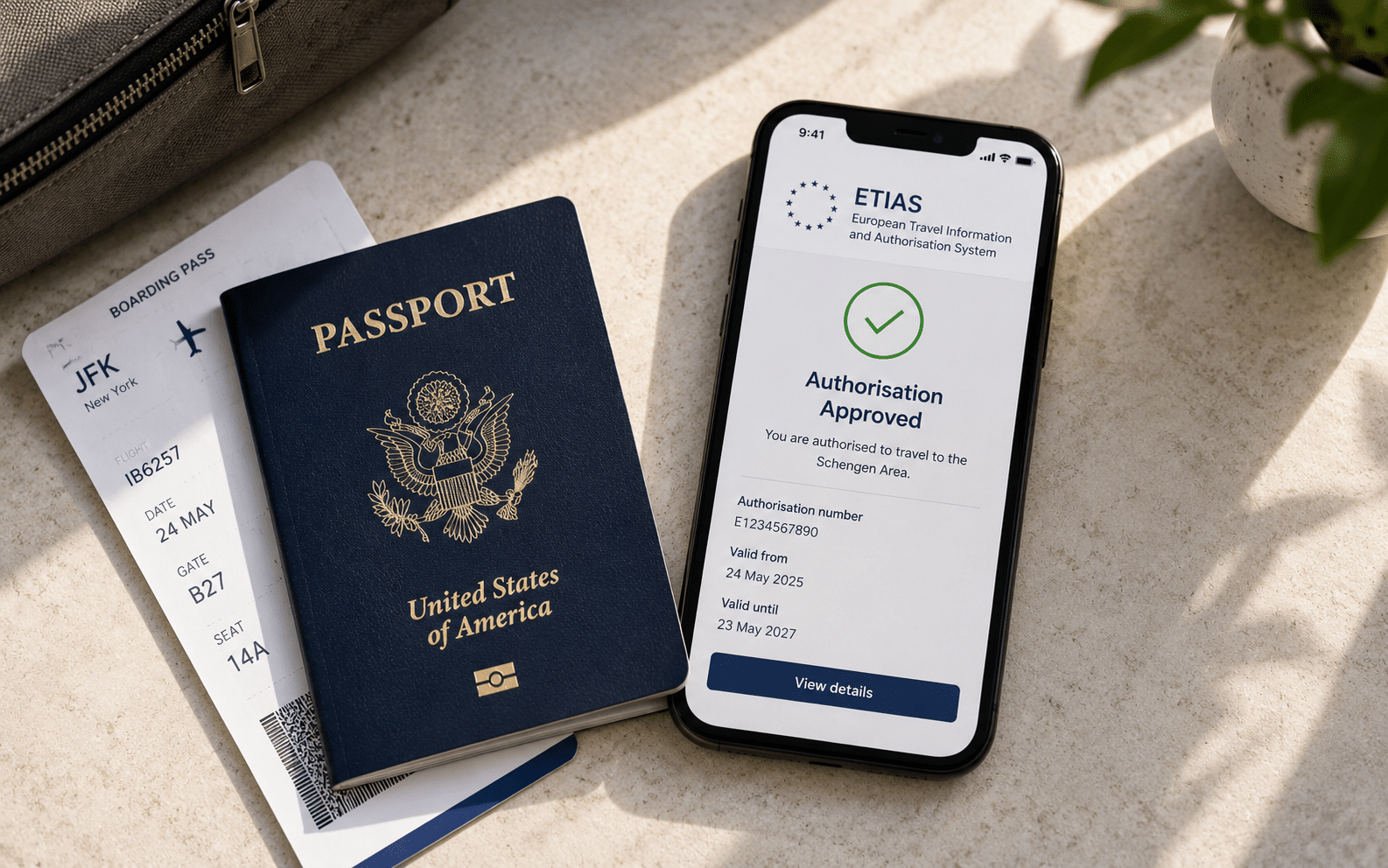
ETIAS is the new pre-travel authorization required for visitors entering the EU/Schengen Area for short stays from visa-free countries (including the US). It works similarly to the US ESTA system.
US tourists visiting any country in the EU/Schengen area for up to 90 days within any 180-day period will need ETIAS approval before boarding their flight. ETIAS is expected to launch in the last quarter of 2026 (probably October), following the rollout of the EU’s new Entry/Exit System (EES).
Once in effect, you’ll need to register for ETIAS before your trip. Ideally approval is instant upon application, however if your application is flagged, it could take anywhere from 96 hours to 14 days before approval.
The cost is estimated to be around €20 and your ETIAS approval is good for up to 3 years or until your passport expires.
How and Where You Apply for ETIAS
When the system goes live, applications will only be submitted through the official European Union ETIAS portal or official mobile app.
The process will be fully online. You’ll enter your personal details including passport number. Answer a few basic background questions, pay the fee and get your approval digitally, usually within minutes or a few days.
The authorization is electronically linked to your passport, so there’s nothing extra to print or carry.
Where to Sign Up for ETIAS Updates
Because rollout timing may shift, the best place to monitor and sign up for announcements is the official EU travel portal.
Be Aware Of Automatic Time Tracking in Europe
Alongside ETIAS, Europe is introducing the Entry/Exit System (EES) — arguably the more significant change. EES digitally records when non-EU travelers enter and leave the Schengen Area using passport scans and biometrics.
EES digitally records when non-EU travelers enter and leave the Schengen Area using passport scans and biometrics. The 90 day rule for staying will now be tracked automatically and overstays will become much easier to detect and be enforced.
Passport stamps will be replaced by digital records removing the guesswork many travelers relied on in the past.
What This Means for Spain NLV Holders & New NLV Applicants
For Americans spending extended time in Spain EES/ETIAS creates a clearer record of your physical presence in the EU/Schengen Area.
Spain generally considers you a tax resident if you spend 183 days or more in the country during a calendar year. While ETIAS itself is not a tax tool, digital entry and exit records make travel history easier for authorities to verify if residency timing is ever questioned.
If you’re already permanently living in Spain under a Non-Lucrative Visa (NLV) or hold Spanish residency, ETIAS does not apply to you. It’s only for short term visitors.
Once you enter Spain on an NLV visa and receive your residency card (TIE), you’ll show your passport and TIE when you enter the EU/Schengen. You’ll be recorded as a resident rather than a tourist, but be aware your entry and exit movements may still be digitally recorded under EES.