
After The Move
Padrón And
Empadronamiento

If you’ve started researching what to do after moving to Spain, empadronamiento shows up on almost every checklist. It’s one of the first things to take care of and it unlocks a surprising number of other processes. Here’s what it is, why it matters and how to get it done.
Empadronamiento Vs Padrón
You will often hear the terms padrón and empadronamiento used interchangeably which can be confusing at first.
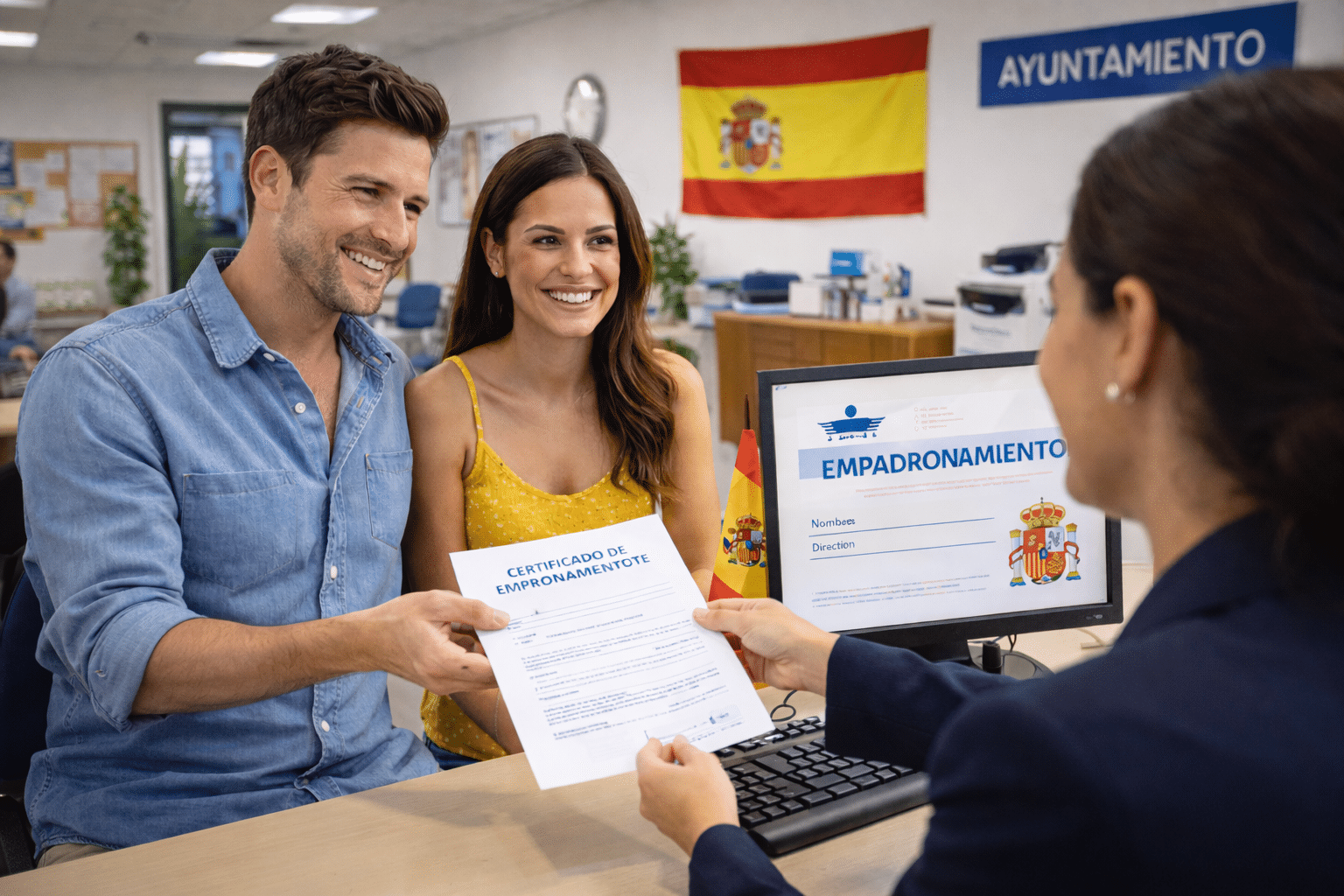
Empadronamiento is your registration with the local town hall, confirming where you live. It’s something both Spanish citizens and foreign residents are expected to do. While it may feel like just another piece of paperwork, it ends up being one of the foundational steps that a lot of other processes depend on.
The padrón is the municipal population register maintained by the town hall. In everyday conversation, most people simply say “padrón” to refer to both the registration and the certificate that proves you are registered.
Why The Empadronamiento Matters
Empadronamiento is more important than many people initially realize. It is used as proof that you live in a specific municipality in Spain and is required for many administrative tasks. It’s how the municipality tracks its population and plans local services. You often need a padrón certificate for residency paperwork, public healthcare, school enrollment, registering a car, paying local taxes and accessing local services. You’ll also need this to actually get your residence card (TIE). Failing to register can block you from accessing healthcare, completing residency paperwork and other essential services, so it’s worth taking care of early.
If you’re on a Non-Lucrative Visa and plan to apply for the Convenio Especial to access public healthcare, you’ll also need to show at least one year of continuous padrón registration — see our healthcare guide for full details.
When And What You Need To Register
You can complete empadronamiento registration as soon as you have a place to live, whether that’s a rental or a home you’ve purchased. Most people take care of it within their first couple of weeks in Spain.
The requirements are generally straightforward. You’ll go to your local town hall known as the ayuntamiento with your passport and proof of address. For most, that proof is a rental contract or property deed. If you’re staying with someone else, they may need to provide a letter or sign a form confirming that you live there. Some town halls require you to book an appointment in advance, while others still accept walk-ins. It just depends on the area.
If your Spanish is limited, it’s worth bringing a Spanish-speaking friend or a simple written summary of why you’re there, as staff at smaller town halls may have limited English. A few small steps can make the process easier. It helps to bring copies of your documents to your appointment and to make sure your name is consistent across everything you provide.
How Long Empadronamiento Takes
Once you arrive at the town hall the process itself is usually quick and straightforward. The appointment often takes 10–20 minutes. Many town halls issue the padrón certificate immediately or within a few days. In some areas, you may need to request the certificate separately after registration.
What To Do After You Get Your Padrón Certificate
Once you receive your padrón certificate, it’s a good idea to make several copies and keep both digital and printed versions. One important thing to know is that many offices want a recent padrón certificate, often issued within the last three months. You may need to request a new copy periodically. The certificate is easy to reprint or request again from your town hall.
Many municipalities now allow you to request and download your padrón certificate online through your town hall’s website or the Sede Electrónica portal. It’s worth checking whether your local ayuntamiento offers this — it saves a trip in person when you need a fresh copy for an upcoming appointment or application.
Renewing Your Empadronamiento
As a foreign non-EU resident you need to renew or confirm your registration every two years. This is typically a simple process but it’s worth being aware of so you don’t accidentally fall off the register.
Empadronamiento: Do It Early
Empadronamiento is straightforward and the sooner you do it the better, since so many other steps depend on it. If you’re working through your first weeks in Spain, the After Your Move section covers the other key steps in order.
FAQs
Is Empadronamiento required to get an initial visa?
Empadronamiento is usually not required for initial visa applications done through a Spanish consulate abroad.
Can I register for empadronamiento if I don’t have a long-term lease?
Yes, in many towns you can still register on the padrón without a long-term lease. Some town halls allow registration with a temporary rental, a letter from the property owner, or a signed authorization form if you are staying with someone. Requirements vary by municipality, so it’s best to check with your local town hall.
What happens if I move to a different address when I’m in Spain?
If you move, you should update your empadronamiento at the new town hall or municipality. You are supposed to be registered at the address where you actually live. The process is similar to the first registration and usually just requires your new address documentation and identification.
Is empadronamiento proof of legal residency in Spain?
No. Empadronamiento is not proof of legal residency or immigration status. It only proves that you live at a specific address in a specific municipality. However, it is often used as supporting documentation for residency applications and many administrative processes.
Is there a charge for empadronamiento?
No, empadronamiento is free in almost all municipalities in Spain. You should not have to pay to register on the padrón or to obtain a basic padrón certificate. Some town halls may charge a small fee for official certified copies.

Before Moving
Everything you need to sort before you leave — visas, NIEs, finances and the hundred other things on your pre-move list.

After The Move
What you need to get sorted once you arrive — utilities, healthcare, paperwork and all the practicalities of your new life in Spain.

Property Guide
Here’s what to know about buying property in Spain as an American — from your first search to signing at the notary.

Resources
Checklists, glossaries and vetted websites to help you plan, prepare and hit the ground running in Spain.

Our Journey
Follow along as we document our move from Portland, Oregon to Jávea, Spain — the highs, the headaches and everything in between.
This page last updated: