
After The Move
Food
And Shopping

Food and shopping in Spain feels different from day one. You’ll shop more often, buy smaller amounts and rely on a mix of supermarkets, local markets and neighborhood shops instead of one weekly run to a big-box store. Prices are generally lower than in the US, especially for fresh food, and the shelf price already includes VAT, so there are no surprises at checkout.
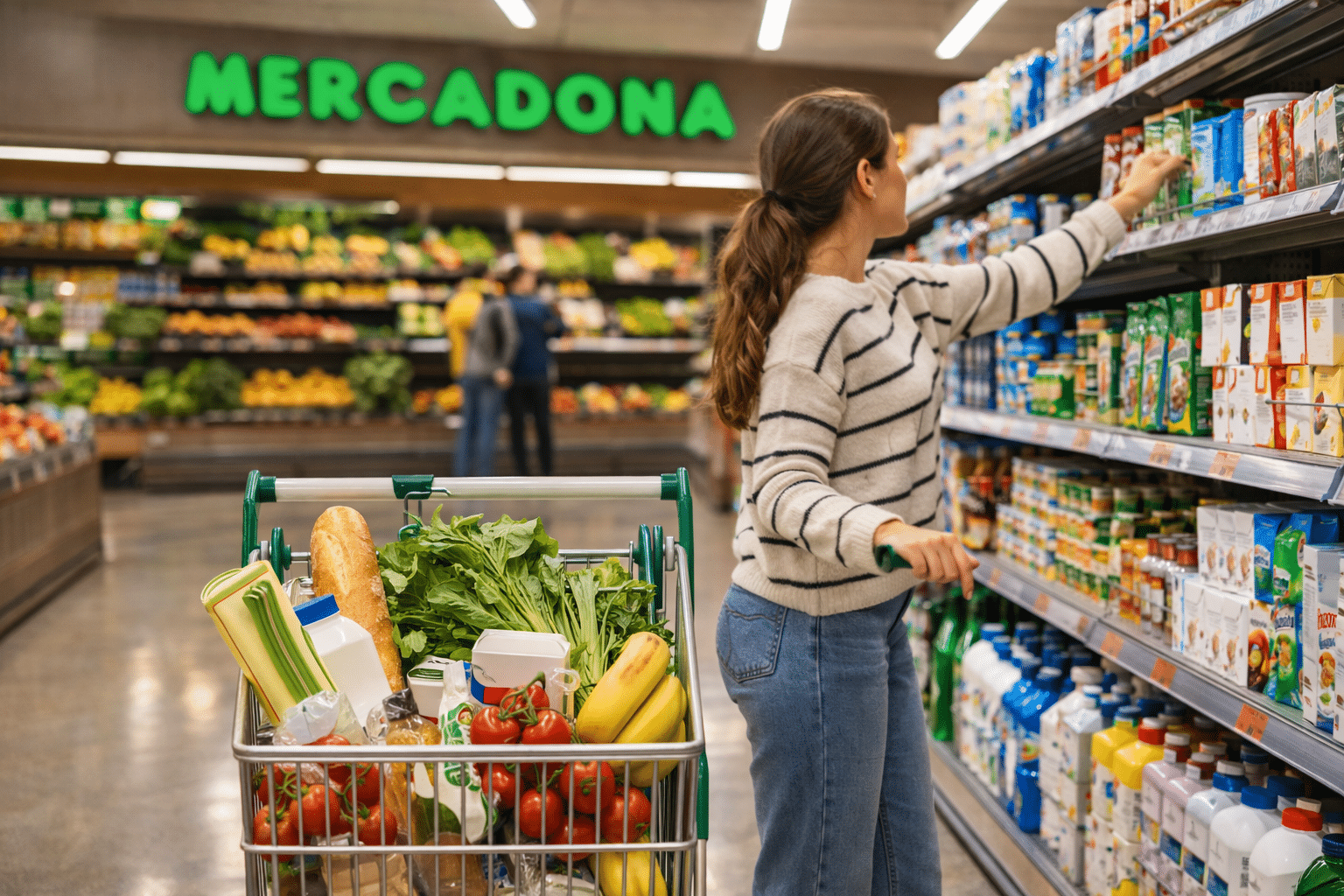
Grocery Shopping In Spain
Grocery shopping in Spain is focused on fresh ingredients and smaller quantities. Instead of one large weekly trip, it’s more common to shop a few times a week and pick up what you need as you go.
The most common supermarket chains are Mercadona, Lidl, Aldi, Carrefour and Consum. These carry everything from fresh produce and meat to household items and are broadly comparable to US grocery stores, just with a different product mix. You’ll notice a stronger emphasis on seasonal foods, local products and store-brand items. Prepared and pre-packaged foods exist, but with less variety than in the US — the focus is on cooking with fresh ingredients.
Groceries in Spain are generally less expensive than in the US, especially for fresh produce, bread, wine and locally sourced foods. Imported or specialty items can run higher, but most people find their overall grocery bill noticeably lower.
Local Markets And Specialty Shops
Many towns have local markets and specialty shops that are part of everyday life. Weekly outdoor markets (mercadillos) are very common and are great places to buy fresh fruits, vegetables, clothing and household goods. You’ll also find smaller neighborhood shops like bakeries (panaderías), butcher shops (carnicerías), fish markets (pescaderías) and produce stores (fruterías). These shops often offer higher-quality or more specialized products and are used regularly by locals.
Organic and specialty foods are available, but spread across smaller local shops, markets and dedicated “bio” stores rather than one large retailer — there’s no direct Whole Foods equivalent, though Veritas and the grocery section at El Corte Inglés come closest.
US Brands And Finding Local Alternatives
You’ll also find some familiar US brands are available in Spain. They tend to be less common and often more expensive than local alternatives. US products like certain cereals, sauces or specialty items are usually priced higher due to shipping costs, import duties and taxes. Carrefour and El Corte Inglés often carry a wide selection of international products. There are even specialty stores that focus on American foods, but prices can be noticeably higher than what you’re used to in the US.
Many expats gradually shift toward local Spanish or European brands. Local brands are typically less expensive and often higher quality. While some specific American products can be hard to find or limited to specialty shops, most people end up finding alternatives that fit their preferences just as well.
Shopping Hours And Seasonal Differences
Shopping hours in Spain are different from the US and can take some getting used to. Many smaller shops close for a few hours in the afternoon, especially in smaller towns. Larger supermarkets tend to stay open throughout the day. Sundays are another adjustment. In many areas, smaller shops are closed. Only certain supermarkets or shopping centers are open. This can vary depending on where you live.
In more tourist-heavy areas like coastal towns, store hours often change during high season. It’s common to see shops open on Sundays, staying open later into the evening and operating on a more extended schedule to accommodate visitors. Outside of peak season, those same stores return to more limited hours and Sunday closures. You get used to these seasonal shifts, but it can feel inconsistent at first.
Everyday Shopping Beyond Food
Daily shopping in Spain goes beyond groceries and you’ll quickly get familiar with where to find everyday household items. Basic household items, cleaning supplies and paper goods are typically available at supermarkets. These are often more reasonably priced than in the US. For more specialized items, you’ll often visit smaller stores rather than large all-in-one retailers.
Hardware stores (ferreterías) are common. They carry tools, home repair items and practical supplies. Prices can vary depending on the item, but for basic household needs they are often comparable or slightly lower than the US.
For gardening and outdoor needs, plant nurseries (viveros) are widely available and often offer plants suited to the local climate at reasonable prices, especially compared to similar items in the US.
Pharmacies (farmacias) play a much bigger role in Spain than in the US. Many basic health-related items are purchased there. Pricing for over-the-counter medications is often similar or slightly lower than in the US, depending on the product.
Larger Stores, Shopping Centers And Regional Differences
Spain has shopping centers and department stores, but the layout of retail is different from the US. El Corte Inglés is the closest thing to a one-stop shop, covering groceries, clothing, electronics and home goods under one roof. Beyond that, shopping is more distributed — there’s no real equivalent to Best Buy, Home Depot or HomeGoods. You’ll visit different specialized stores depending on what you need.
Some familiar international retailers are present, particularly in larger cities. IKEA locations are fairly common. Costco has locations in Spain as well, and a US membership works there, which many expats find useful for stocking up on bulk items.
FAQs
How do I find a local market near me in Spain?
Most towns have at least one weekly outdoor market (mercadillo). Dates and locations are usually listed on the local town hall (ayuntamiento) website or easy to find by asking neighbors or searching online. In larger towns markets may run several days a week or have a permanent covered market hall.
Do Spanish supermarkets accept credit cards?
Yes, credit and debit cards are widely accepted at supermarkets and most larger stores. Smaller neighborhood shops and market stalls sometimes prefer cash, so it’s worth having some on hand for those situations.
Are there English-language labels on food products in Spain?
Most products are labeled in Spanish, though some imported items include English. Reading basic Spanish food labels becomes second nature quickly. Translation apps can help in the early weeks if you’re unsure about ingredients or instructions.
Can I order groceries online in Spain?
Yes. Mercadona, Carrefour and El Corte Inglés all offer online ordering with home delivery. Coverage and delivery windows vary by area — urban and coastal areas are generally well served, while more rural locations may have limited options or longer delivery windows.
What is the best supermarket in Spain for expats?

Before Moving
Everything you need to sort before you leave — visas, NIEs, finances and the hundred other things on your pre-move list.

After The Move
What you need to get sorted once you arrive — utilities, healthcare, paperwork and all the practicalities of your new life in Spain.

Property Guide
Here’s what to know about buying property in Spain as an American — from your first search to signing at the notary.

Resources
Checklists, glossaries and vetted websites to help you plan, prepare and hit the ground running in Spain.

Our Journey
Follow along as we document our move from Portland, Oregon to Jávea, Spain — the highs, the headaches and everything in between.
This page last updated: