
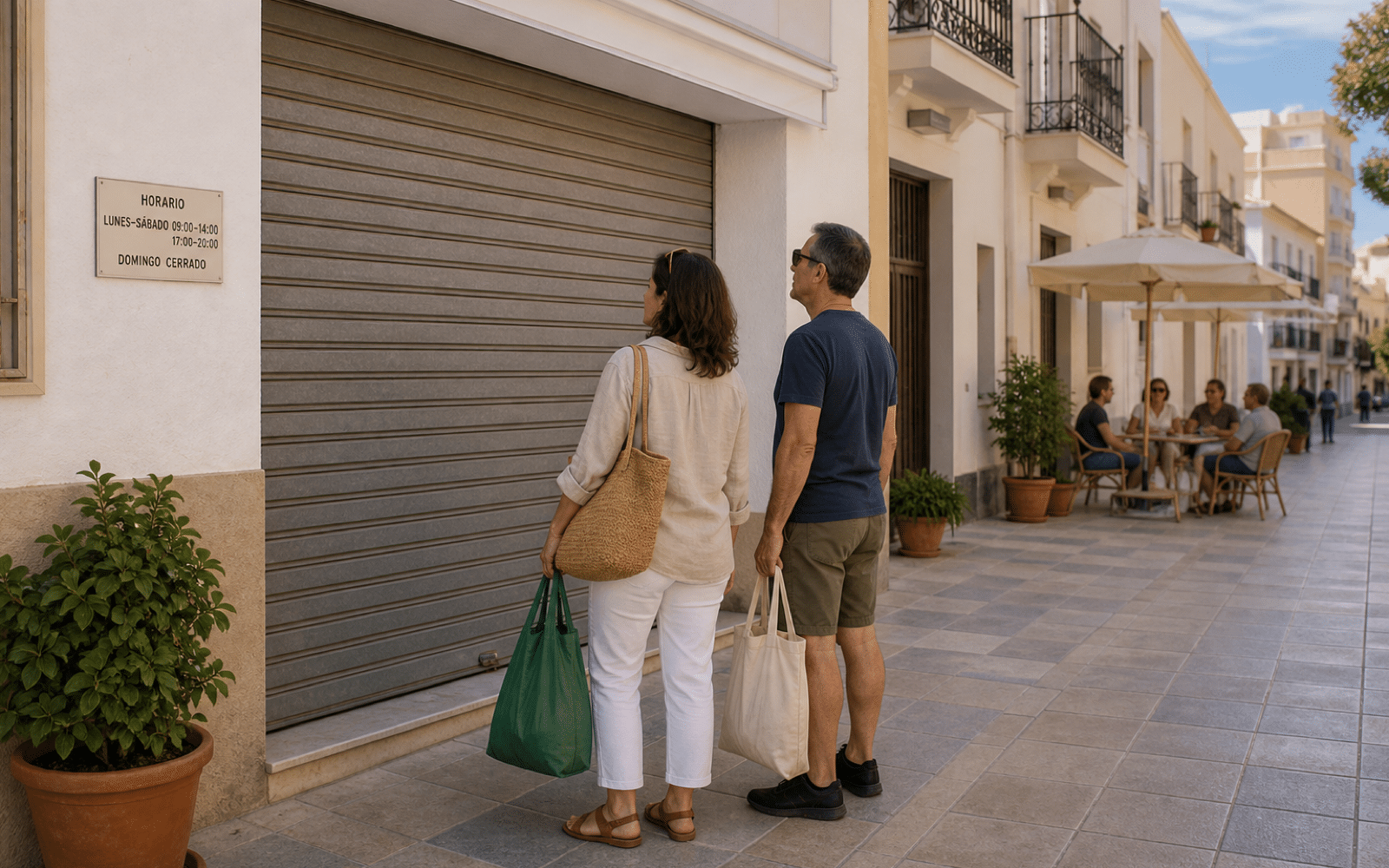
In the US, Sunday is just another shopping day. In Spain, it isn’t. Most stores close. If you don’t plan around it, you’ll find that out the hard way the first time you run out of something on a Sunday afternoon.
Sundays In Spain Are Different
Spanish law protects a weekly day of rest for retail workers, known as descanso dominical. In practice, most shops default to closed on Sundays especially small and mid-sized ones. It’s not just a common custom. It’s regulated at the regional level and each autonomous community sets its own rules for which days shops can open.
This takes real adjustment when you’re used to 24/7 retail. In the US, Sunday is often the day you catch up on errands. In Spain, Sunday is the day nearly everything closes, so you’ll need to plan your week so you have what you need.
What’s Typically Closed On Sundays In Spain
Most general retail including clothing stores, hardware stores, home goods, electronics and independent shops default to closed on Sundays. This holds true in small towns and in most residential neighborhoods of larger cities.
As to supermarkets, Mercadona, one of the largest chains in Spain closes on Sundays and public holidays as a fixed year-round policy. There are limited exceptions in designated tourist zones (more on that below).
Dedicated liquor and wine shops follow the same Sunday rules as other retail, so they’re typically closed too unless they qualify for an exception. Spain doesn’t have a separate “no alcohol on Sunday” law like some US states do. If a supermarket or convenience store is open on a Sunday, it sells alcohol just like any other day. The closure is about whether the store is open at all, not a special restriction on what it can sell if it is.
What Stays Open On Sundays In Spain
Some supermarkets stay open on a rotating or limited basis. Not every chain follows Mercadona’s approach. Some stay open with reduced Sunday hours. It varies by region and by chain. Check locally rather than assuming.
Many neighborhoods have a small independently run shop, sometimes called an alimentación, that stays open later and on Sundays specifically to fill this gap. These usually cost more than a supermarket but they’re useful for basics in a pinch.
Bars and restaurants generally aren’t covered by the same Sunday rules as retail. Cafes, bars and restaurants are commonly open on Sundays. Sunday lunch out is a normal, even popular, tradition in Spain. A closed shop sign doesn’t mean the whole town has shut down. Just expect stores to be the exception rather than places to eat or drink.
Every area has at least one pharmacy open on Sundays through a rotating on-call system (farmacia de guardia). The open pharmacy changes day to day and is usually posted on the door of every pharmacy in the area or searchable online.
The Tourist Zone Exception
Spanish regions can designate certain towns, or parts of towns, as Zonas de Gran Afluencia Turística. These are areas of high tourist traffic that get expanded permission to open on Sundays and holidays.
Where we’ll be living in Both Xàbia (Jávea) and Dénia (part of the Valencian Community) are in one of these zones. So are other cities such as Alicante and Valencia city. Barcelona also has designated tourist zones, though Barcelona’s applies only to specific central neighborhoods. They run on a defined summer season rather than year-round. Madrid is different. Madrid gives shops full freedom to choose their own days and hours all year with no Sunday restriction. It’s the most retail-open region in Spain.
The exception is typically strongest from roughly June through September, tied to the tourist season. It applies more consistently to shopping centers and larger stores than to small independent shops. Many choose to stay closed regardless of what the law allows. Don’t assume every store in a tourist zone is open just because the zone permits it. Store owners still choose their own hours within what’s legally allowed.
Holiday Periods In Spain
Once you’ve got Sundays figured out, the next question is what happens on holidays? Similar closures apply then too, sometimes with extra wrinkles.
Major national holidays like Christmas Day and New Year’s Day close nearly everything, including the big supermarket chains regardless of tourist zone status. Christmas Eve and New Year’s Eve usually stay open but with shortened hours as staff head home early.
August is its own case. Many family-run shops close for two to four weeks, especially outside the main tourist areas while larger chains and coastal tourist zones stay open as usual.
Planning Ahead Is Key
Treat Saturday, not Sunday, as your last errand day of the week. If you’re running low on something, get it before Sunday.
Online grocery orders and delivery apps often still work on Sundays, even when the physical store doesn’t. Delivery services aren’t bound by the same retail-hours law, so this is a useful workaround if you’re caught short. Keep a running list of what’s actually open near you on Sundays. Once you’ve mapped it out for your neighborhood, it becomes second nature.