
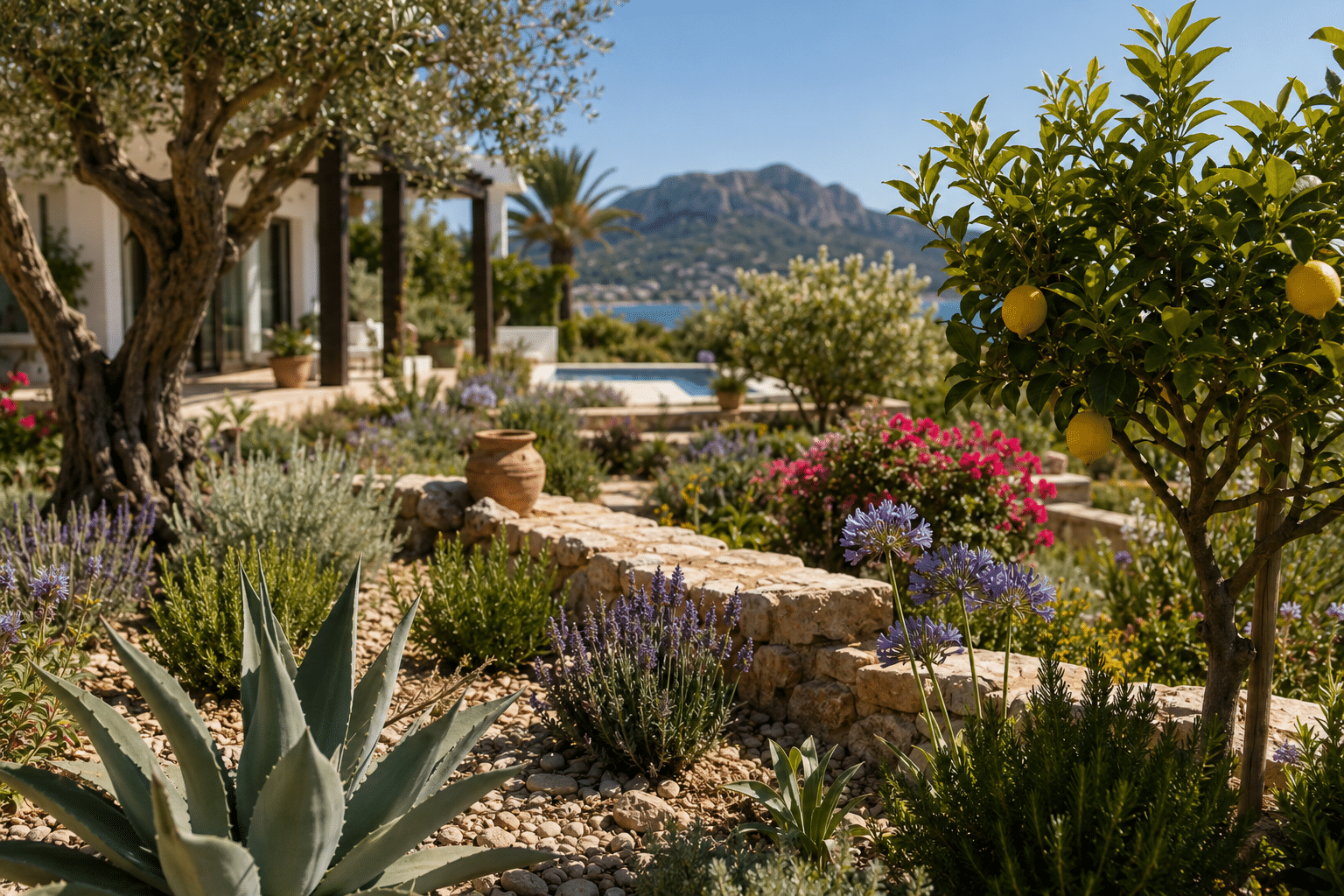
Here in Portland the challenge with gardening is too much rain and not enough sun. Gardening in the Costa Blanca flips that completely.
Over 300 sunny days a year, summer highs that sit in the 30s C (80s F) for weeks at a time and barely 500mm (19 in) of rain a year, most of it arriving in short autumn downpours rather than a gentle drizzle.
If we end up buying new construction, we’ll be starting from a blank plot rather than inheriting someone else’s landscaping. That’s more work and planning up front. No established trees, no existing irrigation and no sense of how a particular part of the yard behaves in August versus January. The advantage would be is that we get to plan the whole thing from day one instead of retrofitting or ripping out what’s already there.
With an existing home, we’re likely starting with something already planted, maybe overgrown, maybe outdated and the work is more about evaluating what’s worth keeping versus what to change.
The Climate We’ll Be Gardening In
Jávea sits in the same climate zone as coastal California and southern Italy: hot dry summers, mild wet-ish winters.
The general rule of thumb here is don’t fight the climate. Plants suited to wet summers and mild winters need constant intervention here. Plants suited to this exact pattern thrive with almost no help once established.
We’ll Need Mediterranean Plants
“Mediterranean climate plant” is a real category and a deep one.
Structural and evergreen: olive trees, Italian cypress for vertical accents, rosemary grown as a hedge, oleander (toxic if ingested, worth knowing with pets or kids), lavender (wants sharp drainage, struggles in heavy clay without amendment).
Bright Color: bougainvillea spilling over walls and pergolas, lantana blooming through the worst heat, gazania as low sun-loving ground cover, agapanthus for reliable summer spikes.
Aromatic herbs as landscaping: thyme, sage, oregano, santolina and lavender all work as low border plants that need almost no irrigation once established.
Fruit Trees
This is one of the biggest things we’re looking forward to. This climate supports fruit trees that would need a greenhouse in Oregon:
All of these want full sun, sharp drainage and minimal fussing once established. The mistake some people make is trying to plant fruit trees meant for temperate climates (apples, cherries, most stone fruit) that need a winter chill period that doesn’t occur on the Costa Blanca.
Xeriscaping Is A Great Option
For a garden that needs essentially no irrigation after the first year, these are optimal. Agave, aloe, prickly pear, sedum and crassula all handle the dry summer and don’t mind the alkaline soil. They’re also a smart choice for slopes or difficult corners where irrigation lines are a hassle to run.
Most gardens here pair succulents with silvery Mediterranean shrubs (rosemary, santolina, lavender) rather than going full desert aesthetic, unless that’s specifically the look you want.
Irrigation And Water Usage
Drip irrigation is the standard here, not an upgrade. It delivers water directly to the root zone instead of losing a huge percentage to evaporation the way sprinklers do in the heat. It’s the most common method most professional garden installers on the install.
A few practical points:
Plants Around The Pool
Pool areas reflect heat and have the occasional chlorine splash. A few reliable choices are:
You want to avoid deciduous trees with heavy leaf or fruit drop directly beside the pool.
Hanging Plants And Balconies
For terraces, balconies and pergolas the intense sun works well for flowering hanging plants, as long as you’re prepared to water containers more often than in-ground beds. Pots and containers dry out fast in this heat.
Perfect plant options include trailing lantana, geraniums (genuinely thrive in this climate and are everywhere for a reason), bougainvillea and trailing rosemary for something that survives neglect. Self-watering pots or a simple drip line to containers solves the biggest issue which is forgetting to water a hanging pot during an August heatwave.
Vegetable Gardens
Compared to Portland’s long, mild growing season where you can leave lettuce in the ground through a cool summer, in the Costa Blanca you’re working around two seasons:
Cool season (roughly October to April): lettuce, spinach, broccoli, cabbage, peas, carrots, onions and garlic all do well and this is actually the more forgiving growing window
Warm season (roughly March/April to September): tomatoes, peppers, courgettes (zucchini), eggplant, beans and cucumbers thrive in the heat, but need consistent water and often benefit from afternoon shade cloth during July and August
The biggest adjustment coming from the US is that peak summer isn’t necessarily peak growing season for everything. Some crops bolt or stop producing in the extreme Costa Blanca heat and need to be timed around it. Raised beds with good drainage and drip irrigation plus mulch make this dramatically easier.
Know Your Microclimate
While the overall climate around the Montgo is mild, your property won’t necessarily match the averages. There are dozens of different microclimates in a very small area. A few things worth checking before you commit to a design:
Wind. Many coastal plots can sit exposed to strong onshore or offshore winds depending on orientation.
Frost pockets. Low-lying spots or enclosed courtyards without airflow can trap cold air on the coldest winter nights even though the coast overall stays mild. Worth knowing before you plant anything frost-sensitive near a wall or in a dip.
Standing water. Anything that holds water for more than a few days, saucers under pots, clogged gutters, an unused corner of a pool cover, becomes a mosquito breeding site fast in this heat. Empty saucers after watering and check hanging pots regularly if you’re going with the trailing plants above.
Take a look at our Wildlife and Pests page before you plant, particularly if you’re planning fruit trees or a vegetable garden since both draw more insects than an ornamental bed does.
Consult With Your Local Nursery (Viveria)
It never hurts to check with the staff at your local viveria (plant nursery) before beginning any landscape project. They’ll be your best source for information on what does and doesn’t work for your particular location in Spain.
For us, Montgó Verd in Jávea is the local large garden center with a solid stock of fruit trees, cactus, palms and Mediterranean shrubs suitable for our area. We had an opportunity to visit there on during our first house hunting trip in August of 2025 and it was nothing short of amazing. It’s absolutely huge and has one of the largest selections of plants we’ve seen.