
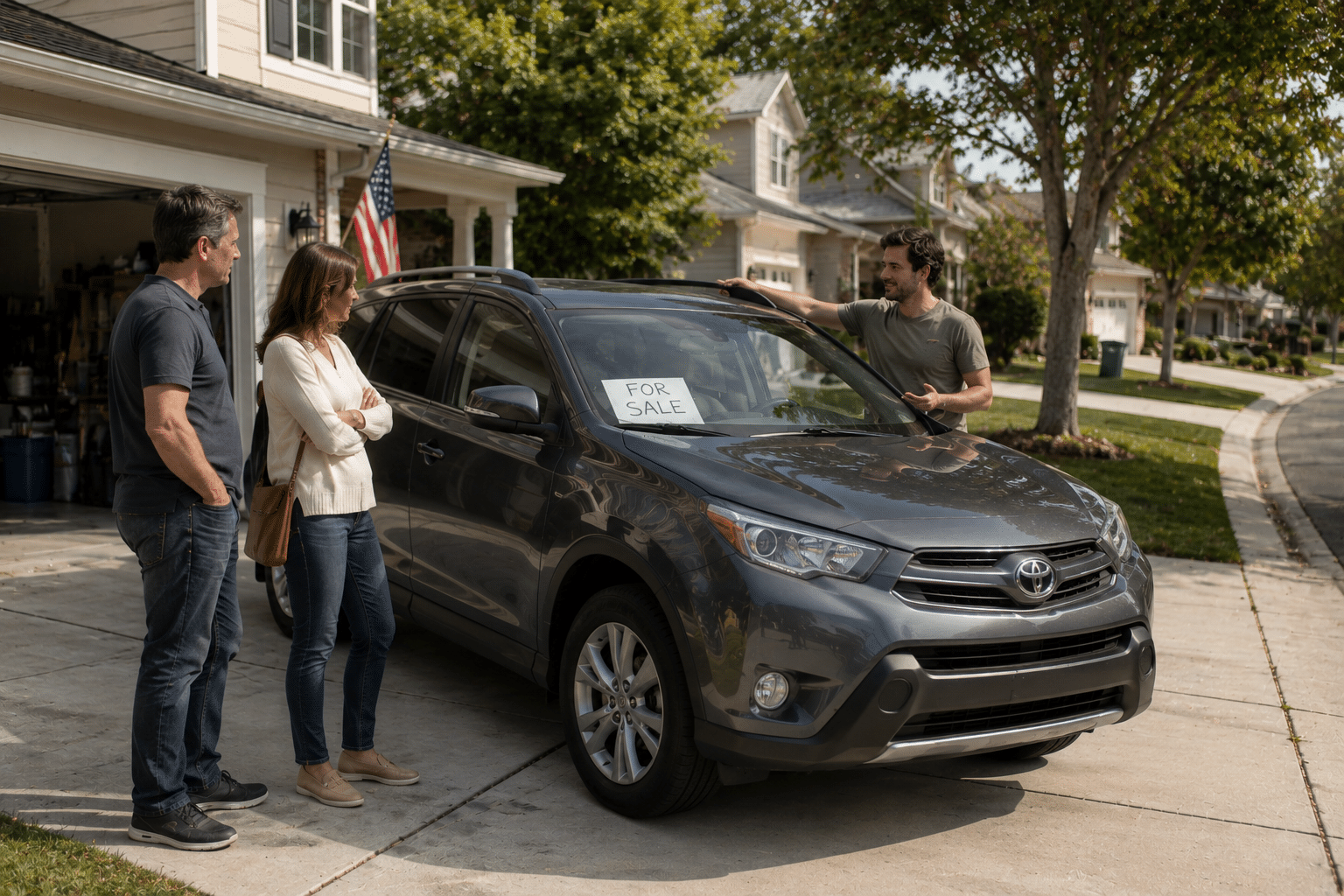
For a very short, fleeting moment this was one of the first questions we asked ourselves: could we just ship our car? The answer, once we started digging into it, was a hard “NO”. Here’s why.The answer, once we dug into it, was a clear no. Here’s why.
The Cost Of Moving With Your US Car To Spain Adds Up Fast
Shipping is only the first cost line item and it’s not even the biggest one. Getting a US car to a Spanish port runs somewhere in the $2,000 to $2,500+ range depending on which US port you’re leaving from and whether it lands in Valencia or Barcelona.
Once the car arrives, Spain applies:
- 10% import duty on the vehicle’s value
- 21% VAT (IVA) on top of that
- Local port and handling charges
And that’s before you’ve registered the car or driven it a single mile.
Homologation Is the Real Problem
Shipping costs are annoying. Homologation is the dealbreaker.
Homologation is the official process of certifying that a vehicle meets a country’s technical, safety, and emissions standards before it can be legally registered and driven. Every US-spec vehicle entering Spain for permanent registration has to go through homologación individual—individual vehicle approval through the DGT (Spain’s traffic authority). This isn’t a quick inspection. It typically involves:
- Submitting technical documentation on the vehicle
- An ITV inspection covering lighting, speedometer display, and general roadworthiness
- Emissions verification under WLTP standards
- In many cases, physical modifications to headlights, speedometer displays or emissions equipment to bring the car in line with EU specification
The whole process can take anywhere from several weeks to several months and the car often can’t be driven while it’s in limbo. If you’re trying to get settled into a new country, a car you can’t legally drive for months is the last thing you need.
Even EVs Don’t Pencil Out
Does the math work better for electric vehicles? Not really. After import duty, VAT, homologation costs and registration fees, the total landed cost of a US-spec EV in Spain often approaches—or exceeds—what you’d pay for a European-spec equivalent bought locally. And the European car comes without the headaches: full local warranty support, no charging-standard mismatches and no software or compatibility surprises down the road.
The One Exception: Classic Cars
If your car is a genuine classic—30 years old or older (1995 or earlier)—the rules shift in your favor. Classic vehicles qualify for a reduced VAT rate (12% instead of 21%) and a simplified homologation process, since older vehicles are generally exempt from meeting current emissions and safety standards.
If you’re bringing a beloved classic that has real sentimental or collector value, that’s a legitimate reason to go through the process. If you’re bringing your daily-driver sedan or SUV, it isn’t.
Good Luck Selling It Later, Too
Say you push through the homologation process anyway. Your car eventually gets Spanish plates and a proper Permiso de Circulación (similar to a US car title). On paper, it’s no longer a “US car.” But that doesn’t make it an easy sell down the road.
Spain’s used car market runs on the Ganvam guide (think of it as similar to the NADA Blue Book in the US), the reference valuation tool that dealers, insurers, and even the tax authority use to price a car. It’s built around vehicles that were actually sold new in Spain.
A US-spec model that never had a Spanish sales history doesn’t fit cleanly into that system. To a dealer or private buyer, it looks like an unknown quantity—something they can’t easily verify a fair price for and something they may be nervous about servicing later (more on that below). That uncertainty tends to show up as a lower offer, a smaller pool of interested buyers, or both.
What Happens If The Car Gets Into an Accident
Here’s the scenario nobody thinks about until it happens: your imported car gets into a fender bender and now you need a part.
Even when a US model shares a name with its European counterpart, the two cars are often meaningfully different underneath. US-spec vehicles commonly have different headlight and lighting assemblies (built to US standards rather than Europe’s ECE standards), different bumpers or body panels to meet US crash-test requirements, different emissions equipment, and speedometers calibrated in mph only. A Spanish mechanic may never have worked on that specific configuration before, and the part sitting on a shelf at the local dealership is built for the European variant—not yours.
That usually means ordering the correct part from the US: the cost of the part itself, international shipping, customs duty on the part, and the wait for it all to arrive. Meanwhile, your car sits in the shop and you’re without a vehicle for however long that takes.
It’s a good reminder that “the same car” isn’t always the same car once you cross the Atlantic.
Insurance Gets Complicated, Too
Even after your car is legally registered, insuring it in Spain isn’t as simple as insuring a normal car.
Spanish insurers price policies largely off the vehicle’s technical data sheet (ficha técnica) and standardized model databases that match a car to known repair costs and parts availability. A US-spec vehicle that was never sold new in Spain doesn’t have a clean match in that system. In practice, that tends to mean:
- No instant online quote. Some mainstream insurers won’t quote it automatically and will need to assess the car manually.
- Higher premiums, especially for comprehensive (todo riesgo) coverage. Insurers price in the same repair-cost risk we just covered—scarce parts and unfamiliar mechanics mean longer, costlier repairs, and that gets passed on to you.
- Fewer insurers willing to cover it at all, which can push you toward specialist brokers rather than the big household-name Spanish insurers.
Mandatory third-party liability coverage tends to be less affected, since that pricing leans more on the driver than the car. But if you want real protection on the vehicle itself, this is where the cost of bringing a US car really shows up.
Find out more about buying a car in Spain, as well as what it takes to insure one.