
If you’ve traveled to Europe before, you’ve probably dealt with a plug adapter and not thought much more about it. Moving to Spain permanently is a different equation. This isn’t about getting your phone charger through a two-week trip—it’s about deciding what from your kitchen, bathroom and closet is actually worth moving and what you’re better off buying once you arrive in Spain.
Voltage, Frequency and Plug Type
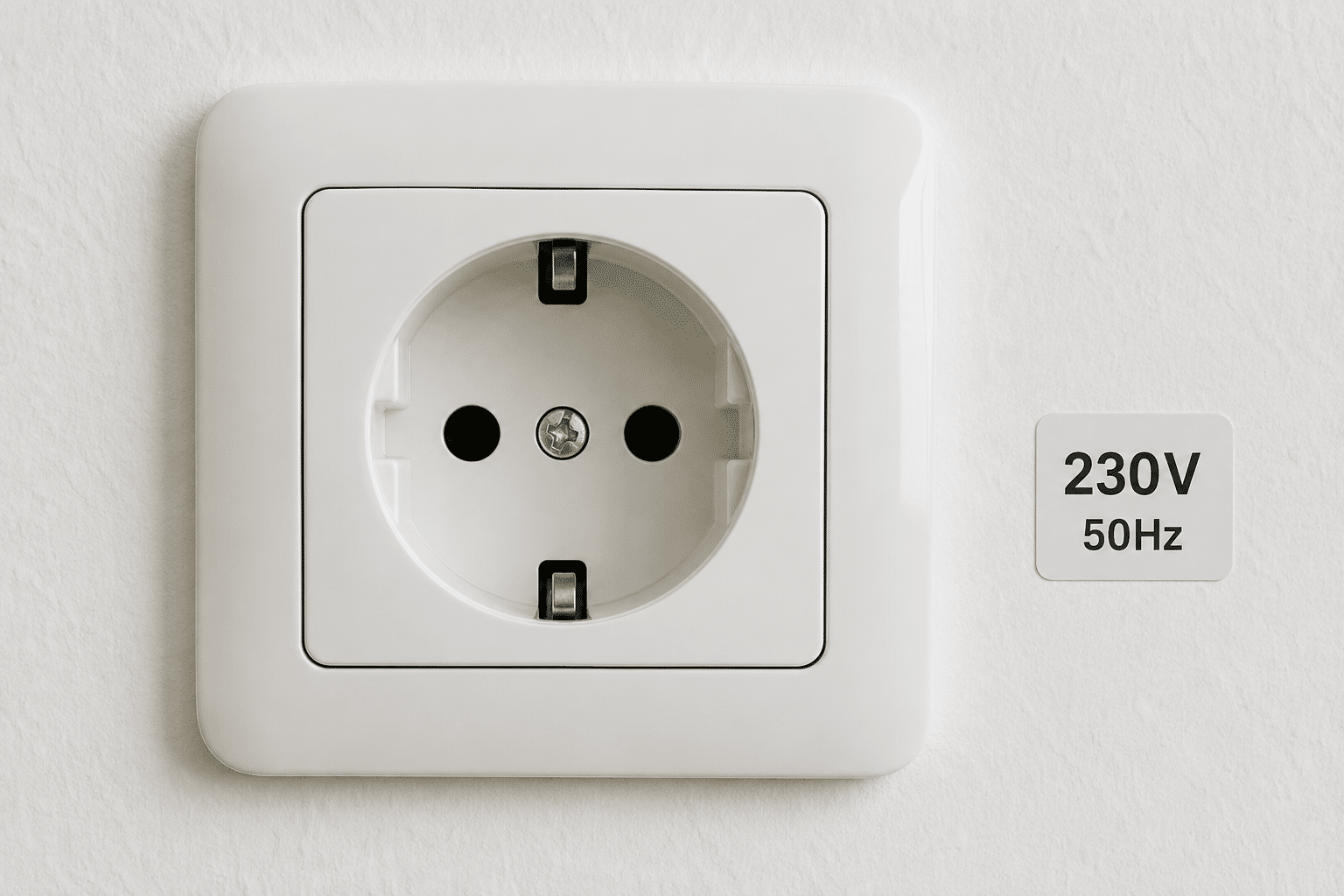
Spain runs on 230V at 50Hz, using Type C and Type F outlets (Type F, also called Schuko, is the grounded version and the one you’ll see most). The US runs on 120V at 60Hz, using Type A and Type B plugs.
That’s not a small difference. A device built only for 120V will draw far more current than it’s designed for if you plug it into a 230V outlet, which can destroy the device immediately, sometimes with a literal pop and a puff of smoke. The frequency difference (50Hz vs. 60Hz) matters less for most devices, but it can affect anything with a motor that relies on a specific cycle speed to keep accurate time or run at the right speed—think older clocks or certain motorized kitchen tools.
The plug shape is the easy part: a $10 adapter solves that. The voltage is what actually determines whether a device is safe to use at all.
Dual-Voltage vs. Single-Voltage
Before you decide what to pack or replace, check the fine print on the device or its power brick. If it says something like “INPUT: 100–240V,” it’s dual voltage, and it’ll work fine in Spain with nothing more than a plug adapter. Most laptops, phone chargers, camera chargers, and modern electronics fall into this category.
If it says “120V” or “110–120V” only, it’s single voltage, and plugging it into a Spanish outlet without a converter will damage it or worse.
The category that trips people up is small appliances with heating elements or motors—these are the ones most likely to be single voltage, and they’re also the ones least worth converting.
What You’ll Almost Certainly Need to Replace
For a permanent move, buying local European-spec versions of these is almost always the better call over hauling a voltage converter through customs:
What’s Usually Fine to Bring
Don’t Confuse This With a Plug Adapter
If you’ve traveled to Europe before, a plug adapter is probably second nature to you by now—the little block that lets a US-style plug physically fit into a European outlet. That habit is exactly what gets people into trouble when they move here permanently.
A plug adapter changes the shape of the plug. It does nothing to the voltage.
If you take your US hair dryer, pop a $10 travel adapter on it, and plug it into a Spanish outlet, you haven’t solved anything—you’ve just made it possible for a 120V-only device to receive 230V, which is exactly the scenario that fries it (or worse). An adapter alone is only safe for devices that are already dual voltage. For anything single voltage, you need an actual converter or transformer, not just an adapter.
This is the single most common mistake we see people make with this move, because it’s the opposite of what years of short trips have trained them to expect.
Converters and Transformers
If you do want to bring a single-voltage device you’re attached to, you have two options: a power converter (smaller, cheaper, meant for simple heat- or motor-based appliances like a hair dryer, and generally not meant to run for hours at a time) or a transformer (larger, more expensive, built for continuous use and more complex electronics).
To put real numbers on it: a basic travel-sized power converter for something like a hair dryer or phone charger typically runs $20–$40. A heavier-duty transformer built for higher-wattage appliances or continuous daily use can run $50–$150 or more, depending on the wattage it needs to handle. Compare that to the cost of just buying a European-spec toaster or hair dryer locally—often $15–$30—and the math rarely favors converting.
For a permanent household, though, converters and transformers are really a stopgap, not a long-term solution. They’re bulky, they’re not built for daily use over years, and in most cases the appliance they’re powering costs less to simply replace locally than the converter costs to buy. We’d save the converter approach for a device with real sentimental value, and buy local for everything else.
Make sure to check out more about electricity in Spain and the EU here in our utilities section.