Our Journey To Spain


Our House
Search Diary

This is our trip-by-trip record of house hunting in Jávea and Dénia as part of our move to Spain. Each entry covers the homes we viewed, the neighborhoods we explored, the tasks we completed and what we learned along the way. The goal isn’t just to document the property search — it’s to capture the full picture of what each visit felt like and how our thinking evolved from one trip to the next.

August 2025 — First Visit to Jávea and Dénia

We’ve been to Spain many times but never to this part of the country, so this first trip was about getting oriented. The house hunt was secondary — the main goal was seeing neighborhoods, meeting with an agent and getting a real feel for what daily life is like here.

We started out in Barcelona because it was easy for us with a direct flight from San Francisco with only one connection. From there we made our way driving down the coast to Jávea, with a brief overnight stop in Valencia to see friends. For this first trip we stayed at Hotel Mi AlmaZara, which sits at the foot of the Montgó between Jávea and Dénia. It was easy to get just about anywhere in either town in 10–15 minutes, so it worked out perfectly as a base.

house hunting in Javea and Denia

We made the rookie mistake of visiting the first week of August. We know that all of Europe is on vacation during August, but it didn’t register with us that most real estate agents would also be on vacation. That also meant that owners would either be in their homes or have them rented out for the month. That made it difficult to see the number of properties we were hoping to. The upside was getting to see the area at its seasonal peak — useful for understanding what the busiest time of year here actually looks like.

We spent most of our time going through each town at different times of day — getting a feel for how long it took to get places, checking out restaurants, coffee shops and stores and seeing what each area had to offer. Each town has its own vibe and in the case of Jávea, each of the three sections is distinct.

The Port has the coastal village feel and rockier beaches. The Old Town has the historic character, narrow alleyways and a lot of evening life. The Arenal is more the daytime social hub — sandy beach, wide promenade and the busiest concentration of cafés and restaurants.

Two other objectives we had for this trip were meeting with a lawyer and a real estate agent. We had done quite a bit of research ahead of time, so we knew who we thought would be best for us. We stopped in at the local office of Pellicer & Heredia, the lawyers we wanted to interview, but most of the office was on vacation given the time of year. For real estate agents, we wanted to check out VillaLux. We spent an hour there with Romy and Max and knew that they were the right ones to represent us and help us find the right home.

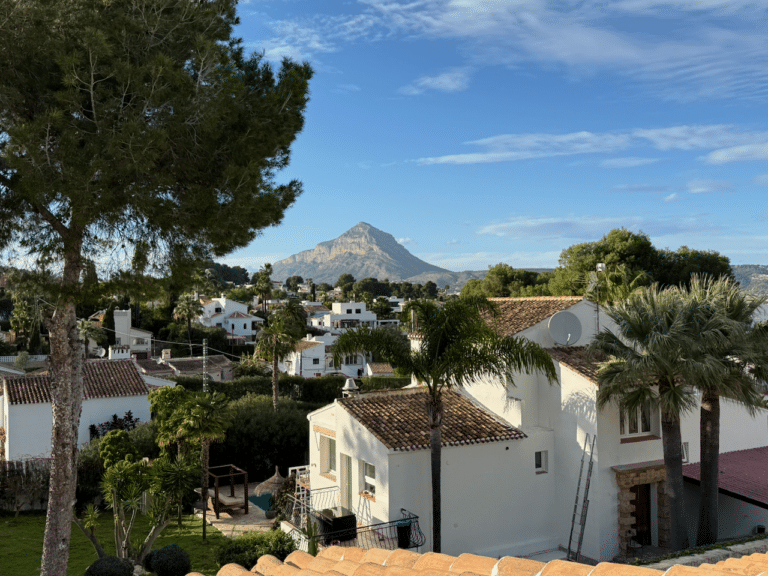
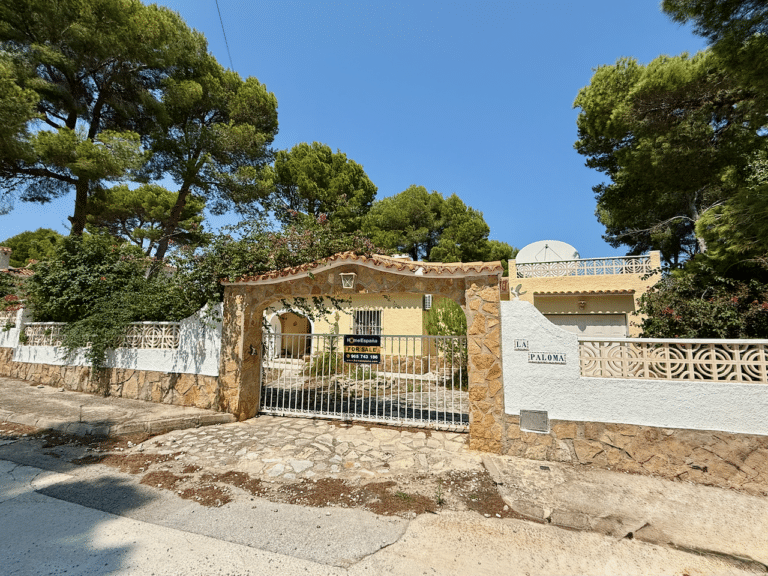
We spent a lot of time driving through a lot of the neighborhoods, so that when we got back home and started looking at properties online, we’d have a real sense of where things were and what each area felt like. We did manage to see two houses — one built in 1970 close in to Jávea that would have been a major renovation effort. The other, a newly completed modern build about 8–10 minutes from town. It was useful for getting a sense of scale, layout and what Spanish homes actually look and feel like compared to photos online.

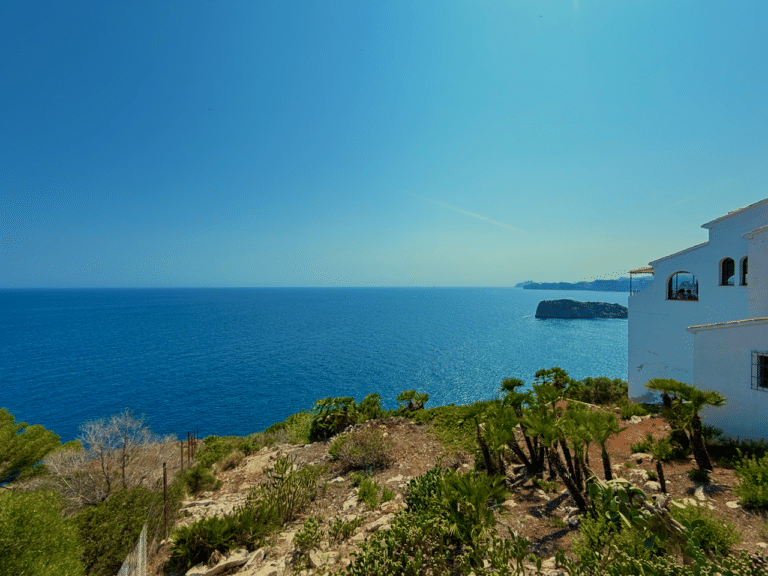
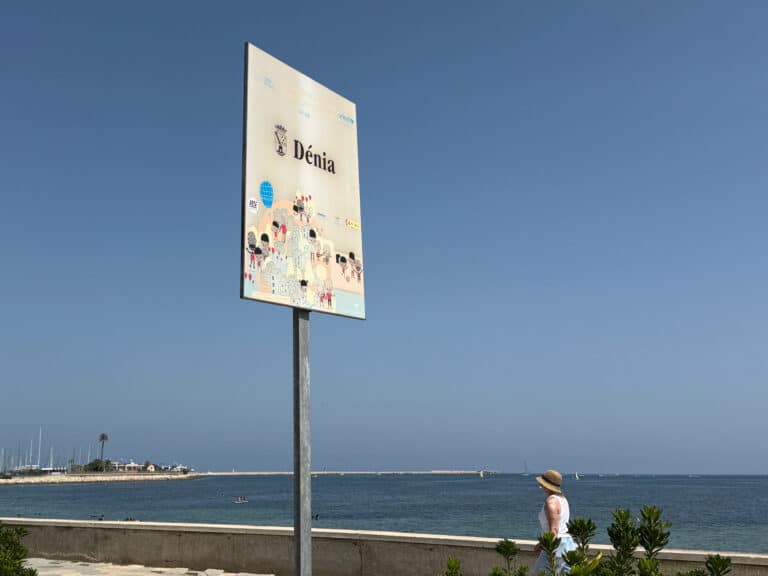
Dénia has a slightly different feel from Jávea — a bit more condensed, a bit more crowded during tourist season and a larger town character overall. Because it sits on the north side of the Montgó where the terrain flattens out, there are considerably more beach areas stretching north from town. The geography on that side also tends to be more vertical so more houses there have sea views. A bit of a downside is the Montgó casts more shade on properties on that side, too which affects pools and outdoor areas. We decided that during our next trip we’d spend more time in Dénia.

On this trip we checked out restaurants and coffee shops. We had dinners at Da Giulia and Restaurante Portitxol in the Old Town, plus Cocina Nikkei at the hotel. Lunches at Cala Brisa Beach Club in the Port and La Fontana in the Arenal. On day trips out of town we went to Artesano in Moraira for lunch and El Palleter in Benissa, with ice cream after at Jijoneca. There isn’t one of those we wouldn’t go back to. For coffee — and we need coffee to get through the day — we loved Nostro and Caffe Milano in Jávea and Pichi’s in Dénia.

After this trip we came away feeling this confirmed that this is the right area for us. Next time we’ll be able to dive in with a clearer picture of not just the area but also what kind of properties we wanted to focus on.

As we left, we drove south to Alicante before taking the high-speed train to Madrid for our flight home. It gave us the chance to see what the area south of Jávea looks like and just how easy and quick the connection to Madrid actually is.

Properties viewed on this trip: House #1 — Jávea, Les Cansalades

February 2026 — Jávea & Dénia

Having oriented ourselves on the first trip, February was about getting serious. We spent more time in Dénia this time, as well as the area between the two cities near the Montgó. We decided to fly into Alicante airport to see what it was like. We were impressed. It’s the third largest airport in Spain — modern, easy to navigate and quick to get in and out of.

After our last trip, we decided that on all future visits we’d rent houses rather than hotels so we could understand not only what Spanish homes are like to live in, but what a neighborhood here feels like. We stayed in a large four-bedroom villa in the La Mandarina neighborhood, just south of The Arenal in Jávea (video coming soon). It was an 8-minute drive into town with a Consum grocery store less than a 10-minute walk away — and less than $200 a night.

Here’s what we took away from living in the house for a few days:

  • We definitely want a full-sized washer, dryer and refrigerator rather than a European washer/dryer combo unit and small refrigerator.
  • On two-story homes, make sure the upper floor is accessible from an interior stairwell rather than an exterior one.
  • Check the Potencia Contratada of any home’s electrical system before committing. The circuit breakers kept tripping during our stay — something we cover in more detail in our utilities guide.
  • A pool cover is a must, heated pool or not. It was windy throughout the trip and leaves were constantly in the water.
  • Make sure any driveway gate has a high-capacity opener. Waiting three or four minutes every time you come and go gets old fast.
  • It confirmed our desire for an outdoor kitchen and dining area. In Spain, people spend so much time outdoors, it’s a must.
  • Older neighborhoods can have very narrow streets with poor visibility around corners — worth factoring in if you drive regularly.

For our upcoming September trip, we’ve rented a villa in Dénia with a sea view for a different experience.

Romy, our realtor from VillaLux, did a great job arranging showings — properties that fit our profile, plus a few we wouldn’t have originally considered. We looked at homes in both towns and several spots in between. Each area has its own character and tradeoffs. We could see ourselves living in either town. It really comes down to the right house in the right neighborhood.

One thing the February trip made clear is that the Montgó makes a meaningful difference depending on which side of it you’re on. The east and north sides run noticeably cooler, which matters when you’re thinking about how much of the year you can actually spend outside and enjoy the pool. We’re leaning toward the sunnier south and west exposures for that reason — something we get into in more detail on our neighborhoods page.

From our first viewing, we learned that it’s typical in Spain for owners to be present when a home is shown. In some ways that’s useful — you can ask questions directly. In others it’s awkward, since it’s hard to speak freely with the owners standing right there.

Existing homes generally aren’t staged for viewings, so you see them in their normal lived-in state — food on counters, clothes on the floor, unmade beds. We also learned a lot about what to look for when evaluating a home in Spain, things specific to Spanish construction and the local market that you wouldn’t necessarily think about coming from the US. We cover those on our property evaluation page.

In Dénia, it was immediately apparent how much of the city sits on a hillside. Most of the homes we viewed had ocean views and multiple stories, which also meant steeper roads to reach them. Neighborhoods toward the top of the city tend to be newer, with wider streets, sidewalks and flatter plots.

The Euro to US dollar exchange rate is also something we’re watching closely. It affects not just the purchase price but the tax on top of it. It had been relatively stable for a few months at the time of this trip, but it’s a variable that anyone buying from the US needs to factor into their budget planning from the start.

While we were there we also visited all the major grocery stores in the area — Consum, Mas y Más, Mercadona, Lidl and Aldi — and did some price comparison shopping to get a feel for day-to-day costs.

Las Fresas Winery

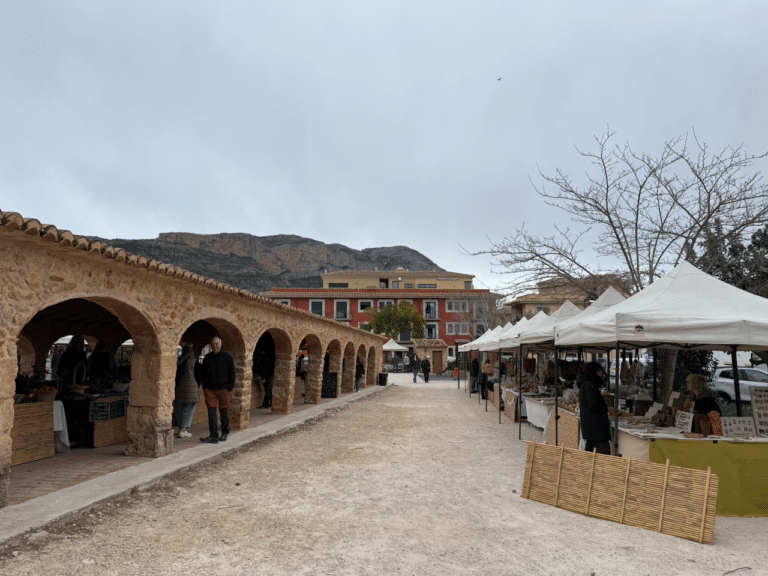
On Sunday, we spent time in downtown Dénia when many of the streets are closed to traffic. A lot of people were out shopping and dining on the sidewalks — a different side of the city than we’d seen on our previous visit. We also got up early that morning for the market in Jesús Pobre and stopped at another market in Pedreguer. That afternoon we did a short visit to Les Freses winery — which we’ve written about separately — and sat outside in the sun with a bottle of wine.

We also used the trip to check out more restaurants and coffee shops. A few earned a permanent spot on our list.

Las Fresas Winery

For breakfast: K. Ricco in Jávea and Niki & Niki near the waterfront in Dénia. For lunch: Aduana Wine Bar in Dénia and Soñando in Pedreguer. For dinner: La Vera and Volta i Volta in Jávea and El Carreter in La Xara. For coffee, we returned to Pichi’s in Dénia and Caffè Milano in Jávea — still the best in both cities and two places we expect to be regulars at when we move.

The next house hunting trip is planned for a week in mid-September. By then we’ll be much closer to the actual move, so the focus shifts from exploration to serious evaluation. We’ll be looking at homes we consider genuine candidates, visiting our lawyers at Pellicer & Heredia, meeting with our banker at Sabadell in Dénia and checking out furniture stores to find out more about the costs to furnish a house. If the right house comes up on this visit, we may come back with a decision made.

When we left, we flew from Alicante to Barcelona for dinner at Cañete — one of our favorite restaurants — before heading home the next morning.

Properties viewed this trip: Houses #2 through #8 — various neighborhoods across Jávea and Dénia

Our Next House Hunting Trip to Spain is In

Days

Hours

Minutes


Before Moving

Everything you need to sort before you leave — visas, NIEs, finances and the hundred other things on your pre-move list.

After The Move

What you need to get sorted once you arrive — utilities, healthcare, paperwork and all the practicalities of your new life in Spain.

Property Guide

Here’s what to know about buying property in Spain as an American — from your first search to signing at the notary.

Resources

Checklists, glossaries and vetted websites to help you plan, prepare and hit the ground running in Spain.

Our Journey

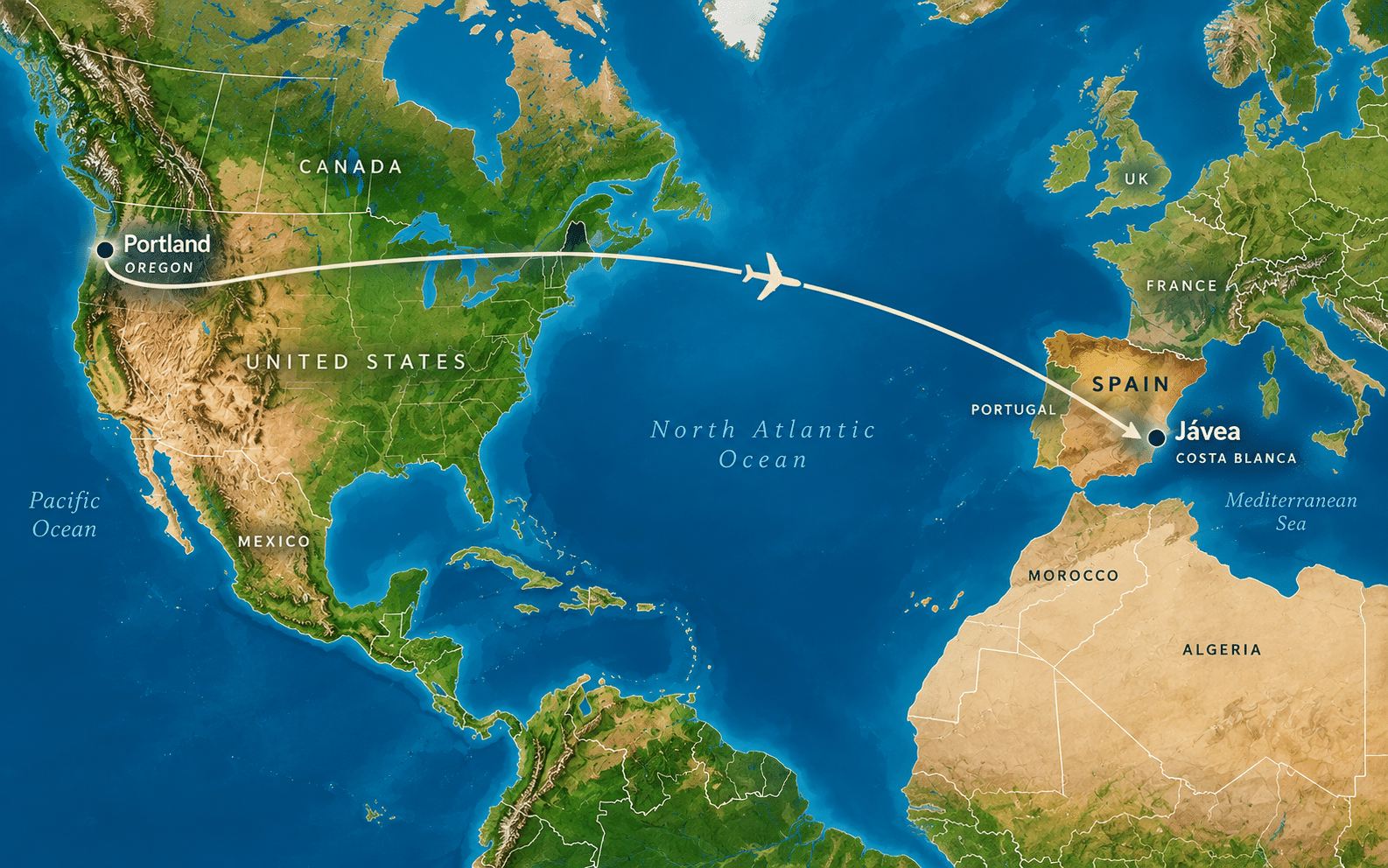
Follow along as we document our move from Portland, Oregon to Jávea, Spain — the highs, the headaches and everything in between.

This page last updated: