
Spain’s V16 Emergency Beacon Law Started January 1
Spain requires safety equipment to be carried inside your vehicle at all times. This is different from the U.S., where these things are optional and drivers are generally expected to pull onto the shoulder and rely on hazard lights or roadside assistance. In Spain, the goal is to reduce secondary accidents and improve response times, especially on highways and rural roads.
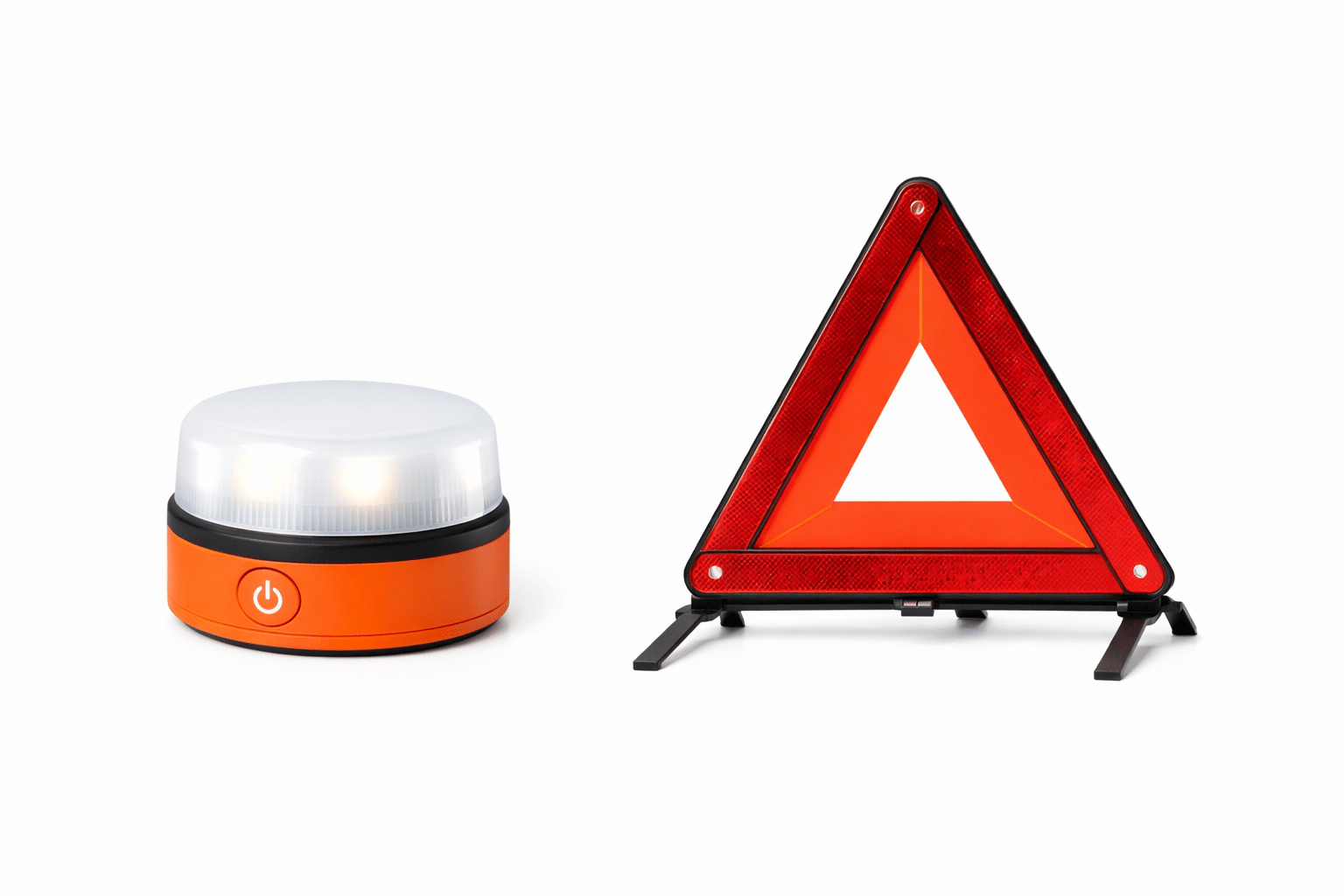
On January 1, 2026, Spain replaced the roadside safety triangle requirement with a V16 connected beacon which is now mandatory in every vehicle.
The beacon is a portable emergency warning light and transponder visible from over 1 km away. It includes SIM and GPS, which automatically send the vehicle’s location to emergency services and traffic systems. The device is placed on the roof of the car through a window, so the driver does not need to exit the vehicle.
Why the Change?
- No need to leave the vehicle on highways
- Reduced risk of pedestrians near fast traffic
- High visibility in poor conditions (night, rain, curves)
- 360° flashing light instead of single-direction reflectors
- Automatic location sharing with emergency services
V16 Cost and Requirements
For private vehicles, a V16 typically costs €40–€60. There is no subscription fee for at least 12 years. Manufacturers currently don’t include the beacon in new vehicles.
For visitors, car rental companies must provide a V16 in each vehicle. However, drivers are responsible for confirming it is presentand for using it if the vehicle breaks down. If stopped or involved in a roadside incident, police may issue a fine if the car does not have a V16 or it is not being used.