
Plenty of expats move here, learn the etiquette, and settle into a comfortable routine. Work, groceries, a nice view. Years later, some of them still feel like a visitor. Let’s talk about how expats make friends in Spain for the long term.
Knowing how to behave and actually belonging are two different things, and only one of them happens on its own. Integrating takes real, ongoing work on your part and it doesn’t happen automatically just because you moved somewhere beautiful.
The difference between genuinely fitting in and staying comfortably on the outside is often the same difference between loving your life here for the long run and quietly counting down the years until you’re ready to leave. This post is about closing that gap while it’s still easy to close, rather than waking up five years in and wondering why it never quite happened.
Meeting Your Neighbors
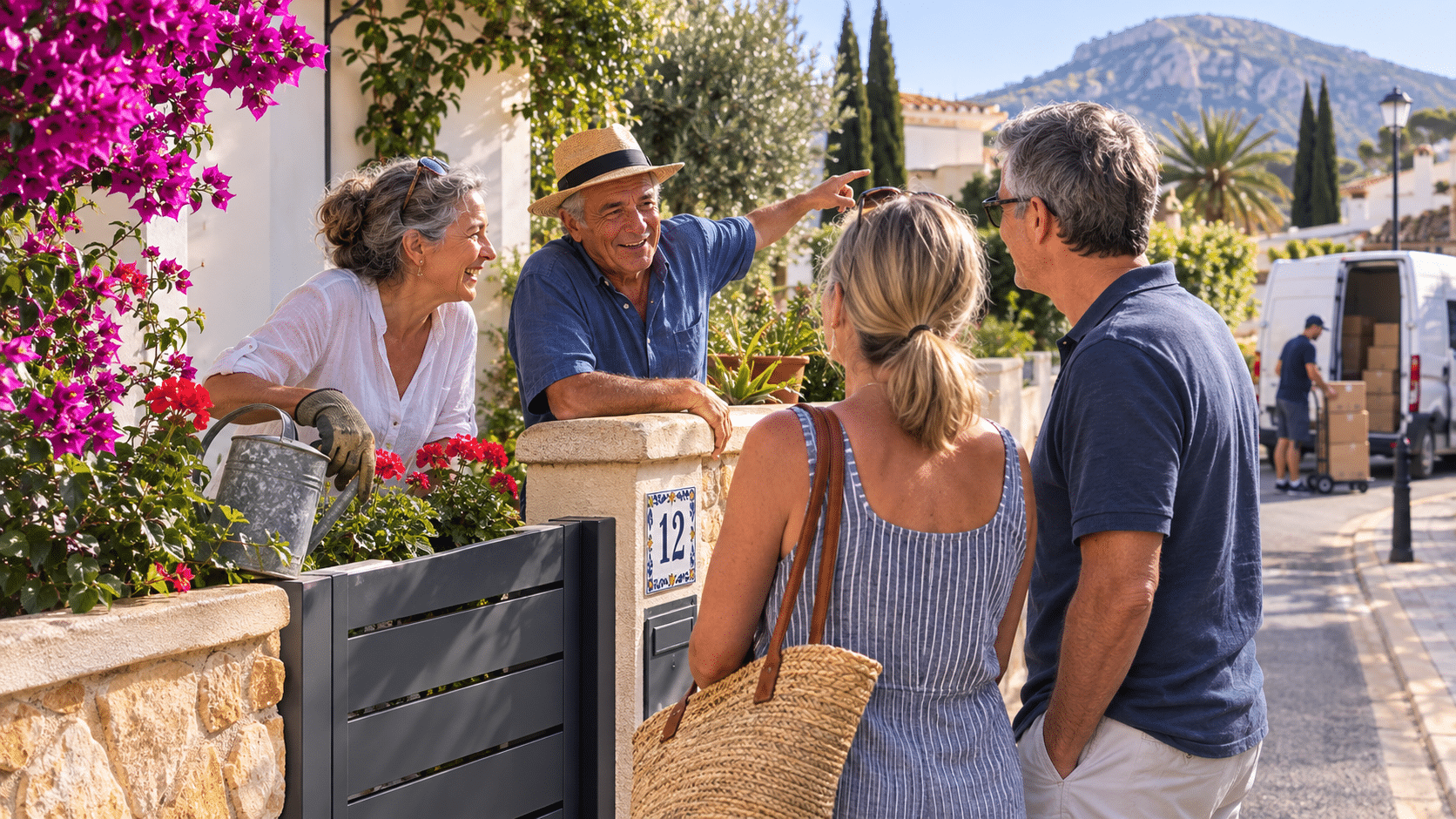
There’s no strict script for introducing yourself to new neighbors. In Spain a simple knock, a hello and a small gesture like a plate of something or a bottle of wine, is always well received and remembered. Expect the relationship to warm up gradually rather than all at once. Conversations often start more formally until it naturally shifts to something more casual.
Asking a neighbor to keep an eye on your place, water your plants or grab a package while you’re away is completely normal here, especially once you’ve been around long enough to be a known face. It tends to be reciprocal without anyone keeping score. You’ll likely be asked to return the favor at some point and that’s exactly how it’s supposed to work. Many neighborhoods also run a WhatsApp group where this kind of thing gets coordinated in real time, something we cover in more detail in our post on personal privacy in Spain.
If You’re Invited To Someone’s Home
Arriving five or ten minutes after the stated time is normal not rude, for a social gathering. Bringing something along, wine, a dessert or flowers is always a nice touch though rarely a strict requirement. Expect the greeting kisses at the door and again on the way out. Expect the evening to run long, since rushing off right after a meal isn’t really how it’s done here.
Once you’ve been invited somewhere, look for a chance to return the invite. Reciprocation is what actually turns a nice evening into an ongoing relationship.
Local Fiestas Are Where Community Actually Happens
Jávea and Dénia where we’re moving to and like most Spanish towns run a full calendar of local fiestas: patron saint celebrations, Moros y Cristianos processions, open-air concerts, weekly markets and neighborhood meals that spill out into the street. These aren’t tourist events. They’re genuinely how the town shows up for itself.
Showing up yourself, even just to watch, is one of the fastest ways to feel like part of the place rather than an observer of it. Check your local ayuntamiento’s calendar or a community WhatsApp group once you’re settled. Treat a fiesta weekend as a real chance to meet people not just noise to work around.
Learn Functional Spanish Before Chasing Fluency
Being willing to communicate imperfectly matters more than waiting until your grammar is right. You don’t need fluency to build real relationships here. You need a working set of phrases for the situations that actually come up.
Prioritize learning to:
- Greet neighbors
- Make appointments
- Ask someone’s name
- Handle shops and restaurants
- Discuss building or neighborhood issues
- Offer and request small favors
- Make casual plans
One thing you’ll want to avoid: switching straight to English the moment someone responds in it. It’s a natural instinct. It quietly signals that you’re not really trying, even if that’s not the intent. A simple, polite line handles it well: “Gracias, pero quiero practicar un poco el español si no te importa.” (Thanks, but I’d like to practice my Spanish a little, if you don’t mind). Most people respond warmly to that not with impatience.
Join Something That’s Recurring
One-off expat meetups produce acquaintances. A weekly padel game, a gardening club, a choir, a volunteer group, a language exchange or a regular market stall you visit every Saturday produces actual relationships. Showing up again and again is what turns a familiar face into a friend. It doesn’t need to be Spanish-specific or elaborate. It just needs to happen on a repeating schedule with mostly the same people. That repetition does more for integration than any number of one-time events ever will.
A Few Mindset Shifts That Help
Learn what “quedar” really means. It’s one of the most useful verbs in everyday Spanish social life, and it doesn’t map onto a single English word.
Quedar means to arrange to meet up. “¿Quedamos el sábado?” means shall we get together Saturday. Once you can use it comfortably making casual plans with neighbors and new friends gets a lot easier.
Go to community meetings. Whether it’s your comunidad de propietarios, a neighborhood association or a public town hall session, showing up in person does two things at once. You get real, useful information and you become a known, engaged face rather than just the foreign name on a mailbox.
Let go of the urgency. Things move slower here: paperwork, service, decisions. Constantly measuring that against how it worked back home wears thin fast, both on you and on the people around you. Adjusting your own pace matters more than any single custom on this list.
Interruptions aren’t necessarily rude. Spanish conversation, especially among friends, often involves people talking over each other, jumping in, finishing a thought together. It’s a sign of engagement and enthusiasm, not disrespect. It can feel jarring at first if you’re used to more turn-taking. Don’t read it as someone cutting you off on purpose.
Be present and remember names. Put the phone away during a conversation. Make the effort to remember someone’s name and use it next time you see them. It’s a small thing, but it’s one of the most noticeable signals that you’re actually trying to build something not just passing through.
Avoid living entirely in the expat bubble. It’s easy and comfortable to socialize almost exclusively with other English speakers. There’s nothing wrong with expat friendships, plenty of people build a great life that way. But if that’s the only layer you ever engage with, none of the rest of this, the language, the repeated activities, the local events, ever really gets a chance to work.
None of this takes long to build once you’re actually living it day to day. If it helps to boil it down, here’s the short version of how to actually settle in:
- Greet people every time
- Learn names gradually
- Accept small invitations when you can
- Spend unstructured time in public spaces
- Ask questions without turning neighbors into unpaid relocation advisers
- Offer help as well as requesting it
- Let relationships develop through repetition