
After The Move
Buying A Car

Buying a car in Spain works differently than in the US. Spain’s system is more rule-based and standardized. There is less room for negotiation and fewer informal workarounds. It will probably feel less flexible to Americans at first, but once you understand the rules, the process is predictable and straightforward.
One advantage of owning a car in Spain is that you can drive throughout the European Union without any special paperwork. Spain is a right-side driving country, just like the US, so that part will feel familiar.
How Cars Differ In Spain
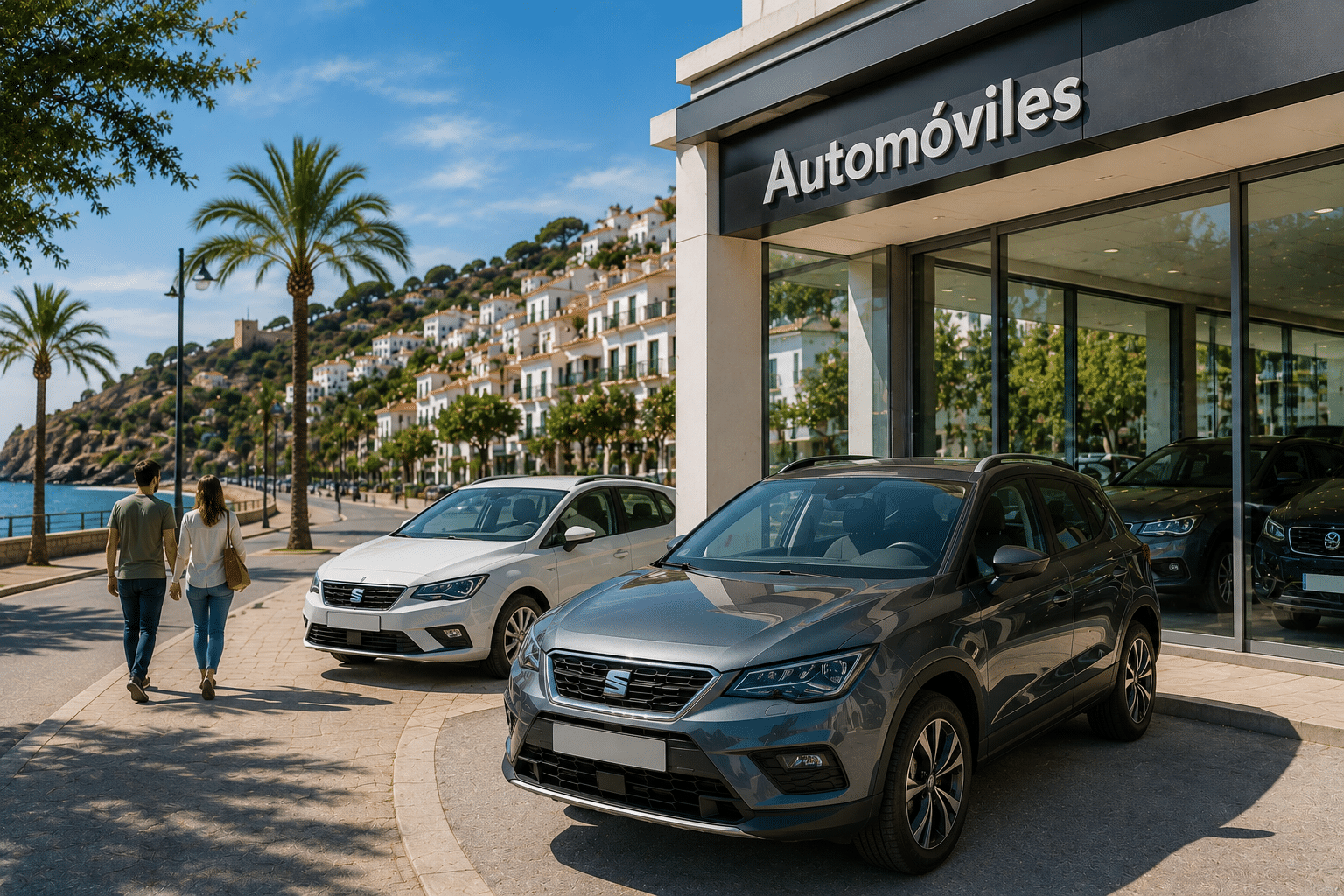
In addition to having a wider choice of brands in Spain, along with brands you already know, cars in the EU are tailored to the market of the country they are sold in. These are some things to pay attention to when you start car shopping, whether you’re buying new or used.
Size Matters In Spain
Many streets, parking garages and parking spaces in Spain are narrower than in the US. You’ll notice that large SUVs and trucks are much less common. Smaller cars are easier to park and drive in older towns and city centers. Many expats end up buying smaller cars than they had in the US. Overall, cars in Spain are designed for narrower roads, smaller parking spaces, better fuel economy and lower emissions rather than size, horsepower, or long-distance road trips, which reflects the way people typically drive in Europe.
Automatic Vs Manual Transmission
One of the biggest differences Americans notice is that manual transmission cars are still very common in Spain. Automatic cars are becoming more popular, especially with hybrids and electric vehicles. Manual cars are still more common and are usually cheaper. If you specifically want an automatic transmission you may have fewer options and could pay more for it.
Engine Sizes
Cars in Spain generally have smaller engines. Cars here are designed more for efficiency than power. Fuel is significantly more expensive in Spain so cars sold here are built with fuel economy in mind. Also don’t assume that the same make and model of car in the US, which is also available in Spain, has the same engine size.
You’ll see many cars with 1.0L to 1.6L engines, which might sound very small by US standards. However, they are perfectly adequate for everyday driving, especially since much of Spain’s highway driving is steady-speed rather than long high-speed distances. Diesel engines are also more common in Spain than in the US because of their fuel efficiency for highway driving.
Feature Differences
Features that are standard on many cars in the US are not always standard in Spain. Things like backup cameras, heated seats, power seats, cruise control, keyless entry and Apple CarPlay/Android Auto are sometimes only included in higher trim levels or as options.
Cars in Spain are more customizable and may be ordered with a wider array of individual options or option packages. This means two cars of the same model and year may have very different features depending on how they were originally configured. This is an important thing to keep in mind, especially when looking at used cars.
Fuel Types In Spain
Cars in Spain commonly run on gasoline (petrol), diesel or hybrid, with electric vehicles becoming increasingly common. Diesel cars are more common in Spain than in the US because they are more efficient for highway driving and long distances. Gasoline cars are common for smaller cars and city driving. Plus, the cost for gasoline and diesel in Spain and the EU is significantly higher than the US. Hybrid cars are very popular and often qualify for lower taxes and emissions benefits. Electric vehicles are becoming more common, and there are incentives and tax benefits in some regions.
New, KM0, Or Seminuevo Cars In Spain
Just like in the US, there are new car dealers in most towns and cities. You’ll see many manufacturers that aren’t available in the US, along with brands you already know. One advantage of buying a new car in Spain is that warranty service is typically valid anywhere in the EU, which is helpful if you travel throughout Europe or move to another EU country later.
In addition to buying a new car, you may also see cars listed as KM0 or seminuevo, which are very common in Spain. A KM0 (kilómetro cero) car is a vehicle that has been registered by the dealer but barely driven, usually with fewer than 100 km. Dealers often register these cars to meet sales targets and then sell them as “used,” even though they are essentially new.
The benefit of a KM0 car is price. They are often 5–15% cheaper than a brand-new car, available immediately, and still include most or all of the manufacturer’s warranty.
A seminuevo car is a nearly new used car. It’s usually 6 to 18 months old with low mileage, often under 20,000 km. These cars may come from demo use, short-term rentals, or company fleets. They also typically cost 10–25% less than new, have slower depreciation, and still carry a large portion of the original warranty, making them one of the best value options when buying a car in Spain.
Where To Buy A Car In Spain? Dealer Vs Private Seller
You can buy a car in Spain from a dealership or from a private seller. Buying from a dealer is usually easier because the dealer handles most of the paperwork, registration, and ownership transfer. Dealers often include a warranty on used cars and may offer financing.
Buying from a private seller is often cheaper, but you will need to handle more paperwork and ensure ownership is transferred correctly through the DGT. There is also a transfer tax when buying a used car from a private seller, which varies by region.
Many expats prefer buying from a dealer for their first car because the process is simpler and more standardized.
Car Pricing In Spain
In Spain, the price you see is usually the final price. Car listings almost always include IVA (21% VAT) and dealer fees are usually built into the advertised price. This is very different from the US, where taxes and fees are often added at the end and not included in the posted price.
Negotiating car prices in Spain is much less common and less flexible than in the US. There may still be small discounts or incentives, but the process is generally more standardized.
What is unique in Spain is that you may be able to get further discounts on the vehicle based upon if you finance. Dealers sometimes offer a lower purchase price if you finance the car through their financing partner rather than paying cash. Because of this, some buyers finance the car to receive the discount and then pay off the loan early. Beware though that most have caught on to that trend and may apply early repayment penalties.
Leasing And Long-Term Rental Options
Leasing and long term renting are other options vs an outright purchase.
Leasing is closer to financing and may include an option for purchase at the end. Insurance and maintenance are often extra. One difference Americans may notice when leasing a car in Spain is that residual values are often more conservative than in the US. This can make monthly payments slightly higher, but the purchase price at the end of the lease is usually closer to the car’s actual market value. Leasing in Spain is often treated more as a long-term use option rather than a way to buy the car cheaply at the end of the lease.
Long term renting has a fixed monthly price. The monthly price usually includes insurance, maintenance, tires, and taxes. Think of it as a car subscription.
Kilometer limits are strict and enforced and unlike the US, you can’t purchase upfront miles in advance plus overage penalties are higher. Renting costs more per month but it removes risk and makes budgeting easier, especially if you are new to Spain or may not stay long term.
Many Americans start with long term renting, learn how the system works, and later buy a new, seminuevo or KM0 car.
Electric Vehicle Incentives In Spain
Spain’s main government incentive for electric vehicle purchases is the Plan Auto+ program, which replaced the previous MOVES III plan in 2026.
The program is administered centrally by the national Ministry of Industry — a change from MOVES III, which was distributed through regional governments and was notoriously inconsistent.The subsidy is applied as a direct discount at the dealership, so you see the benefit at the point of sale rather than waiting for a reimbursement claim afterward.
The maximum subsidy for a passenger car is €4,500 and dealerships are required to add at least €1,000 on top of that — so the minimum real-world saving on an eligible vehicle is €5,500 before any negotiation. The actual subsidy amount isn’t flat. It’s calculated through a scoring system based on three factors:
A pure electric car priced under €35,000 and built in Europe qualifies for the maximum €4,500. The subsidy scales down from there based on the scoring. Vehicles priced above €45,000 (before VAT) are generally not eligible for the Auto+ subsidy. If you’re considering a higher-end EV, factor that into your total cost comparison — you’ll be paying full price without the incentive offset.
Beyond the purchase subsidy, electric vehicles in Spain may also benefit from reduced registration taxes, access to low emission zones and eligibility for separate subsidies toward home charging station installation. Individual buyers can claim the subsidy on one vehicle. You’ll need a NIE and a registered Spanish address to participate.
Auto Loans In Spain Vs The US
Auto loans in Spain work differently than in the US. Many Americans are surprised by how financing is structured. In the US, car loans are usually obtained through banks, credit unions, or dealer financing. Interest rates are heavily based on your credit score.
In Spain, financing is often arranged directly through the dealership using a financing company associated with the manufacturer. The system is generally more standardized with fewer financing options than in the US. Auto loan interest rates in Spain are nearly the same as in the US or slightly higher. Loan terms are similar, often between 3 and 6 years.
As in the US, buyer beware. Monthly payments may also include additional products such as maintenance packages, extended warranties or insurance. It is important to review the financing contract carefully and understand what is included in the payment.
Car Insurance In Spain
Car insurance in Spain operates differently than in the US. The car is insured rather than the driver, and coverage tiers range from basic third-party liability up to fully comprehensive. Premiums for new expats can be higher since Spain doesn’t recognize your US driving history. Full details are on our car insurance page.
Paperwork, Registration, Taxes And Insurance
Paperwork and ownership are centralized in Spain and are usually handled by the dealer. Dealers typically handle national registration through the Dirección General de Tráfico (DGT), request your license plates and take care of the title transfer for you.
Car owners in Spain must also pay an annual road tax to their local municipality called Impuesto de Circulación. The amount depends on the car’s engine size, emissions, and the town where the car is registered.
Car insurance is required, and you can find more information about how car insurance works in Spain on our insurance page. RACE (Real Automóvil Club de España) is Spain’s equivalent of AAA, providing roadside assistance and other services.
ITV Inspection In Spain
All vehicles in Spain must pass a periodic inspection called the ITV (Inspección Técnica de Vehículos), which is similar to a vehicle inspection and emissions test. Cars four years and older need to be inspected every 2 years and those 10 years and older every year. If you buy a used car, you should always check when the next ITV inspection is due. The car cannot legally be driven if the ITV has expired.
Other Considerations When Buying A Car
Parking cars in older towns and city centers where streets are narrow and parking spaces are small can be challenging. Many apartments and houses have garage spaces but if you live in a town center, having a parking space can be very important.
Street parking is often regulated with colored zones: Blue is paid parking, Green is resident parking and White is free parking. Parking rules are enforced and fines are common, so it is important to understand parking in your town.
Many Spanish cities now have low emission zones, especially larger cities like Madrid, Barcelona, Valencia, and others. Vehicles receive an emissions classification sticker. Older cars may be restricted from entering certain areas or may have higher parking costs. If you plan to own a car in one of these cities or visit them frequently, it is worth considering a newer car, hybrid, or electric vehicle.
FAQs
Do I need a Spanish driver’s license to buy a car in Spain?
You do not need a Spanish driver’s license to buy a car in Spain, but you do need a valid driver’s license to legally drive the vehicle. Many expats initially drive using their foreign license or an International Driving Permit, depending on their country of origin and how long they have been living in Spain. However, after becoming a resident, many people are required to exchange their license for a Spanish one or take the Spanish driving test depending on the agreements between Spain and their home country.
Can foreigners register and insure a car in Spain?
Yes, foreigners can register and insure a car in Spain. You typically need a NIE (Número de Identidad de Extranjero), a Spanish address and car insurance before the vehicle can be registered in your name. Most dealerships help handle the registration process which is one reason many expats choose to buy their first car through a dealership rather than a private seller.
Is it better to buy a car before or after becoming a resident in Spain?
Many expats wait until they have their NIE and a permanent address before buying a car because these are usually required for registration and insurance. Some people start with long-term rental or leasing when they first arrive and then purchase a car later, once their residency paperwork and local documentation are completed.
Can I bring my car from the United States to Spain instead of buying one?
It is possible to import a car into Spain, but it is often complicated and very expensive. Import taxes, shipping costs, modifications to meet EU standards and registration requirements can make importing a car more expensive than buying one locally. Because of this most expats choose to sell their car before moving and purchase a vehicle in Spain instead. You can find out more on this topic in this post.
Are toll roads common in Spain?
Spain does have toll roads, called autopistas de peaje, but many toll roads have been removed in recent years and converted into free highways. Most long-distance driving in Spain can now be done on free highways called autovías. Toll roads still exist in some areas, usually as faster or less crowded alternatives and tolls can typically be paid by credit card, cash, or electronic toll devices.

Before Moving
Everything you need to sort before you leave — visas, NIEs, finances and the hundred other things on your pre-move list.

After The Move
What you need to get sorted once you arrive — utilities, healthcare, paperwork and all the practicalities of your new life in Spain.

Property Guide
Here’s what to know about buying property in Spain as an American — from your first search to signing at the notary.

Resources
Checklists, glossaries and vetted websites to help you plan, prepare and hit the ground running in Spain.

Our Journey
Follow along as we document our move from Portland, Oregon to Jávea, Spain — the highs, the headaches and everything in between.
This page last updated: