
Property In Spain
Pre-Purchase
Home Inspections

If you’re buying a home in Spain, our advice is simple: get an independent pre-purchase home inspection before you commit. In the US, a home inspection is a routine part of almost every purchase. In Spain, it isn’t legally required and many buyers just skip it entirely.
We’ve always done one when we’ve purchased houses in the past. We knew we would absolutely do one in Spain, given that we knew very little about construction methods, building codes, etc. Our agent, told us that while it’s still not all that common to request an inspection, they are seeing an increase in requesting one as part of the offer process. .
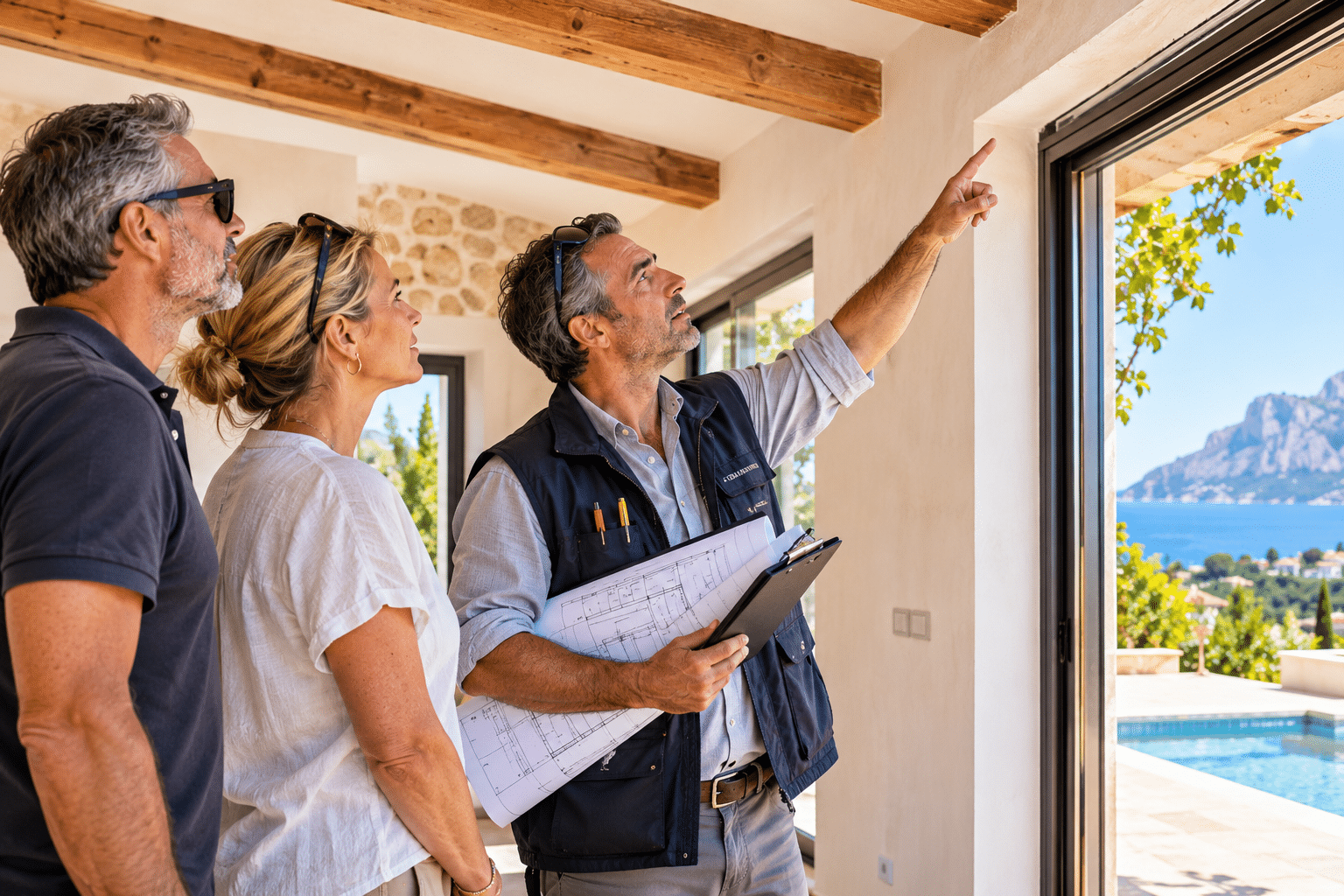
We wrote an inspection clause into our reservation contract. Luckily we did, because we walked away from our first choice. Here’s what we learned, what an inspection covers, how to build it into the reservation process and how it saved us from a €100,000+ mistake.
Why Inspections Matter More in Spain
Three differences from buying a house in the US vs Spain make an inspection especially valuable here:
The last point was a big one for us. Our potential house had just been renovated. We loved the result, but a beautiful renovation tells you nothing about the roof, the plumbing or what’s behind the walls.
What If You Find a Problem After You Buy?
Spanish law does give buyers some protection against hidden defects, known as vicios ocultos. Under the Civil Code, the seller is responsible for serious defects that existed before the sale and weren’t apparent to the buyer, even if the seller didn’t know about them. But the protection is narrow:
What counts as “hidden”? Spanish courts ask whether the buyer could have discovered the problem with average care, given their own technical knowledge.
In practice, that means:
This is also where an inspection helps you. Anything the inspector finds is no longer hidden, so you can’t claim it after closing. Instead, you negotiate it before you sign, while you still have leverage. The six-month protection applies whether or not you have an inspection, so getting one doesn’t mean giving it up. Problems the inspector couldn’t reasonably have found may still be covered.
That said, we wouldn’t skip an inspection and count on the six-month rule as a backup. It’s a last resort, not a plan. You’d have to prove the defect was serious, hidden and there before the sale, usually in court, while paying for lawyers and experts out of pocket. The seller may have moved on or even out of the country and a waiver clause in the contract can complicate things further. By comparison, an inspection lets you deal with problems before you’ve paid for the house.
One more thing to watch: sellers may add a clause waiving this protection. Under the Civil Code, that waiver only protects a seller who didn’t know about the defect, not one who hid it. Ask your lawyer to check for it in your contracts.
Common Problems Inspectors Find
Surveyors who work in coastal areas of Spain consistently say the same thing: damp is by far the most common problem, whether it’s rising from the ground, coming through the roof, or penetrating the walls. The sunny climate makes it easy to assume Spanish houses are dry, but that often isn’t the case.
Here’s what to have checked:
This issues list from a local architecture firm in Benissa covers several of these and is worth reading.
Who Does Inspections And What Types Are There
In Spain, inspections are usually done by an arquitecto técnico (also called an aparejador), a building surveyor qualified in construction. Make sure the report will be written in English if you need it to be.
| Type Of Inspection | What It Is And When It’s Performed |
|---|---|
| Technical inspection | A visual walk-through of the whole home followed by a written report on the structure, roof and terraces, damp, plumbing and electrical. It’s done after your offer is accepted and before you sign the arras. This is the right choice for most resale homes. |
| Full structural survey | A more in-depth survey that can include moisture readings and a closer look at the foundations and structure. It’s done at the same stage as a technical inspection, usually for older, larger or hillside homes or when a technical inspection turns up a concern. |
| Snagging inspection | A detailed check of a new build for defects and unfinished work, producing a list of items for the builder to fix. It’s done before you accept handover of the keys. |
| Specialist checks | A focused inspection of one system, such as moisture, the pool, the septic system or termites. It’s done when the general inspection flags something, or when a feature of the home needs an expert’s eye. |
Prices for inspections depend on the size and complexity of the home. Compared with the price of a house, it’s a small cost, and if the report turns up problems, it can more than pay for itself in a lower price.
Remember a bank appraisal (tasación) isn’t an inspection. It tells the lender what the house is worth, not what condition it’s in.
Request An Inspection In Your Reservation Contract
The right time for an inspection is when you make your offer on the home during the reservation process and before you sign the Contrato de Arras. Once you sign the arras and pay that larger deposit, backing out gets expensive.
Here’s how it worked for us:
If you’re buying from abroad like we were, ask your agent whether they can meet the inspector at the house.
What About New Builds?
New construction in Spain comes with legal warranties under the building law (Ley de Ordenación de la Edificación, or LOE). They’re set in three tiers:
| Warranty period | What it covers |
|---|---|
| 10 years | Structural defects, such as foundations and load-bearing walls (backed by mandatory insurance the seguro decenal) |
| 3 years | Habitability defects, such as leaks, damp and insulation problems |
| 1 year | Finishing and workmanship, such as tiling and paint |
The 10-year insurance transfers to later owners for the rest of its term, so it also applies if you buy a home that’s only a few years old. Ask to see the policy.
Those warranties were a big reason we looked so hard at new construction during our search. Even so, a snagging inspection (mentioned above) before you accept the keys on a new build is worth it. It’s much easier to get the builder to fix problems before handover than to file a warranty claim afterward.
Our Experience
In any house we’ve ever purchased in the US, we’ve always had a pre-purchase inspection done, so we knew when we found a house in Spain, we’d do the same. And thank goodness we did.
As part of our reservation agreement, we specified that we wanted a house inspection. Given that most reservation agreements are valid for 21 days and there’s a deposit riding on the deadline, we had to act fast. Our lawyer recommended Tom, owner at Autentico Arquitectura of Jávea.
Tom was great to work with and we had the report in about 14 days, which left us a few days to make the final decision to move forward or not.
The report he gave us was very extensive. It included technical and structural inspections of the property. The report was about 12 pages and detailed room by room what the issues were. There were photos for each item, which was helpful not only in making our decision to move forward, but also as a follow-up with the seller.
We paid €1700 + VAT for the inspection, which we thought was reasonable for the thoroughness of the work.
The Outcome
Based upon the report and the findings, there were significant deficiencies that made us worry about what else might be wrong that a typical inspection may not find.
We scheduled a follow-up call with Tom about what he found. (That was included in the fee). We estimated that the repairs to cure the issues could be over €100,000 and that was just what was discovered, not potential things we didn’t see.
Most issues stemmed from inadequate work and oversight during the renovations, removal of original structural components which might compromise the structure itself, improper installation of all new windows everywhere in the house and moisture issues in the bathrooms.
The seller was unwilling to compromise on price and was fairly dismissive of the issues. Given how significant the issues were, we didn’t feel we could move forward. The potential for future expenses and issues was just too much.
After we walked away, it took a few days, but we did get our €10,000 deposit returned to us. We’re very glad that was stipulated in our reservation contract.
So for us, it was €1,700 well spent. It’s sad because we really loved the house, but didn’t love it enough to take on that kind of risk.
You can read more detail and some examples in our diary entry.
FAQs
Who pays for the inspection?
The buyer. You hire the inspector, so the report works for you, not the seller or the agent. Your agent can arrange access to the house, but the inspector should be someone you choose and pay directly.
Do I need to be present for the inspection?
INo. Many international buyers aren’t in Spain when the inspection happens and that’s how it worked for us. Your agent can let the inspector in. Ask the inspector for photos and video with the report and schedule a call afterward to walk through what they found.
The seller already has a survey. Can I use that instead?
Ask for a copy, since it may be useful background. But don’t use it in place of your own inspection. A report the seller paid for was written for the seller, and it may be out of date.
Do older homes in the Valencia region need an official building report?
Yes, in many cases. The Comunitat Valenciana requires a building evaluation report, the IEEV.CV, for homes more than 50 years old. That includes both single-family homes and apartment buildings. Compliance is low, so many older homes don’t have one. If the home you’re buying is over 50 years old, ask whether a report exists. It’s not a substitute for your own inspection, but it can point out known issues.
Is there a best time of year for an inspection?
If you have a choice, after a stretch of rain is ideal. Leaks, damp and drainage problems are easiest to spot when the house has recently been tested by bad weather. During a long, dry summer, those problems can be hard to see. If your inspection happens in dry weather, ask the seller directly about leaks and damp after storms.

Before Moving
Everything you need to sort before you leave — visas, NIEs, finances and the hundred other things on your pre-move list.

After The Move
What you need to get sorted once you arrive — utilities, healthcare, paperwork and all the practicalities of your new life in Spain.

Property Guide
Here’s what to know about buying property in Spain as an American — from your first search to signing at the notary.

Resources
Checklists, glossaries and vetted websites to help you plan, prepare and hit the ground running in Spain.

Our Journey
Follow along as we document our move from Portland, Oregon to Jávea, Spain — the highs, the headaches and everything in between.
This page last updated: