
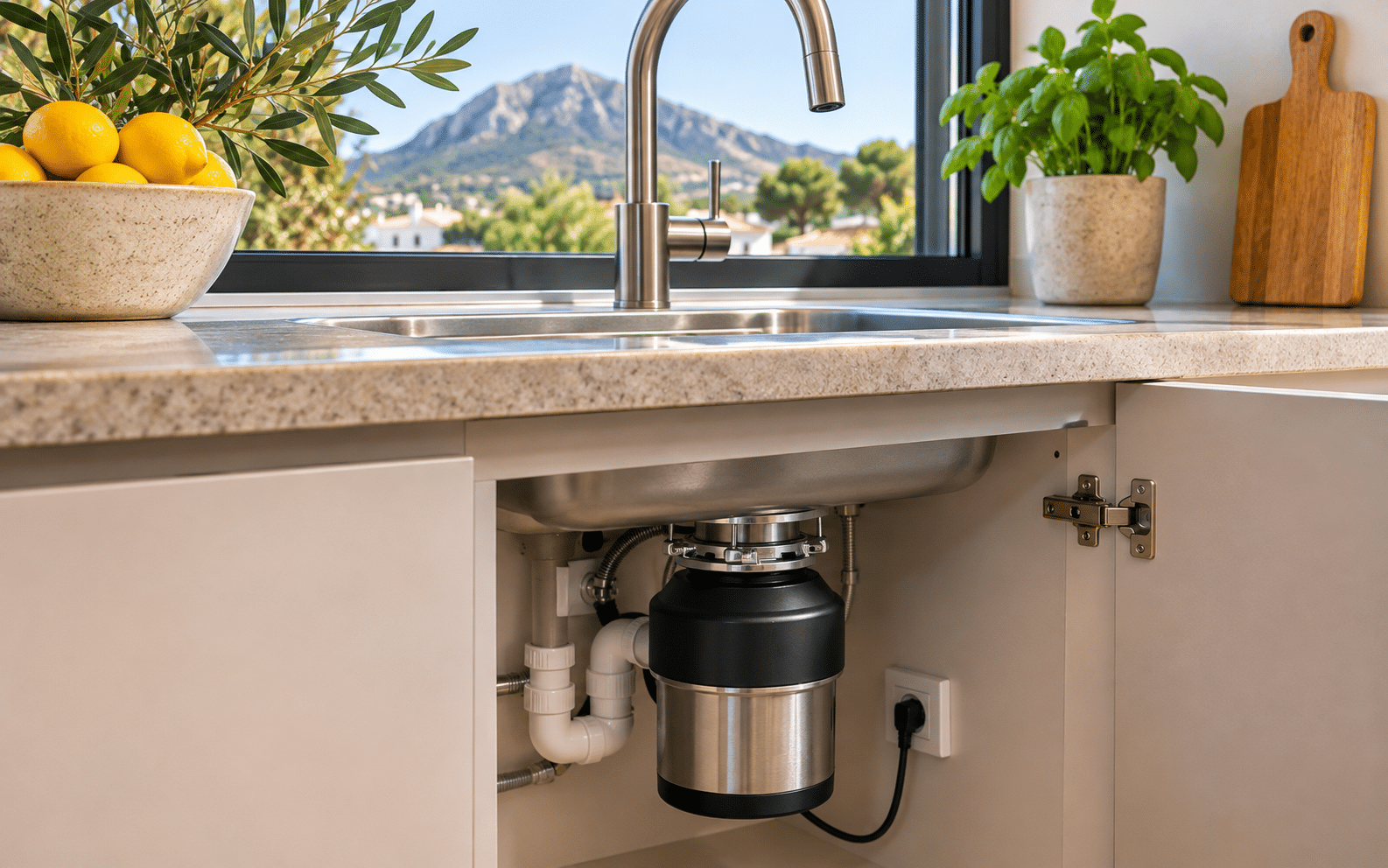
At first, when we were viewing houses, we never thought about it. We just assumed there would be one. Then, almost by accident, we noticed it was missing. No garbage disposal. Once again, we learned never to assume. About half of American homes have one. Look under the sink in a Spanish kitchen and you’ll find a trash bin, some cleaning supplies and maybe a water filter. That’s it. It definitely caught us off guard.
Why Spanish Kitchens Skip the Disposal
Spanish towns regulate what can go into their sewers through a local wastewater ordinance (ordenanza de vertidos). Many of these ordinances list solids from food grinders as a prohibited discharge. Some go further and ban installing a disposal at all if it drains to the sewer.
The reasoning is simple. Ground-up food and grease build up in the lines and at the treatment plant and the town pays to clear them. Rules vary from one municipality to the next. The only way to know for sure is to check your town’s ordinance before you buy anything.
What If You Have a Septic Tank?
Many older homes in Spain, especially in smaller towns and rural areas, run on a septic system rather than a city sewer. In Jávea a large share of villas in the urbanizaciones still aren’t connected to the municipal sewer. They run on a septic tank (fosa séptica) or a sealed holding tank that gets pumped out.
Even in the US, people still argue about whether disposals and septic tanks mix. InSinkErator points to a 2019 University of Minnesota study that found food waste had a negligible effect on septic tank pumping frequency in a well-maintained system. Roto-Rooter takes a more cautious line and warns that regular use can add a lot of solids to the tank. Remember, everything you send down the drain is something you eventually pay to have pumped out.
Spain Wants Food Scraps in a Bin, Not the Drain
Spain’s 2022 waste law (Ley 7/2022) requires towns to collect organic waste separately so it can be turned into compost and biogas. That’s the brown bin (contenedor marrón), the fifth bin alongside yellow (packaging), blue (paper), green (glass) and gray (everything else). A disposal sends the same material into the water system instead, which works against the whole point.
How the Brown Bin Works
What goes in: fruit and vegetable scraps, meat and fish, eggshells, shellfish and nut shells, bread, coffee grounds and tea bags, used napkins and paper towels, and small plant trimmings.
What stays out: diapers and wipes, hair and floor sweepings, cigarette butts, gum, regular plastic bags, large amounts of garden waste, cooking oil, and sauces or stew liquids.
Organic waste goes in compostable bags. Used cooking oil has its own collection container. We cover the full bin system in our [trash and recycling guide].
Some towns are starting to reward people who use it. Alicante offers up to 20% off the annual garbage fee for residents who use their brown bin card regularly. Expect more towns to follow.
Can You Still Install a Disposal?
Yes, they’re sold as trituradores de residuos, InSinkErator is distributed throughout Spain and is available on Amazon or at other retailers. They aren’t cheap. Higher-end models run roughly €750 to €1,000 before installation. Things to check before you take the leap:
- Sewer or septic. Ask whether the property is on the mains sewer or runs on a fosa séptica or holding tank. This belongs on your list of questions before you buy. See our [property evaluation checklist].
- Your town’s ordinance. If the sewer rules prohibit grinder discharge, a plumber may still install it, but you carry the risk.
- Your plumbing. Drain lines in older Spanish homes are often narrower than what Americans are used to, so a disposal raises the risk of clogs.
- Your comunidad. In apartments and shared developments, check the community rules before tying anything new into shared drain lines.
If You Go Without A Garbage Disposal
- A mesh sink strainer. It catches the bits a disposal would have ground up. Any ferretería sells them for a few euros.
- A countertop caddy. Keep a small lidded bin with a compostable bag next to the sink and empty it every day or two.
- The freezer trick. Shrimp shells and fish scraps get smelly fast in a Costa Blanca summer. Freeze them in a bag until your next bin run.
- Composting. Garden trimmings and vegetable scraps can feed a compost bin if you have the space. See our [Mediterranean gardening guide].
- Paper towel first. Wipe greasy pans with a paper towel before washing. The towel goes in the brown bin and the grease stays out of your pipes.