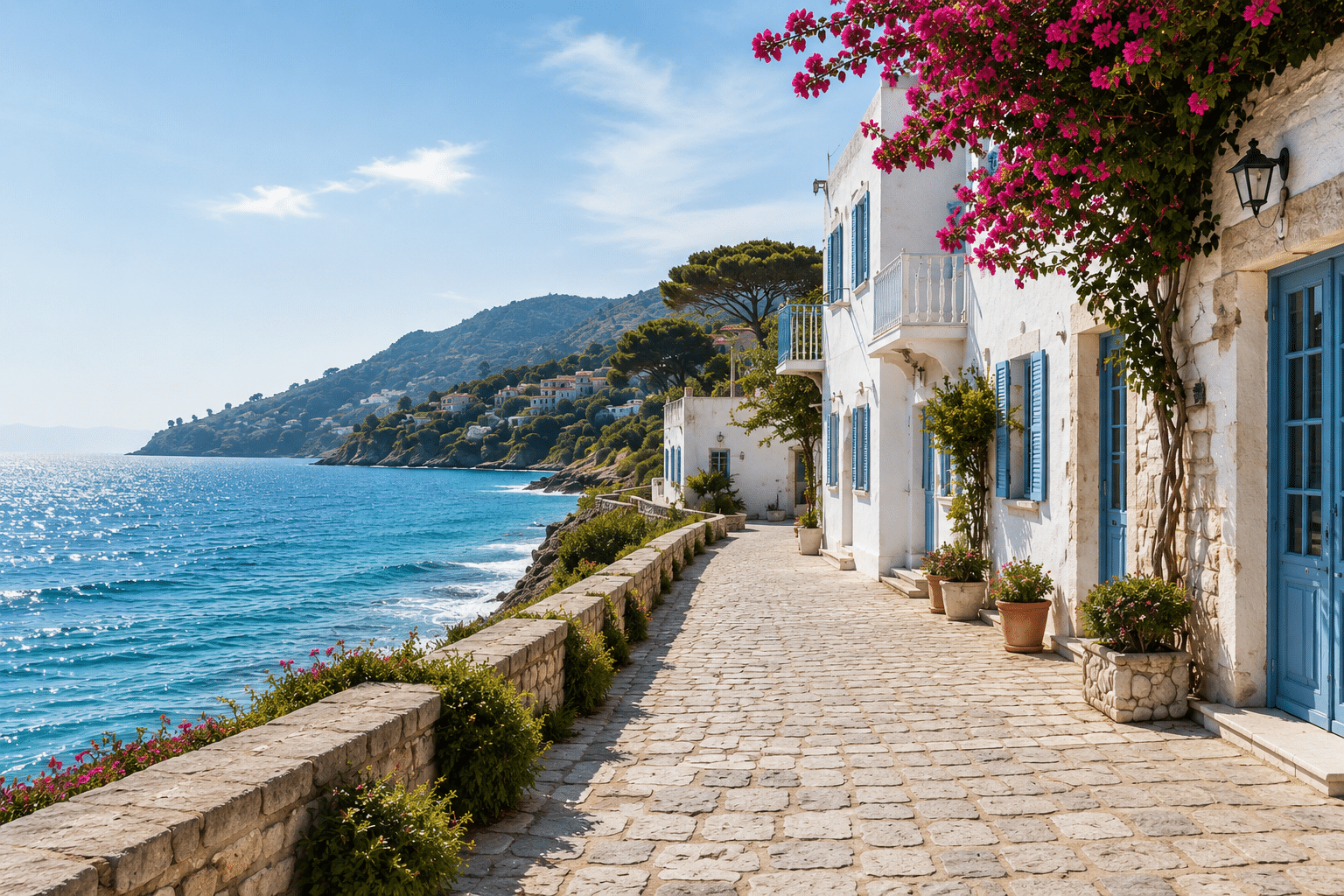
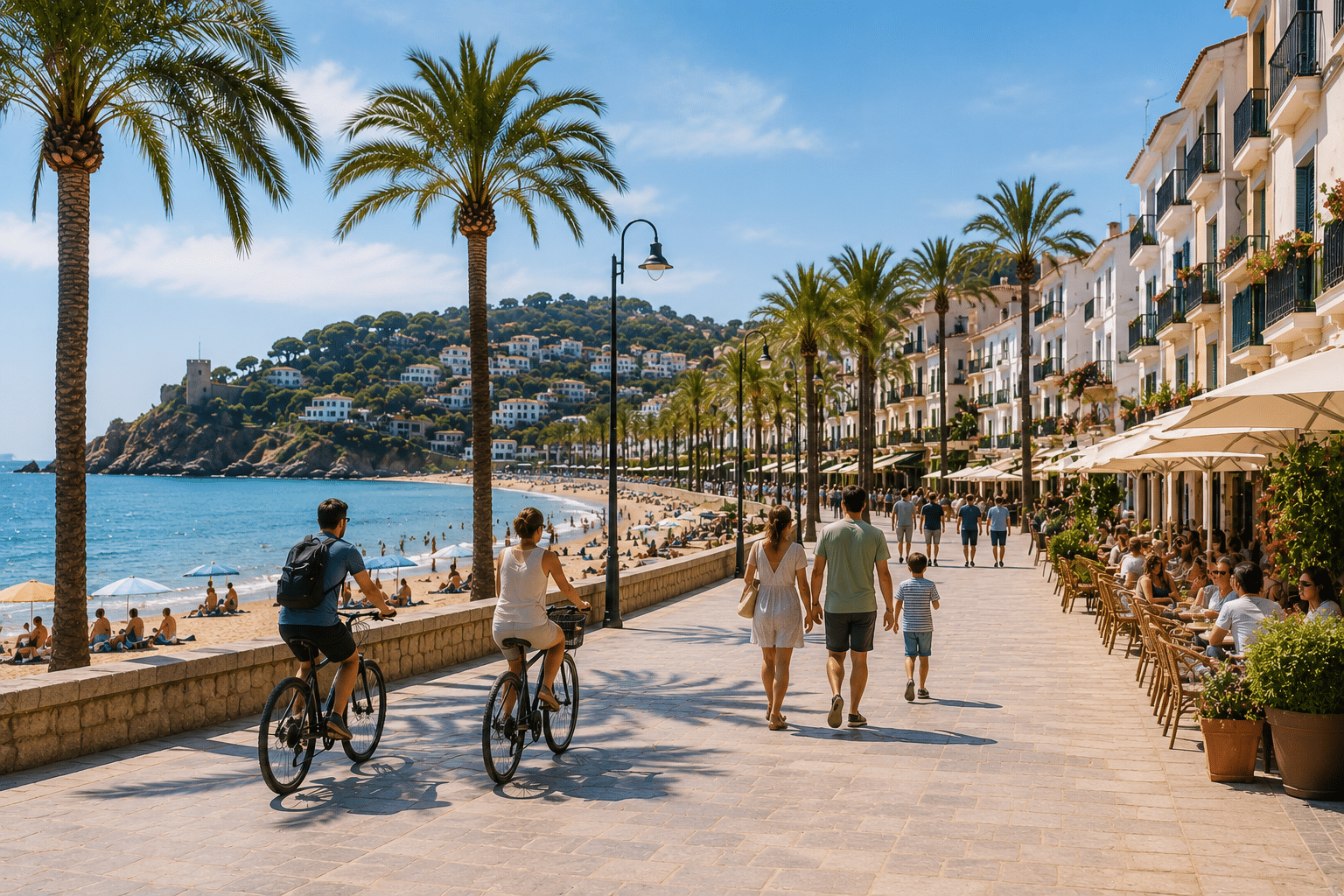
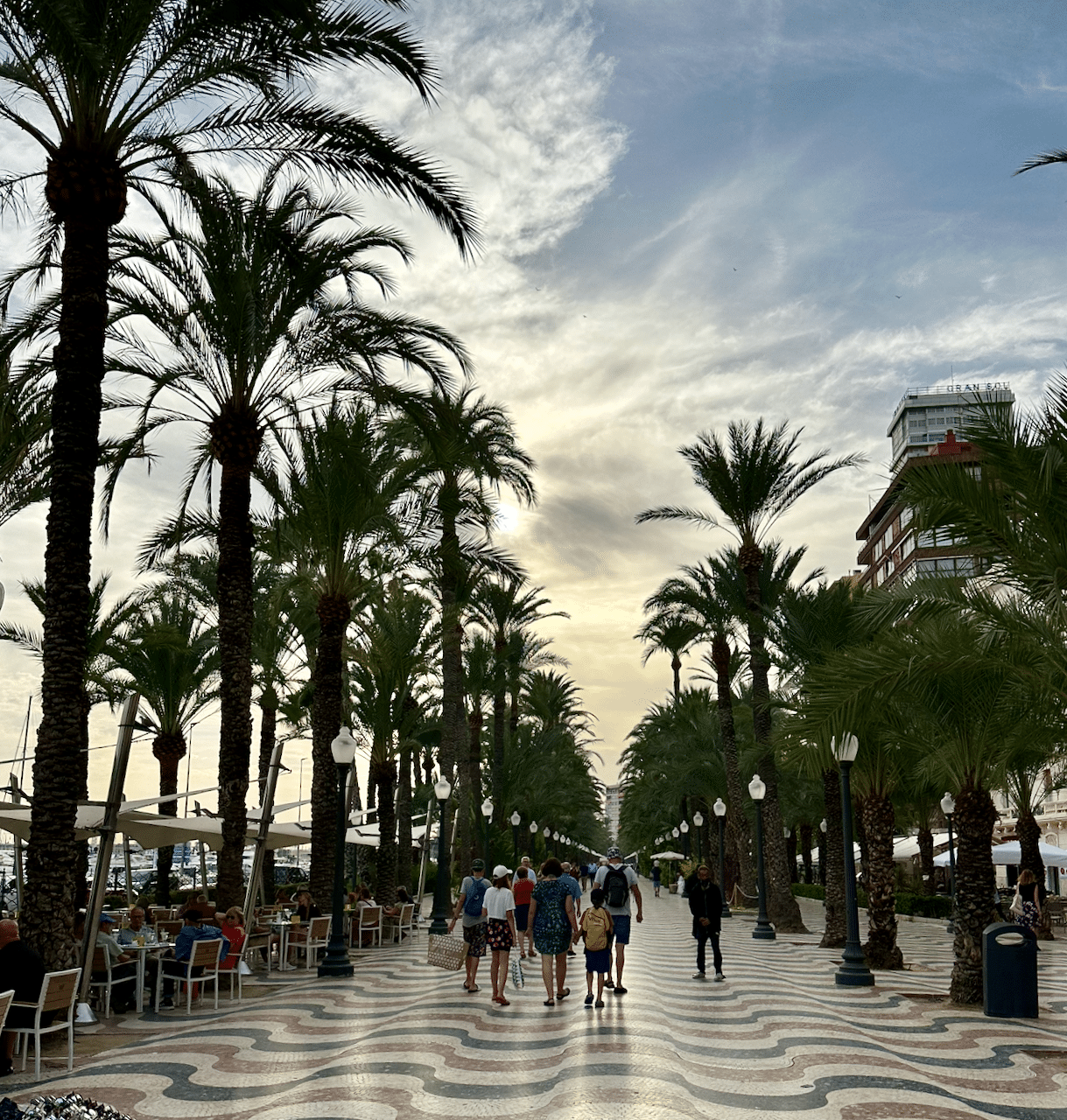
We know from having visited Spain many times that daily life in Spain will feel genuinely different from the US. That’s one of the main reasons we’re moving to Spain, because that’s what we’re looking for. We’re curious to see how long it takes to really adapt. Some things probably won’t take any time at all, while others may take longer and test our patience. But one thing we know for sure is that the adjustment will be worth it.
Time is Different In Spain
The pace is slower. Everyday life in Spain runs on patience. Appointments, errands, and service often take longer than you’re used to. Fewer people rush, and “mañana” doesn’t necessarily mean tomorrow — it just means sometime soon.
Meal times are later. Lunch is typically around 2–3 PM and dinner rarely starts before 8 PM, often later. No one rushes through a meal and restaurants expect you to take your time.
Stores have different hours. Many shops close in the early afternoon for an hour or two, especially in smaller towns. Many businesses are also closed on Sundays and holidays.
The siesta is real, but selective. The traditional midday break still exists in smaller towns, but it’s less common in cities and modern workplaces. What remains everywhere is the later daily schedule: long lunch breaks, later dinners and businesses closing mid-afternoon.
Spain uses the 24-hour clock. Time is typically shown in 24-hour format rather than AM/PM. 8:00 PM is written as 20:00. It takes a little getting used to, but becomes second nature quickly.
Public holidays are frequent and respected. Spain has more public holidays than the US, and taking extended time off, especially in August, is completely normal. Some shops may close for days or weeks at a stretch.
Spanish Culture And Daily Life
Life in Spain happens outside. In warmer areas like the Costa Blanca, cafés, plazas, terraces and promenades are where people spend their time day and night.
Festivals are a constant. It often feels like there’s always a celebration happening somewhere. Every town has its own traditions, and local events are taken seriously.
Spaniards are direct. They tend to say what they mean without softening it first. It can come across as blunt to Americans, but it’s just normal communication — nothing personal.
Community is built into daily life. Neighbors tend to know each other. Conversations at the bakery, on the street or at a café are routine. Local relationships matter in a way that can feel unfamiliar at first and deeply appealing once you’re used to it.
Life in Spain is louder than most Americans expect. People stay out late, restaurants fill up after 9PM, and festivals routinely go until the early hours — fireworks at midnight on a Tuesday aren’t unusual. None of this is considered a problem. It’s just how things are.
Tipping is different. It exists but is far more casual than in the US. Rounding up or leaving a euro or two is common; the kind of percentage-based tipping Americans are used to is not expected.
Getting Around In Spain
Walking is the default. The mild climate, wide sidewalks and pedestrian-friendly layout of most Spanish towns and cities make walking the normal way to get around day to day.
Public transport is good. Buses and trains connect most areas reliably and in larger cities the networks are extensive. You can get around without a car more easily than in most of the US.
Driving and parking take adjustment. Streets in older town centers are often narrow and parking in or near them can be genuinely difficult. Large vehicles are a liability. If you’re used to driving a truck or SUV, a smaller car will serve you much better.
Everyday Differences In Spain
Bureaucracy is slow and paperwork-heavy. Official processes such as residency, permits, utilities, anything involving a government office, typically involve forms, stamps, waiting and more waiting. Basic Spanish helps enormously. Patience is not optional.
Spanish is required for daily life in Spain. Banks, doctors, town halls, delivery drivers and most government offices operate in Spanish. In some areas you may also encounter Valencian or Catalan. Getting comfortable with at least functional Spanish is one of the most practical things you can do before you arrive.
Cash is still widely used. Card payments are accepted most places, but cash remains common for small purchases at traditional shops, markets, and some cafés.
Pharmacies handle a lot. For minor health issues, most people go to a pharmacy first rather than a doctor. Pharmacists are well-trained, can advise on medications directly and will tell you clearly if something needs professional attention.
Pets are part of daily life in Spain. Dogs especially are everywhere. In cafés, on terraces and in shops. They’re well-socialized and generally welcomed in a way that surprises most Americans.
Most expats who make the move find that the adjustment period is real but shorter than expected. The slower pace, later schedule and community-centered daily life end up being exactly what they came for — and most never seriously consider going back.
Spanish classes will get you started, but talking like a local in Spain takes more than a classroom can teach. You can get by in Jávea and Dénia without much...
It's tempting. You convert a restaurant bill or a rent payment back to dollars, do the math in your head, and blurt out how cheap everything is compared to home....
In the US, Sunday is just another shopping day. In Spain, it isn't. Most stores close. If you don't plan around it, you'll find that out the hard way the...
Plenty of expats move here, learn the etiquette, and settle into a comfortable routine. Work, groceries, a nice view. Years later, some of them still feel like a visitor. Knowing...
Most of daily life in Spain will feel familiar. People are polite, helpful and generally happy to see a new face around. But a layer of everyday habits works differently...
Costa Blanca weather is just all sun and fun. One morning you wake up and the light looks wrong. The sky is a dull orange-grey. The sun looks filtered. Your...
Spain drives on the right side of the road, just like the US. That's one less thing you'll have to worry about when driving in Spain. Everything else takes getting...
Privacy doesn't mean the same thing in every country. Some things that feel normal in the US may surprise you here. Some things that feel invasive back home are just...