
Property In Spain
Evaluating
Property In Spain
Evaluating property in Spain is one of those steps where doing your homework pays off more than almost any other part of the process. Unlike the US where home inspections are a standard and expected part of every transaction, independent property surveys are less common in Spain and not always automatically arranged. For any significant purchase they’re worth arranging. We’ll cover more about this in our property purchase guide.
This page focuses on what to look for when evaluating a property physically. Legal checks, title verification and paperwork are covered in our buying process section. We’ve also put together a variety of property evaluation checklists that you can use when you visit various properties. You’ll find them in our Resources section.
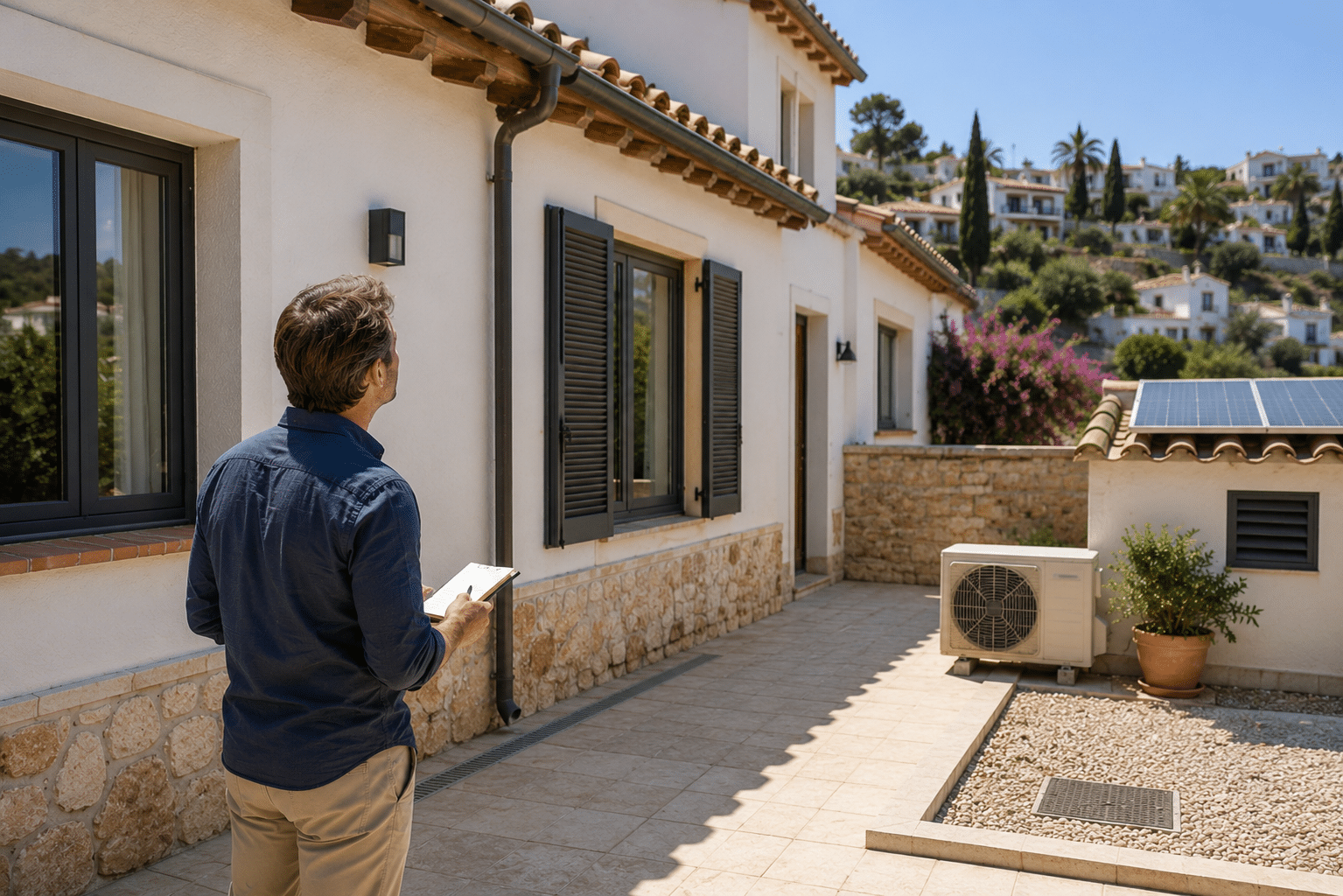
How Spanish Homes Are Built
Spanish homes are built differently from what most Americans are familiar with. Understanding the basics helps you evaluate what you’re looking at. The vast majority of properties, new and old, are built from concrete block or brick rather than the wood-frame construction common in the US. They’re solid, quiet and resistant to the pest and moisture damage that plagues timber construction.
Construction Basics
Older properties, generally anything built before the 1990s, were constructed under looser standards with minimal insulation. Heating wasn’t a priority in coastal areas. Building codes were inconsistently enforced. That era also produced a lot of unpermitted additions (such as rooms, terraces and outbuildings) which can create legal complications for buyers. The boom-era construction of the late 1990s and early 2000s was notoriously uneven in quality and some properties show it.
Newer construction is a different story. In 1999, Spain enacted the Ley de Ordenación de la Edificación (LOE), which set mandatory standards for structural stability, fire safety, insulation, energy efficiency, noise control and accessibility. Modern builds tend to have better thermal performance, modern electrical and plumbing systems and cleaner documentation. You’re also more likely to find features like solar, central heating and cooling and home automation systems, plus lower maintenance costs in the early years of ownership.
One of the most valuable aspects of the LOE for buyers is its mandatory warranty system. It runs from the date on the Certificado Final de Obra (Final Completion Certificate). There are three tiers:
- 10-year structural warranty covering foundations, beams and load-bearing elements
- 3-year habitability warranty covering dampness, insulation and waterproofing
- 1-year warranty for minor finishing defects
Developers are required to back the 10-year warranty with a Seguro Decenal — a structural defects insurance policy that transfers automatically to future owners and pays for repairs even if the original developer no longer exists.
Windows, Insulation And Noise
Older Spanish homes often have single-glazed windows which are inefficient by modern standards. Double glazing is standard in newer builds and renovated properties. Check the condition and type of glazing throughout the property. Upgrading windows is possible but adds significant cost.
Roller shutters (persianas) are standard on most Spanish homes and worth having in good working order. On newer homes, they tend to be electrically operated, on older homes, manually operated. They provide shade, privacy and security. Check that they operate smoothly and that the mechanisms are intact.
In older Spanish homes insulation is often minimal. The thick concrete block walls provide some thermal mass but without proper insulation properties can be cold in winter and difficult to cool efficiently in summer. Newer builds are subject to stricter energy efficiency standards but older properties vary widely.
Check the energy efficiency certificate (certificado de eficiencia energética) which is legally required to be provided with any property listing. Ratings run from A (most efficient) to G (least efficient). Most older Spanish homes rate E or F. This isn’t necessarily a reason to walk away but it tells you something about ongoing energy costs and the scope of improvement that may be needed.
Noise is worth paying attention to during viewings. Properties in town centers or near main roads can be significantly noisier than you might expect, particularly in summer when windows are open. Listen during your visit and if possible visit at different times of the day.
Unauthorized Additions And Legal Compliance
Unauthorized construction is genuinely common in Spain. Over the decades many homeowners have added extensions, enclosed terraces, built outbuildings, added pools, created roof terraces or made other modifications without obtaining the required permits. These additions may look perfectly normal and be fully functional, but their lack of legal status creates real problems after the purchase for buyers.
An unauthorized addition is not legally recognized as part of the property. This means it may not be reflected in the registered size of the property, it may not be insurable and it can expose the new owner to fines, orders to demolish and complications when selling in the future. In some regions there are time limits after which unauthorized structures can be legalized but the rules vary by region and are not always straightforward.
Before making an offer on any property compare the physical property carefully against the title deed (escritura) and the catastro (Spain’s property cadastre system which records physical details of properties). Any significant discrepancy between what’s registered and what actually exists is a red flag that needs investigating.
Ask the seller directly about any additions or modifications made to the property and when. Request copies of any building permits (licencias de obras) for work carried out. Your lawyer should also check the property’s legal status as part of the purchase process, but doing your own preliminary check can save time and avoid pursuing a property with serious complications.
In rural areas there are additional considerations around land classification. Properties built on rural land (suelo rústico) are subject to stricter regulations. Some rural properties exist in a legal grey area that has never been fully resolved. This is a specialist area and if you’re looking at rural property, getting proper legal advice early is essential.
Signs Of Problems
Dampness And Moisture: The Most Common Issues
Dampness is probably the single most common problem in Spanish properties and one that’s frequently underestimated by buyers.
- Rising dampness comes from moisture moving up through the foundations or ground floor walls. It typically shows as tide marks, salt deposits or deteriorating plaster at the base of walls. It’s more common in older properties and in areas with high groundwater levels.
- Penetrating dampness comes from water getting in through walls, roofs or around windows. It often shows as patches or staining on interior walls or ceilings. Flat roofs and older window seals are frequent culprits.
- Condensation dampness is caused by poor ventilation and can appear as black mold particularly in bathrooms, kitchens and poorly ventilated rooms. It’s more of a maintenance issue than a structural one but it can indicate chronic ventilation problems.
In all cases look carefully at walls, ceilings and floors, particularly in corners, around window frames and at the base of exterior walls. A damp smell in a closed-up property is a serious red flag. If you see evidence of fresh paint or recent plastering in isolated patches that can indicate an attempt to conceal dampness rather than fix it.
The main issue is not just whether dampness is present but whether it reflects a manageable maintenance issue or a larger structural or waterproofing problem.
Roof Design
For properties with flat roofs check the condition of the waterproofing membrane. Signs of cracking, bubbling or pooling water indicate maintenance issues that can lead to leaks. Look at the drainage points and make sure they’re clear and functional.
For pitched roofs, check the condition of the tiles. Spanish roof tiles are durable but individual tiles crack and slip over time. Look for missing or broken tiles and check the ridge line for gaps. Inside the property check ceilings on the top floor for any signs of water staining.
Roof terraces are common on Spanish homes and are generally a selling point but they need proper waterproofing and drainage. Check the condition of any tiling, the state of the drainage channels and whether there are any signs of water penetration below.
Electrical Systems
Older Spanish homes frequently have electrical systems that are undersized by modern standards. The Spanish grid runs on 220-240 volts like the rest of Europe rather than the 110-120 volts in the US. More important than voltage is the overall capacity and condition of the electrical installation. This matters even more if you expect to run multiple split heating and cooling units, pool equipment, induction cooking or EV charging.
Older properties may have limited amperage capacity, outdated wiring and fuse boxes that don’t meet current standards. Check the electrical panel. A modern consumer unit with circuit breakers is a good sign. An older ceramic fuse system or a panel that looks heavily modified is worth flagging.
Look at the number and placement of outlets throughout the property. Older Spanish homes often have fewer outlets than you’d expect and they may be awkwardly placed. This isn’t a dealbreaker but rewiring or adding circuits adds cost to any renovation, especially when you consider interior concrete walls.
Check whether the property has adequate outdoor electrical supply if you’re planning to install an EV charger or run equipment in a garage or workshop. This is worth confirming early rather than discovering limitations after purchase.
Water Systems
Water pressure, hardness and supply can vary significantly in Spain, particularly in rural or elevated areas. Turn on taps throughout the property and check that pressure is adequate. Low pressure at upper floor bathrooms is a common issue in multi-story properties.
Many Spanish homes use smaller, area specific hot water systems rather than the larger centralized systems many Americans are used to. Smaller properties often use a single electric water heater (termo eléctrico) which heats a fixed volume of water. Larger properties may have multiple units or a gas boiler. Check the age and condition of the water heater as they have a finite lifespan and replacement is an added cost.
Many Spanish properties also have a water storage tank (depósito) particularly in areas where supply can be intermittent. Check its condition and capacity. If the property relies on a well rather than a municipal water supply, understand what that means for ongoing supply reliability and water quality.
Check under sinks and around toilets for any signs of leaks or water damage. Look at visible pipework and note whether it looks modern or original. Older properties may have outdated plumbing that works adequately day-to-day but will need updating over time.
Utilities & Infrastructure
Sewer, Septic And Waste Water
This is an area many buyers don’t think to ask about until after the fact. It can make a significant difference depending on where the property is located.
Properties in established town centers and most urbanizations are typically connected to the municipal sewer system. This is the simplest situation. Waste water is handled by the local authority and there’s nothing for the owner to maintain beyond the internal plumbing.
Properties on the outskirts of towns or in rural areas frequently rely on a septic tank (fosa séptica) or a similar waste water treatment system instead. This is common and perfectly workable, but it comes with responsibilities the buyer needs to understand. Septic tanks require periodic emptying, typically every one to three years depending on usage and tank size. The cost and logistics of this vary by location. Check when the tank was last emptied and serviced and ask about its capacity and condition.
Older rural properties sometimes have very basic waste water arrangements that don’t meet current regulations. This can create complications and potential costs particularly if the property is ever renovated or if local authorities tighten enforcement. It’s worth asking specifically how waste water is handled and verifying that the system is legal and adequate for the property.
In some areas, properties are connected to a communal septic system shared across a small development or group of properties rather than the municipal network. Understand who is responsible for maintaining the shared system and what the costs are.
Gas: Municipal, Bottled And LPG
Gas supply in Spain varies significantly by location. It’s important to understand what a property has before you buy.
Municipal gas mains (gas natural) are available in many towns and cities but coverage is not universal, particularly in smaller towns, older urbanizations and rural areas. If a property is connected to a municipal gas main, it’s the most convenient option with no supply management required beyond paying the bill.
Many Spanish properties that aren’t connected to municipal gas mains use bottled butane (butano) or propane supplied in orange or blue cylinders. This is extremely common and most Spanish households are very familiar with it. Butano is used for cooking and sometimes for water heaters. The cylinders are delivered by Repsol and other suppliers and exchanged when empty. It’s a practical system but it requires keeping track of your supply and arranging deliveries or exchanges. If a property uses bottled gas check what appliances it supplies: cooking only, water heating or both and factor in the ongoing management and cost.
Larger rural properties and some urbanizations use LPG (liquefied petroleum gas) supplied via a larger fixed tank on the property rather than individual cylinders. The tank is typically owned or leased from the gas supplier and refilled periodically by tanker. Check the condition and age of any LPG tank on the property and confirm the supply arrangement and contract terms.
If the property uses gas for heating, cooking or hot water and you’re not sure which type of supply it has this is a straightforward question to ask the agent or seller early in the process.
Solar Power
Spain has some of the best solar resources in Europe and residential solar installations are increasingly common. If a property already has solar panels it’s worth understanding exactly what you’re getting.
First, establish whether the system is owned outright or still under a financing or leasing agreement. A system that comes with outstanding payments or contractual obligations transfers to the buyer and needs to be factored into the purchase. Make sure ownership status is clearly documented before proceeding.
Check the age and condition of the panels and inverter. Solar panels typically have a lifespan of 25 to 30 years but inverters often need replacement sooner, usually after 10 to 15 years. An older system may be approaching the end of its efficient life or may need inverter replacement in the near term.
Find out whether the system is connected to the grid (autoconsumo con vertido a red) which allows excess energy to be fed back and offset against your bill or whether it’s a standalone off-grid system. Grid-connected systems are more practical for most buyers. Check the capacity of the system relative to the property’s typical energy consumption. A small system on a large home may cover very little of actual usage.
If a property doesn’t have solar but you’re interested in adding it, check whether the roof orientation and available surface area are suitable. South-facing roofs with minimal shading are ideal. In urbanizations or apartment buildings, check the community rules as installations on shared roofs typically require community approval. Check out solar installation and vendor checklist for more help in evaluating a home.
Internet And Fiber Connectivity
For many expats reliable fast internet is as important as any other utility and it’s worth checking carefully before committing to a property. Spain has invested heavily in fiber optic infrastructure and coverage is good in most towns and urbanizations — but it’s not universal and rural or elevated properties can still have limited options. The layout of a home can also affect internet speeds throughout a property. This post has more information on what to look for.
If fast reliable internet is essential to your daily life or work confirm connectivity before you make an offer rather than assuming it will be available. We have more about internet services in Spain here, including how you can check to see what service the address has available.
Comfort & Livability
Orientation And Sun Exposure
In Spain, orientation matters more than it does in most parts of the US. South-facing properties get sun throughout the day and tend to be warmer and brighter in winter. North-facing properties can be surprisingly dark and cold in the winter months despite the Mediterranean climate. East-facing properties get morning sun and west-facing get afternoon and evening sun.
For coastal properties in areas like the Costa Blanca, sea views are often a priority but orientation affects livability significantly. A property with a spectacular sea view that faces north may be much less pleasant to live in day-to-day than a south-facing property with a more modest outlook.
Check which rooms get natural light and when. Visit at different times of day if you can or at least think through the sun path relative to the property’s position. In summer this matters less since the sun is high and strong regardless of orientation. In winter, it makes a real difference.
This is one of the easiest things to overlook in a short viewing and one of the hardest things to change later.
Heating And Cooling
This is an area where many buyers, particularly those moving to coastal areas, underestimate what they’ll need. The Spanish Mediterranean climate is genuinely mild but winters can be cold particularly at night and in older homes with poor insulation. Many older Spanish properties were simply not designed with heating in mind.
Check what heating system exists in the property. Ducted systems are less common in Spain than in the US. Split-system air conditioning units which provide both heating and cooling are the most common solution. They’re effective but check how many the property has and whether they cover the whole home adequately. A property with a single unit in the living room and nothing in the bedrooms will need additional units.
Underfloor heating is increasingly common in newer and recently renovated properties and is worth noting as a positive feature. Gas central heating exists in some properties particularly in cooler regions.
For cooling, check that the property has adequate air conditioning capacity for the summer months. The Costa Blanca and similar coastal areas can get very hot in July and August. Check the age and condition of any existing units. Air conditioning systems have a lifespan and older units may need replacement.
Pools
A private pool is one of the most sought-after features in Spanish properties, particularly in coastal and rural areas. In the hot Spanish summers, a pool goes from luxury to necessity fairly quickly. Pools also come with ongoing costs and responsibilities worth understanding before you buy.
Check the condition of the pool structure itself looking for cracks in the shell or lining. A well-maintained pool should have clean water, functional filtration and pump equipment and tiling in good condition. Ask when the pump and filtration system were last serviced and how old they are. Pool equipment has a lifespan and a system that hasn’t been maintained properly may need significant work. Check the surrounding area for adequate drainage. Poor drainage around a pool can lead to water damage to the surrounding terrace or the property structure over time.
Verify that the pool has the proper permits and is legally registered. In Spain, pools require a building permit (licencia de obras) and should be registered with the local municipality. Unpermitted pools are not uncommon. They can create complications including potential fines or demolition orders. Ask specifically for documentation and verify it independently.
If you’re considering a property without a pool, but want to add one, check whether the plot size and local planning rules allow for it. Many urbanizations have specific restrictions on what can be built. Pool installations may require municipal approval in addition to special permits.
Ongoing pool maintenance in Spain typically costs several hundred euros per year for chemicals, servicing and minor repairs. Many use a pool maintenance service particularly during the summer months. Factor this into your ownership cost calculations.
If the property has a heated pool, check how it’s heated: gas, heat pump or solar, then factor that into the running costs accordingly. Heat pumps are the most efficient option and increasingly common. A pool cover is also worth having or budgeting for. Beyond reducing heat loss and cutting energy costs, a cover is an important safety measure if you have children or a pet. In some municipalities in Spain, it may be required by local ordinance.
Find more information about maintenance and other services in our Home Services guide.
Outdoor Spaces, Terraces And Gardens
Outdoor living is central to life in Spain and outdoor spaces are often a key factor in why people choose a particular property.
For terraces, check the condition of the waterproofing and drainage. Look at the condition of any tiling, railings and structural elements. Check that any pergolas, awnings or additional structures are in good condition and verify their legal status (more on this in the unauthorized additions section above).
Gardens in the drier parts of Spain require irrigation to keep plants alive through the summer months. Check the condition and coverage of any existing irrigation system and whether it connects to mains water or a separate supply. In some areas water costs for garden irrigation can be a meaningful expense during summer.
Consider the landscaping of the property in general. Mature trees are a genuine asset, providing shade, privacy, and character, but they also require maintenance. In some cases they may be subject to local protection orders that restrict pruning or removal. A heavily landscaped garden with complex planting can be beautiful, but carries ongoing maintenance costs that a simpler garden doesn’t. Don’t forget about pests. Insect damage to the home or to various plants and trees can lead to unexpected costs down the road.
In urbanizations and developments there are often community rules governing landscaping. Some communities require gardens to be maintained to a certain standard or restrict certain types of planting, structures or modifications. Check the community statutes before assuming you can make the changes you’re planning.
Parking And Access
Parking and access are easy to underestimate when viewing homes especially if you’re focused on the house itself. In many parts of Spain, particularly older urbanizations, hillside neighborhoods and town centers, road access can be tighter and less convenient than buyers from the US are used to.
Check how easy it is to actually get to the property by car. Pay attention to road width, turning space, visibility, gradient and whether larger vehicles can comfortably reach the home. A steep or narrow driveway may not seem like a major issue during a quick viewing, but it can become frustrating over time especially with guests, deliveries, service vehicles or emergency access.
If the property has private parking, make sure it works for the type and number of vehicles you expect to have. Garages in Spain can sometimes be smaller than American buyers expect. Outdoor parking areas may be less usable than they first appear. If street parking matters, check how available it is at different times of day and during peak tourist season.
Plot Usability
Plot size can be misleading if you only look at the number on the listing. What matters just as much is how much of the land is actually usable. In Spain, especially in hillside or terraced areas, a large plot may include steep slopes, retaining walls, awkward corners or sections that are expensive to maintain but not very functional.
When viewing a property, look beyond the advertised square meters and think about how the land is laid out. How much of it can realistically be used for outdoor living, gardening, a pool, children, pets, or future improvements. Also pay attention to drainage, erosion and ongoing maintenance. Steeper plots can be beautiful and offer strong views, but they come with higher landscaping costs, more irrigation complexity and greater long-term upkeep.
Boundary And Privacy
Privacy can vary a lot from one property to another even within the same neighborhood. A house may feel private in listing photos, but look very different once you’re standing on the terrace, by the pool or inside the main living spaces. Check sight lines carefully from both inside and outside the home. Look at whether neighboring properties overlook key areas such as terraces, gardens, bedrooms or pool space. Pay attention to boundary walls, fencing, hedges and elevation differences.
It’s also worth confirming where the actual property boundaries are, especially on larger or irregular plots. If walls, hedges, or access routes appear unclear, ask about it early. Privacy can often be improved over time, but boundary disputes are much harder to resolve after purchase.
Take It With You
We’ve turned the key evaluation frameworks from this page into printable checklists you can take to viewings.
The Quick Property Evaluation Checklist covers the essentials for early-stage viewings.
The Detailed Property Evaluation Checklist is built for finalist properties and goes deep on systems, structure and legal compliance. (A Spanish version of the detailed checklist is also available if you want to walk through questions directly with a listing agent or homeowner.)
The New Construction Evaluation Checklist includes additional items to check if you’re looking at new builds.
Download the PDF version of the Quick Property Evaluation Checklist
Download the PDF version (English) of the Detailed Property Evaluation Checklist
Download the PDF version of the New Construction Evaluation Checklist
FAQs
How do you know if a property is overpriced?
Pricing can be inconsistent across listings, especially when the same property appears through multiple agents. The best way to judge value is by comparing similar properties in the same area and understanding how long a listing has been on the market. If a home has been listed for a while or appears at different prices across platforms, it may indicate room for negotiation or that the pricing isn’t aligned with current demand.
How much should you factor renovation costs into your decision?
More than most buyers expect. Even properties that appear “move-in ready” often require updates over time. It’s important to think beyond the purchase price and consider what it would take to bring the home up to your standards, whether that’s minor cosmetic work or more significant upgrades.
Are newer homes always a better choice than older ones?
Not necessarily. Newer homes typically offer better insulation and modern systems, but older homes often come with larger plots, more established locations and character that newer builds may lack. The right choice depends on your priorities, including maintenance, location and long-term plans.
How do you evaluate a neighborhood if you’re not familiar with the area?
Beyond the property itself, it’s worth spending time driving or walking the surrounding area. Look at road conditions, nearby homes, overall upkeep, and access to key services. If possible, visit more than once or at different times to get a better sense of how the area feels day to day.
What’s easy to overlook during a first viewing?
Things like road access, parking, nearby construction, and neighboring properties are often overlooked initially. It’s easy to focus on the house itself, but the surroundings can have just as much impact on your experience living there.

Before Moving
Everything you need to sort before you leave — visas, NIEs, finances and the hundred other things on your pre-move list.

After The Move
What you need to get sorted once you arrive — utilities, healthcare, paperwork and all the practicalities of your new life in Spain.

Property Guide
Here’s what to know about buying property in Spain as an American — from your first search to signing at the notary.

Resources
Checklists, glossaries and vetted websites to help you plan, prepare and hit the ground running in Spain.

Our Journey
Follow along as we document our move from Portland, Oregon to Jávea, Spain — the highs, the headaches and everything in between.
This page last updated: